Daniel Tosh Is Not the Problem
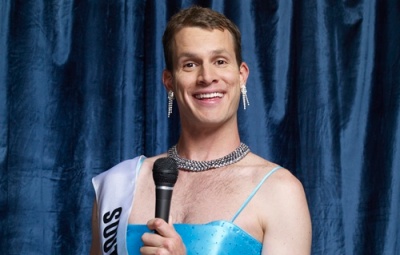 Last week, a brouhaha erupted on the Internet after Daniel Tosh, a lackluster comic and host of Tosh.0 on Comedy Central made a joke about rape. Or rather, he attempted such a joke, knowing full well that somebody out there in the world, if not his audience, would find it unfunny and offensive. Many smart people have written about why there’s no place in comedy for jokes or comic routines on the subject of rape, others have waxed eloquent on where this moment intersects with the First Amendment, but I’d like to expand the discussion here.
The issue of what’s funny and where the boundaries of taste and appropriateness in comedy comes up often. Stephen Colbert recently apologized for likening the food industry’s infamous pink slime to transsexuals. Tracy Morgan was taken to task for saying during a stage routine that he’d kill his own son if he found out the kid was gay–when asked about the lines, he remarked:
I don’t “f*cking care if I piss off some gays, because if they can take a f*cking d**k up their ass … they can take a f*cking joke. Read More…
 When Susanne and I were still trying to get pregnant, we made an appointment to see a fertility specialist in Seattle, and were told that there was new paperwork to sign because the Federal rules had changed about informed consent and patient monitoring in light of the eight pregnancies Nadya Suleman had carried to term in California. Ms. Suleman was known more popularly as “Octomom,” and derided in the media as a bad mother even before the birth of the eight children, because she wanted to birth all of them (she did also have other children at that time, but this wasn’t mentioned, in what I read back then, as the reason for questioning her parental fitness). Eight embryos didn’t magically appear in her uterus–some health practitioner had to put them there (and in fact, 12 were transferred into her). Thus while the question of malpractice or medical negligence was brought up by some of the talking heads, most of the attention was focused solely on why a woman would even want to carry and care for that many children. And although the medical board in California investigated the practitioner and subsequently revoked his license, it wasn’t he who came away with a derisive nickname.
 While watching Zombieland a few years ago, I was struck by the notation, made almost in passing, that in a zombie apocalypse, larger and slower people would be the first to go. Certainly I personally would not win a footrace against well, anyone, but in a zombiecalypse, I don’t need to be speedy. I just need the right equipment.
 At some point, any zombie apocalypse had to move into a new phase–zombies eventually run out of human brains to eat, humans find a way to reverse zombification, thus beginning a new chapter in humankind, or humans defeat the zombie onslaught. Of course there was another option–people dying out completely. But human history has shown us capable of responding to almost any threat, and so we found a way of succeeding even when all seemed lost. So many theories about surviving zombie attacks have focused on battling zombies, avoiding zombies, and discerning whether a loved one has become a zombie, it has largely slipped through the cracks of culture that even zombie doomsdays must end.
 I’ve been fascinated by the concept of the humanoid robot, or android, as long as I’ve been reading science fiction, and fortunately there are loads of examples out there for people who find themselves fascinated by such things. Although at first it may seem like androids make a simple statement about our humanity—or lack thereof—I think there are different ways that androids play into a commentary on our species. And in terms of narrative, they’re characters, sometimes even the protagonist, they’ve been used as themes, reflections, and on occasion are the plot itself. So with a fondness for the non-carbon community, let’s look at some messages in popular culture that come from how androids have been conceptualized.
  I do love a good police procedural. I got hooked on them somewhere around Hill Street Blues which uncoincidentally is about the same time I became addicted to hospital shows (thank you, St. Elsewhere). These were character-driven, with short arcs of crime stories interspersed with longer relationship arcs of the ensemble characters, and the latter knew to never really upstage the former. Yes, we knew all about Jessica Fletcher’s life, but we really were invested in her solving another murder. Priorities, people.
 I was in graduate school in snowy Syracuse, New York when the word “queer” came onto the scene as a self-identifier for LGBT people. One colleague whispered her horror to me, saying that “queer” always was and always would be a terrible word. Yet the wave swept over a large segment of the LGBT community and the collective decision, at least in my generation, was to “reclaim” the word for ourselves. We were out, loud, and proud, and we had just discovered that we could co-opt Roy G. Biv for our political purposes and move past the pink and black triangles of our elders. Queer Nation was here.
 I’ve done a political clairvoyance act for the last few years on this blog, with more than a few teaspoons of satire thrown in for good measure. But 2012 doesn’t feel like adequate fodder to me, because hello, Barack Obama is going to be reelected President, and all of the other commentary around the election is just noise. So I’m setting my sights on popular culture this time around. With that, here are my thoughts for what I see will be terrific stories, so-so pop moments, and overhyped crap:


 Trans/plant/portation