Archive | Travel RSS feed for this archive

Across the continent, unlike Lewis & Clark

PNWA: Three times the charm

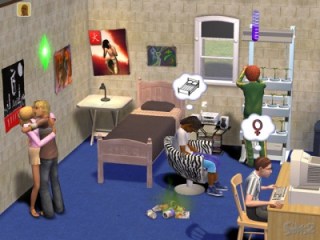
It was Saturday morning, and I kept thinking about the Sims, that role-playing video game in which the people in the town all have little diamond-shaped crystals hovering over their heads, indicating their energy and mood levels. When a Sim is content, the crystal is emerald and shiny, a bright beacon of happiness. When the crystal is faded, looking mostly transparent, the Sim is no longer a happy camper. During the course of any activity, the crystal will slowly fade, ticking down, as it were, into misery and joylessness. Fortunately for the game player, something as simple as going to the bathroom with make the Sim happier. But just given the tendency of time and entropy, according to the game’s designers, all Sims will end up in Funked Out Town. And I have made Sims die by leaving them in a room by themselves with no toilet, food, drink, or human companionship. It is awful to see what goes through their minds as they slowly fade into death. I swear I didn’t do this intentionally. I just forgot I’d left the game running and was in the next room watching reality television.

I took the 560 bus again, getting a salutation from the driver who now recognized me. He may be confused on Monday, but I’m betting he won’t care. This time I wasn’t going to wait for the courtesy vehicle. I decided to walk to the light rail station, remembering that I’d seen the conference center from the train on my first day in town last week. Sure enough, a 10-minute walk later, I walked right into where they were serving coffee and continental breakfast. I should have done that all along instead of waiting around for some hotel van.

No sooner had I put a few things on my plate that I noticed that a lot of people in the room had faded crystals over their heads. Everyone was as wiped out as me. We were all toughing it out but damn, we looked a lot more rumpled around the edges and worn out than we had just the day before. I know we all wanted to be there, but I began wondering if it wouldn’t have been helpful to have had a nap room, like in my old day care. Maybe minus the story time with teacher.

After a few gulps of hotel coffee, however, I had brightened my indicator by several shades of green, and I said hello to the folks I’d previously met. It was definitely nice to hear a stream of congratulations through the day from people who spotted my finalist ribbon. And in the back of my head, when so greeted, I would wonder anew if I would win one of the top three spots for memoir. I told myself not to get my hopes up.

I figured out which workshop to attend, found my chair and started typing away on my iPad to take notes. I’m the only one at the conference with this thing, and I hadn’t thought ahead as to whether any rabid anti-ebooks people would eschew me for carrying the device. I really do love paper books and find them easier to read, but the screen really is pretty good and when I’m really reading, I can eat through novels, so I appreciate having several in one place. Already this trip I’ve read through The Help, The Scarpetta Factor, and Confessions of an Ugly Stepsister. What can I say, I have eclectic reading tastes. I do miss my days as a book buyer because I loved getting uncorrected proofs and reading things before anyone else. But that was back in the era before Amazon reviews and online spoilers. Advance readers had smaller effects on others.

In the hallway I ran into one of the agents who handles science fiction and fantasy, and told her about my SuperQueers story, and she really liked it, handing me her card and asking for the first 10 pages. That made my morning! At that point, anyway.

It was time to go to the editor pitch session, in which a group of writers sits at a table with an editor and gets their take on our ideas and manuscripts. We writers have only a couple of minutes to give the idea and get feedback. While this may sound a bit insane—and it is—it at least mirrors the amount of time editors generally have to consider projects. I liken it to this:

I don’t think they get a lot of time to get the wrapping on at most publishing houses.

I gave the editor my pitch for my superheros novel, SuperQueers, that I started writing back in 2004 for National Novel Writing Month. It was a total turd by the end of that November, but I really liked my idea and so hey, I kept working on it for the next four years. I refused to watch Heroes because I didn’t want the narrative to disturb my project. I pitched the project to the editor, and she really liked it. I told her I often see the story as a graphic novel, and she thought about that for roughly 2 seconds, before smiling and leaning in toward where I was sitting.

“Actually, I think it’s a movie,” she said. I believe my mood indicator turned as green as the rolling hills of Ireland. I needed to get on this project next, take another look at the manuscript, since it has sat around for a while now, and see what needed freshening up before sending it to the agent, with whom I’d spoken earlier. The editor wanted me to make a few changes to the story so that it would be more marketable to a mainstream audience, unless I’d think that those changes would be paramount to selling out. I actually liked her suggestions. But I’d need to tell the agent, maybe, that it would be a couple of months before I’d be ready to send the manuscript out to her.

More workshops, another lunch eaten standing up while networking. My stomach was really starting to get pissed at me for eating so strangely these past few days. At least there was an awards dinner coming up in a few hours. But oh, I’d probably be nerve-wracked for that. I reminded myself again that I wasn’t going to win anything, so I should just settle down. I thought, nobody is going to give top prize to a sex change memoir, Everett. Get over it.

A writer I’d talked with the previous day came up and asked me if I’d like her speed pitching time slot. For memoir these had closed out two people ahead of me in line, when I’d tried to get assigned one, and she knew that. I asked why she didn’t want it for herself. She’d signed up, after all. Well, she explained, her longer-session pitches to the agent and the editor gave her enough information that she knew she needed to go back and spend more time reworking the story, so a speed pitch session would be a waste of time. I said sure, and we worked it out with the coordinators.

When the time rolled around for the speed pitch, I found the conference room and waited. Four of us were to meet with four agents. We got two minutes at each station, and had to listen out for the volunteers to call time, at which moment we’d move on to the next agent for two minutes. I walked into the room, and considered leaving, because taking one look at the group, I knew none of them would be interested in my project. They were:

  • A woman from a small agency in California who had thrown memoir in almost as an afterthought when she’d introduced herself two days earlier
  • A female agent from NYC who seemed really sharp but would be more inclined to take the next Eat, Pray, Love than Bumbling into Body Hair
  • A young female agent who rejected my email query five or six months ago
  • An older mam who probably didn’t know a transsexual from a puffin

The agent from NYC was my first pitch. She nodded, listened, as I talked a mile a minute. I hoped she could hear my “voice” with the Doppler effect from my almost stream of consciousness prose I’d memorized. She wasn’t the right agent, she liked the idea though. Fair enough.

Next was the young rejector. I told her, “you rejected this query a few months ago, but here it is again.” She honestly looked at me like a deer in headlights. This was a graduate from Northwestern? She seemed taken aback. That’s when I realized I like querying GLBT stuff through the Internet. I don’t like seeing distress on a human being’s face. Not the right agent, I get it. Thanks.

Older guy, taking notes as I talked. I gave him the title first, before my “hook” sentence. He nodded, and looked straight at my chest once he put two and two together. Memoir + story about a transgender person = this guy used to be a chick.

“I like that,” he said, scribbling on his pad, “good phrase, ‘gender reassignment.'”

I didn’t have the heart to tell him that wasn’t a creative phrase, it was just medical terminology. Oh those medical terminologists. Such poets, they are.

“Did you have your surgery in Sweden,” he asked.

“I had it at a strip mall,” I said. This is the God’s honest truth. And nobody gets their surgery in Sweden anymore. He was 50 years behind the times.

I sat down at the fourth table.

“This pitching is really not going well,” I said. This was my opening sentence to the agent. “I think I’ll just be wasting your time. We could talk about something else.” Seriously, I felt almost tortured. Little crystal over my head was ready to instruct me to begin a temper tantrum.

“Well, tell me what it is anyway,” she said. She didn’t smile, didn’t give me any false affect.

“The title is Bumbling into Body Hair: Tales of a Klutz’s Sex Change,” I said.

“Ooookay,” she said, and told me to go on. I gave her the briefest of synopses.

“But it’s funny,” she asked.

“It’s really, really funny,” I said. “Pinky swear.”

She asked for the first three chapters.

I learned that this writing thing is just a roller coaster and I need to get used to it. There is an advantage to having a thick protective coating around one’s nerves.
We finally, finally, at last, made it to the award dinner hour. I’d gone down to the bar during the break for a tall pint of beer, and some email checking time, and I felt refreshed and ready to finish out the conference. Finalists were treated to a glass of wine and a networking party, then were led into the dinner room ahead of everyone else. For some reason everyone else at my table was a screenwriter, but the volunteers assured me we’d been seated randomly with other finalists. The awards themselves were poorly coordinated, and rife with technical glitches, but we managed to get through them, after hearing a Shakespeare-checkered keynote speech by C.C. Humphreys, who was charming, but too fake British for the wife of one of the screenwriters. She tsk tsked through his speech, which I heard because we were sitting next to each other.

“That is not a proper London accent,” she told me. “He’s not really English.” I myself would never have noticed, being that I’m from New Jersey.

They called up the memoir and nonfiction finalists. I took my certificate and smiled as everyone applauded us. That was nice. The woman reading the nominee names and titles seemed confused and slightly repulsed by the first part of my title. The subtitle wasn’t on the screen. I’m sure she wondered if I were just an extremely hairy man, and why anyone would write a memoir about that.

I did not win a prize, but with three agents expressing interest from the conference, one agent corresponding with me from before the conference, and one set of really good feedback on my fiction project from an editor, I think I’ve won more than I imagined I would. And I’ve made some terrific connections with other writers, with whom I keep in contact.

I left the dining room to head back to the main lobby, catch a cab, and go to sleep. On the way out, I ran into the science fiction agent. I told her the editor had suggested I make a few changes to the manuscript. She smiled at me as we walked.

“Oh sure,” she said, “she really knows the business. Just put that PNWA in the subject line, take the time you need.”

I thanked her, and we talked a little about the craziness of this business, but how we love it anyway. In my head I started drawing up rewrite plans and schedules.

I am a very happy green.

First day at PNWA

I showed up at the Pacific Northwest Writer’s Association annual conference having taken the 560 bus from my friend’s house in West Seattle, raring to get there early so I could grab a latte before an all-day writing workshop. It was workshop in the conference sense, not the creative writing circle sense. Which was fine. But I waited a while for the hotel shuttle to show up at the airport, so I wound up waiting until the first break, some hours later, before having anything other than water for breakfast. Poor planning on my part constituted a high level of frustration on the part of my stomach.

I found a seat in the large ballroom—which is another funny word, since I’m fairly sure nobody has ever danced in this room of the conference center—and turned on my iPad. Realization dawned on me when it redirected to a pay-only/give password access page. Only cheap hotels have free WiFi. They need it as a selling point. The Hilton, even the SeaTac Hilton, does not need such leverage over its guests. I saw two women at the back of the room on laptops. Being the extrovert I am, I walked up to them and asked if they knew the password.

“Oh, there’s no network for this conference,” one of them told me, fiddling with her cell phone. “The conference didn’t arrange it.”

I relayed my shock and dismay in her general direction. She responded by walking up to the tech guy in the corner of the room and asking if he could help her get her Bluetooth to work. And wonderfully for us, he used her device to set up a network. What a guy!

She came over to my chair and gave me the password, and I thanked her with great enthusiasm. Now I was online with my iPad and could live-Tweet the workshop. So here’s the transcript, more or less, of what I wrote and sent out today:

PNWA! – Just starting the first workshop…writing the novel. Kind of a big subject!

New writers have a 90 percent failure rate. We’re just like restaurants.

BTW Thanks to Johanna Harness for getting me online today.

You should be able to say what your book is in one sentence.

This is all from Bob Mayer, who has 40 books in print.

The original idea is usually the heart of your pitch.|| sure, but they happen a long time apart from each other.

Write what you want to know. Elizabeth George isn’t British. She’s a damn good researcher.

Write what you read, what you’re interested in. Don’t worry about what’s hot. || he just gave me permission to write about transfolk!

Don’t write from a place of fear. People will know something about you from what you write.

Get each sentence right. Think about every word you put down. || well, I get to this place, but not usually in my first draft.

What makes you shiver, and how can you communicate that shiver?

We’re watching Joachaim Phoenix as Johnny Cash replacing all the instances of “song” with “book.”

It’s an example of listening to agents and getting over fear.

Give readers a good payoff at the end. You want them to get something new out of successive readings.

I already think about narrative structure and character, so whew on that.

How is your idea different? It isn’t. But we create new characters, plot, setting, intent to make it fresher.

Writers need to have strategic goals. Book goals, career goals, writing goals. Perswrvere.

Or, perservere.

Protagonist: must want something, be in trouble, unique voice, be different, be someone readers can identify with

Antagonist: must be someone audience respects/fears, drives the plot initially, should be a single person.

I’m not personally a believer of the single trigger leading to main motivation, but I’m not arguing with Bob here.

Conflict can arise from people having the same goal, conflicting goals, different goals. Be clear about what’s happening.

You must know, before you start writing, what your climactic scene is going to be. We’re not all Stephen King.

Use the POV that will work best for your story. Be willing to dissect your own books.

Look at the narrative flow of a movie by looking at the scene selection on the DVD. Think about what gets introduced first, char or prob.

Details drive your story. Flake on the details, bad news.

Outlining: get it out of your head. You’re a writer, write it down.

Back story should fill half your outline. And it’s all before the initial scene. You need to know all of it, your readers don’t.

Backstory: you can’t use your opening to set up your book.

Make clear to readers what is flashback and what is memory. || I don’t always do this. Intentionally.

The initiating event must introduce the protagonist, the problem, or both. Whew! Bumbling into Body Hair gets both.

Introduce your protagonist before they’re aware of the problem. It helps set their motivation.

The opening scene often mirrors the climactic scene, just at a lower level.

The bigger the story, the smaller the opening. And vice versa.

Think about your first shot. It sets your tone, your story.

Remember that suspense comes from caring about the characters. So make characters believable.

Fate works because it is layered on top of the existing base conflict. Coincidence merely is the conflict.

Break coming up. I’ll be back!

Only have one last scene after your climax. Otherwise you haven’t closed out your subplots well enough.

Show how the protagonist has changed by the end of the story.

Setting is time and place. And mood. And a character.

The when is part of your setting.

Get all five senses involved in putting together your setting.

You have to do intense research on your setting before you write it. Your readers don’t need to know it, you do.

Think about how time affects your narrative structure, conflict, suspense. Time can wreck it or enhance it.

Know the purpose of every scene. Make sure it has its own protagonist and antagonist.

Once you hook, the reader, trust them to stay connected. Don’t jar them and take them out of the story.

I like that we’re watching a lot of Paul Newman scenes in this presentAtion.

Dialogue: establishes character, advances the plot, shows off conflict, controls pace, gives expository info. But beware the last one.

Don’t use dialogue tags. Readers notice when writers say shrieked, exclaimed, sighed.

My takeaway about dialogue is that it’s very easy to get wrong. I speak mine out loud to make sure it’s sayable.

Stuff on writer’s block. Nobody cares about that, right?

Don’t over edit. You leave subconscious seeds that should stay in. It might not make sense to you yet, but it may someday.

3 ways to write: following the outline, followed subconscious seeds, rewrote and added.

You have to be your own best editor.

Have beta readers for your work. They must be good readers, not writers.

Readers point out problems. You’re the writer, you find the solutions. All the problems have to be erased. You can’t explain, you must fix.

Story editing: answer why now, what’s the mood, setting, who are the actors? Do the turning points aid motivation? Conflict escalating?

More editing: can your book be better?

Stick your characters into Maslow’s hierarchy to see where they are. They’re never self actualized at the start of the book.

Your characters all have blind spots. As an author, you need to know yours.

List your characters, their main traits, and their flaws. Flaws can be just needs in the extreme.

Your character has to have motivation and back story, but you don’t have to explain to the reader. At least, not at first.

Time for lunch. Catch you all later!

Checkov: don’t have a gun in act I unless you’re going to shoot it by act III.

Show, don’t tell.|| I know! I guess we all keep doing that if they keep saying it.

Character description: keep it brief, distinctive. Use placeholders of people you know so you have a visual image while writing.

Don’t have your char stand in front of a mirror. || Unless they’re a vampire! Kidding.

Try not to make ridiculous names for your character. Users shld be able to pronounce. || Unless that’s the point. I’ve done it on purpose.

Writers interested in getting published should join the romance writers of America, bc they’ve got the most professionals.

Profile yourself for a week, then see how much time you waste that you could have been writing.

Writers should take the Myers-Briggs. One of the 16 types is author. It’s opposite? Promoter.

Writer’s groups should make sure they’re moving forward. Goals, goals, goals!

Top character trait of writers is the ability to change. || I had a sex change, does that count?

#bookmarket I’m at PNWA, listening to a talk on the book market. Follow me for my live twitter feed.

Only 5 percent of people can change themselves at the rate we writers need.

When characters make decisions, they either dismiss it, feel stuck by it, or stick with it.

Nothing in your writing should be by chance. You’re the architect. Architect it.

Decisions leads to sustained action, leads to change. This is how characters develop.

Moments of enlightenment leads to decisions, which start the process.

The stages of death: denial, anger, bargaining, depression, acceptance. It’s just like publishing!

To show your character has changed, they must act differently.

During lunch break, lit judge agreed with me: tell agents I’m willing to do whatever it takes to get pub interest.

Everything you put in a book, use two ways. Back story, plot grease, character develop.

Don’t be afraid to refer to other points and arcs in the story.

Bob Mayer: I hate it, but know what genre you’re in. You must know exactly what you’re in. 56 percent of sales is romance, FYI.

There is no reality. So think hard about what POV you will use. POV is the number 1 problem writers have that keeps them from selling.

In communication, the receiver is more Important than the sender. So know your readers.

Don’t be afraid to let your books grow. If pub wants more out of one narrative, write more books!

If the reader doesn’t need it, don’t tell them. The more you put In it, the more you may introduce something they don’t like.

Beware the subconscious negative: to be honest, or else, mocked…

Don’t have too many POV angles.

First person is good for a lot, but not for building suspense. || unless readers think the narrator is dead!

Try not to start too many sentences with “the” unless you’re writing omniscient.

A change POV if it makes sense. Read thru to make sure you know when/why it shifts.

Start writing your next book before you start querying your first. Let the first one sit for a while. Get some distance.

Remember it’s voice that sells. Must be distinctive. In third POV, voices must sound different.

The voice that is your best voice is the one you want least to write in. Because it’s so close to you.

You will tend to write in the voice you most enjoy reading.

Ex. Of Courage Under Fire as a way of using POV as a narrative/plot device.

Selling Your Book. When yr story becomes product. Figure out what you want to achieve.

You may be asked to cut, add, simplify, restructure. Do you want to sell it or not?

The writer is working in conflict with their own environment and the publishing world. Have clear goals and plans.

It’s not supposed to be a war with writers and agents.

Don’t spend your time reacting, get to acting. Successful writers get beyond reacting.

Every writer who thinks they have it made fails. Perserverence makes you successful.

Fixed minset vs. a growth mindset. Writers must be prepared to reinvent themselves.

Have measurable goals. External, visible outcomes. Time lock for achieving goals. Keep it positive.

Face your freaking fears. Often the fear is what you have to do.

Ask yourself: what was my original goal as a writer? Should you return to it? Change it? Make it happen.

If you don’t state that you want to be a NY Times bestselling author, you won’t be. Tell others, too, If this is your goal.

Have specific tactical goals: read PUblishers Weekly, go to specific confs, write 5 pages a day,etc. Write down your goals.

Prioritize your goals, but make sure you keep writing.

Keep your options open. Look for direct and indirect approaches. It’s never a good time to be a writer, so get over that.

Study other books like yours. It’s part of your work. It’s your job. Network and ask for help.

Read blogs by agents, authors and editors, but understand they all have a POV.

If you’re type A, publishing will break you of that. You must have persistence and patience.

Have a three year mindset. Publishing’s processes take time.

Traditional publishing is planning for books in 2012, 2013.

You need to figure out what your platform is. Your anger, your idea, your background. Understand the market you’re trying to reach.

If you’ve written a funny story, your query letter should be funny. Match tone.

The aggressive person wrote a good book, the obnoxious person wrote a bad one.

Find the right publisher by knowing imprints, genres, market, small presses, ebook possibilities.

Copyright symbols on queries and ms copies are turn-offs for agents.

Don’t pay attention to slush pile statistics. The slush pile is supposed to be worse than your writing.

Cover letter: 2 para on idea, 2 para on you, one page total. Don’t say anything valenced–no praise or negative comments about your work.

Don’t hold back the ending to your book in the query letter! Give the entire story arc. Be terse with your synopsis, though.

Only mention the pro tag, antagonist, main supporting character. Don’t use bullets in your query. If it’s a genre, say what it is.

Don’t put subplots in your query letter. Just show the main storyline. In a query, less is more.

Think about using snail mail queries. Email lets agents track you, may serves walls to getting representation.

I really don’t like the predictive keyboard on this iPad. It keeps introducing typos!

Go to writer’s conferences and retreats.

Do multiple submissions, don’t tell them it’s a multiple; that’s a subconscious negative.

Agents and editors don’t read like readers. They scan.

They also don’t read in their offices. They cram it in when they can.

If you want to get published in New York, you MUST have an agent. They actually support writers’ careers.

Small pubs with no advances, regional presses, if those are your goals, you don’t need an agent.

Ask agents: recent sales in your genre, how long in the biz, submission timelines, contract types, how do they like to communicate.

Nasty rejections are mostly myth. But if you get one, stop reading and delete it. Just move on.

It’s simple. Just don’t quit. Be wiling to market yourself.

Thinking your agent will market your book is like thinking your OB-GYN will raise your child.

When you get your first book published, market the hell out of it. You have to work hard to succeed.

We want to love indie bookstores, but it’s the big stores that stock all genres. || eh, I still like ’em.

Go ahead and self-promote, even if you’re worried about being self-promoting.

Balance your promotion with supporting others. Keep yourself honest.

Don’t make your Twitter avatar your book jacket. You’re going to write more than one book, right?

Writers, it’s likely you will have to get out of your comfort zone to promote yourself.

Average sell through on a book is 50 percent. That is why publishing is struggling.

Booksignings are not cost-effective. But they’re good for networking and fan base. Get creative with venues.

Publicists are more important for non fiction. Jon Stewart sells more books than anyone else on TV.

Write a book on your blog. You’re going to write 100,000 words anyway.

Think about viral marketing for your book on You Tube. Do everything you can to find your audience.

If you’re a new writer, get traditionally published. 950,000 books last year (out of 1.2M) sold 99 copies or fewer.

If there were a formula for success, everyone would be doing it. Be open to possibility and find what works for you.

Generate good will. It will go far to your success. For more info, follow @bob_Mayer and go to bobmayer.org.

Don’t self publish fiction. Your work will get buried.

Publishers control distribution. That is why ebooks are confounding to the industry.

That’s it for today. I’ll see what I can Tweet out tomorrow, folks. So far so good!

Powerlessness

I’ve been attempting to get through a first draft of a short story, something just this side of speculative fiction, trying not to make it resemble any of the other storylines I’m not recalling since beginning on to work on it. Susanne is dunking herself, meanwhile, into her own writing—hers of the academic, public policy bent, which in this world is arguably weirder than anything I conjure up in pretend-land. But we decided to take a break and play a game of Hand and Foot, which is an intense version of canasta.

Over the hills and behind the orchard, we could see the sky shifting from gloomy to doomy, and when the wind picked up, we wondered if we would get only the southern skirt of the storm, or bear the brunt of it. Quickly Susanne and I went out to the deck and brought in furniture cushions, laid the tables on their sides, and called that hunkering down.

We played our hands, sitting around the kitchen table as the rain began, evolving quickly from small, unintimidating droplets to pouring down sheets of rain. Only the zinnias in a flower box seemed happy about it. I asked if they had any candles in case the power cut out. This seemed to have the effect of an unintended wish, because shortly thereafter, everything clicked off, a thin stream of lights stayed on. It wasn’t a total black out, but it was a darn thin brown out. The kind of brown out that kills things like refrigerator compressors.

When the power went out about 40 minutes into the thrashing, I vaguely pondered how long it would stay off. In Syracuse and Washington, DC, two cities in which I’ve suffered through outages, electricity comes back on relatively quickly, usually only a few hours later. Out here in rural Michigan, it could be off for days, as the line crews head toward fixing things in the population centers first. We found the flashlights and batteries, lit candles, and continued our card game. Much like the first class passengers on the Titanic, I suppose.

Nothing came anywhere near to that tragedy, of course, and I thought about how people have lived without power for much, much longer than we’ve ever had it. We’re so far north that at this time of the year, it is still light outside until after 9:30. We weren’t submerged into darkness until a couple of hours later. But we did immediately feel the lack of air conditioning.

Morning rolled around and everything was still waiting for some juice. I headed down to a coffeeshop 15 miles to the south so I could make a deadline, feeling guilty for abandoning my clan. Around the corner from the house I saw a truck from the power company, hauling a large ash tree off of a power line. One crewman waved me around his vehicle, and I rolled down my window.

“Is this why the power is out?”

“Yup,” he said like he’d been asked this question 2,000 that morning before me. “Should be up and working again in a few hours.”

I thanked him and called Susanne on her cell phone and gave her the good news. She declared that she would communicate our collective good fortune and then return to her nap.

And the zinnias look fantastic today.

In the heat of the dusk

I like fireworks as much as the next person, assuming the person next to me likes fireworks as an annual, but not more frequent, source of half-hour entertainment. But I made the trek into the steamy Michigan night thinking that my niece and nephews would really really very much yes want to see the light show. I learned something new in the process:

  • The 13-year-old girl was more interested in recording the entire half-hour event onto her camera, having almost no interest in watching the explosions with her naked eyeballs.
  • The 10-year-old boy remarked, “eh, you’ve seen one set of fireworks, you’ve seen ’em all.”
  • The 3-year-old was thrilled beyond belief.

So why do we drag out our blankets and children and slap mosquitos off ourselves, pushing through slow-moving traffic to find that last parking spot, half a mile walk away? An extreme need for patriotism?

I plopped down on the ground, cuddling Susanne a little and watching the toddler fight for all the patience he had in him, waiting for the brightness to light up the indigo sky. We found a spot that framed the fireworks by two very large poplar trees, the kind that drove my mother crazy with all of their pollen, and that I played under as a child, because my sandbox caught its enormous shade and was viewable from the kitchen window. I can’t remember a single organized fireworks show that I saw as a kid. Instead we’d light our own fireworks on the sands of Myrtle Beach where we stayed for a couple of weeks most summers. These were procured from our friendly tractor trailer container, parked in the lot of the local Piggly Wiggly, suggesting that The South was a far more dangerous place than New Jersey, where we lived, because such things were illegal there.

Mom was the risk-taker, almost eager to light the blasting caps like she were ready to mine for something under the sand. I have to say she’s an agile one; nobody moved away from the lit fuse faster than she, and on the challenging beach, no less. I have a hard time getting my feet under me just walking, when it comes to sand.

It got so that I liked hearing the booms from the explosions against the sound of the surf from the Atlantic. So last Sunday I didn’t hear that combination, but I’ve learned to be flexible and take things as they come. Hearing kids giggle gleefully while their parents oohed and aahed at the unexpected shapes appearing in the sky was enjoyable enough. But I think in a few years, I’ll have to go back to the beach for Independence Day.

And ask Susanne to handle the fireworks. We all know I’d blow off at least a couple of fingers. I’m a scared Yankee with that stuff.

Four corners and three sheets to the wind

Weddings, I’ve discovered over the years, are as varied as anything—wildflowers, thumbprints, coffee stains. In my life, I’ve been to many, many weddings, including:

  • An actual shotgun wedding in which the bride’s father really had a rifle nearby
  • A last-minute wedding of two friends whose parents had discerned were about to elope
  • A wedding for a friend who had very recently converted to Jehovah’s Witness—still my personal record holder for longest sermon ever
  • A Minnesota wedding in which a few of the guests showed up in sweatpants
  • A wedding in which my siblings and I got so rip-roaring drunk the maitre’d asked if he could cut us off
  • A lesbian wedding held at the infamous Salahi’s Oasis vineyard in Virginia—yes, those Salahis

Then of course there’s my wedding, and we all know what happened there. In case we don’t know, it was a splendid, oppressively hot day and in the middle of the reception, I blew out my left ACL. Apparently, this is a common event, so don’t mock me too badly.

We received word that our friends were going to get married this summer and immediately, reflexively, my mind ran through all of my prior nuptials experiences, culminating, unsurprisingly, with the Why I No Longer Dance to Billie Jean moment. I was ready to move on, as I’m sure everyone else who knows me is, too.

These good friends fall solidly in the “hippie” category of person. What kind of wedding would we see?

We heard from the bride-to-be, who is, among other things, an interpretive dancer, that there would be interpretive dancing. I remarked that their wedding may be the gayest ever we’d seen, even gayer than the gay ones. But the dancing turned out to be lovely. Choreographed by the bride, it highlighted what we were about to experience from the ceremony itself, which also had an original song written by the bride’s father, burning sage and a pagan-lite blessing, a communal turning to the four corners, and a linked touching thing or other, in which we all put a hand on the person next to us, all the way to and including the couple. This would have been a sweeter activity were it not for the 97-degree daylight beating down on us and making the majority of our skin sweaty and damp. The bride and groom accepted our love and support even if it came with some measure of perspiration. We were touched by the sentiment, nonetheless.

The ceremony took only about 40 minutes, meaning that it failed to beat the time of the longest ceremony I’ve experienced, which went for more than 2 hours. People would have died of heat stroke if we’d had to sit out there that long. We made our way to a cocktail hour, sipped at some cool beer, and then seated ourselves for dinner, which was a tasty barbeque buffet. This meant that Susanne ate three pulled pork sandwiches in two days. Suffice it to say she won’t go anywhere near a pig product for a while.

One guest ran up to us, half-drunk, asking if we could locate any empty tin cans so she could attach them to the couple’s car. I looked over and saw that there were already six balloons taped to the windows. I smiled and made a note not to let intoxicated people decorate my car.

After the sun set it wasn’t long until Susanne noticed a bright light at the top of the Blue Ridge Mountains. How obnoxious, she exclaimed. Then we realized it was the moonrise. Score 2,000 points for this wedding, the first I’ve attended with its own moonfreakingrise. Our friends stood outside, watching it and feeling whatever overwhelming emotion they must have noticed at that moment.

Their friends who are in a zydeco band struck up a set and people danced and drank, danced and drank, until the guests, en masse, were snockered. There came a point at which my own level of sobriety became incompatible with theirs—I could see that they were having fun, but we were on different planes of existence. We hugged our friends and wished them well. They were getting ready to settle in for a few days at a resort in Mexico. We were headed back to our B&B and a nice bath with water jets. Same difference, I’m sure.

Cavern of luxury

We’d received warning of the Beetlemania 2010 at our hotel, so online Susanne and I scoped out other options and landed on a B&B. We memorized the Google maps screen, tossing aside any notion that pen and ink would serve us better than memory after being on the road for more than 3 weeks. Who needs things like ink? It was just too 17th Century for us. So off we went, traversing Route 66 through Haymarket, Virginia, Front Royal, and down a smaller highway into Luray. We knew we’d arrived too early to check in, so we met up with a friend for lunch at her hotel, a former hospital during the Civil War. Which side it housed we didn’t know, although our waitress explained that Luray was a Union-held town for much of the war. I appreciate getting a history lesson with my meal.

After lunch, we made our way to Luray Caverns, where we strolled through a large bey of stalactites and stalagmites, and the most amazing, Dream Lake. I couldn’t believe my eyes—the almost-still water reflected the ceiling perfectly, making everything look like we were on the inside of a gigantic clam shell. We curled around the walkways, taking in the formations and enjoying a break from the stifling late-June heat, but it did get a bit crowded in the caverns. This is what I dislike about traipsing through nature: there are too many damn tourists. I don’t have a leg to stand on, given that I’m a tourist, too. It’s not the same as being a resident of DC and feeling some moral justification in condescending to everyone in shorts and Teva sandals.

After the caverns we attempted to find our bed and breakfast. Susanne thought it was on Court Street. This was light years ahead of me, who didn’t know where in the hell it was, having looked for too long at the Google map the night before. We pulled up to the building, finally, after asking a lady in the Luray Visitor’s Center, who thankfully knows the location of each and every standing structure in town. Knocking at the door, nobody answered. Fortunately we knew that this B&B was part of a small conglomerate, so we made our way to one of the other three inns and hoped someone would be around.

Susanne caught the innkeeper just as he was heading out. When she inquired about how we checked in to the other inn, he punted. Just stay here instead, he said, as they didn’t have any guests for that night signed up. Really? I was surprised. He told us the rooms were nice, he wouldn’t charge us any more than we’d already booked for, so heck, we hauled our bags to the second floor and were astonished to receive the keys to “The Boudoir Suite.” Ooh. Boudoir. I hadn’t seriously thought about boudoirs since a senior colleague asked me to meet him at his boudoir, thinking it was a synonym for “office.” I attempted to correct him, but he would have nothing of being told he was wrong.

Inside, we were greeted by a four poster bed and a two-person Jacuzzi in the next room. Not too shabby! We’d lucked out and strangely enough, had beetles to thank for our good fortune. I hoped that this suite wouldn’t be plagued by frogs.

We geared up for the rehearsal dinner by enjoying a 2007 Chateauneuf de Pape wine with Dr. Wine Aficiando, Jody. It was tremendously good, and we compared notes, which Jody took the time to write down, not wanting, heh, to rely on memory alone. What a smart woman. Things go more easily when we write them down, don’t they?

At the rehearsal dinner, which had nothing to do with a rehearsal, we dined on some barbeque and Susanne ate her second pulled pork sandwich of the day. This was not going to end well, I figured, especially since the next day, the wedding day, came complete with barbeque buffet. It may be a while before Susanne heads anywhere near a pig.

Welcome to Luray!

goat on a treeOur trip to DC ends this weekend with a visit to Luray, Virginia, for our friends’ wedding, which is on some kind of animal farm. I have not yet made any jokes about this and promise I will refrain from any undue humor, at least until the nuptials have concluded. But I do wonder if late June is not on a collision course with animal dung in a very foul-smelling way. I suppose I’ll see on Saturday.
Hopefully the text messages we received last night from other wedding guests who’ve trekked out there a few days early are no oracle of doom. For apparently there is a beetle infestation at the hotel where the room block was made. I suppose we should have realized that we weren’t going to get the greatest hospitality experience for $62 a night.

We went online to find another place to stay. Unfortunately for us—and probably the tax base of Luray—there are not a lot of hotels in the town. We didn’t have many options.

Now then, without knowing anyone from the town, and having never set even a toe upon its soil before, we really only had the pictures supplied by each hotel, which we know from prior experience are visual manipulaitons, like Stalin cutting former allies out of his photos, and user-generated reviews, like Yelp and Yahoo!. Here is a sampling:

  • This hotel is very run down, out dated and dirty feeling. I’m sorry, dirty feeling? Did you rub something between your fingers, like grit? Or did you “feel” it was dirty by looking at it?
  • Two weeks later, there was this missive, of the same hotel—Rooms were being renovated, and ours smelled of paint, but not badly. No more whining about dirty feeling rooms. Whew!
  • The food at the Victorian Inn left little to be desired. Breakfasts were delicious and included an assortment of fresh fruit. Val made certain that no one went away hungry. This seems like more our speed! No gritty rooms, no paint offgassing, and best of all, no beetle infestation! Sign us up! But just to be sure I kept up my legwork on the potential pit stop.
  • One review for a cabin was so rip-roaringly funny, in a “oh that must have SUCKED” way that I really can only link to it in its entirety, but trust me, it’s worth the three minutes of reading time. We hadn’t been planning on renting a cabin, so no worries there.
  • The bathroom was old and smelly and a cockroach ran across my arm while I was lying in bed. Hmm, I thought, I may actually prefer a beetle infestation to a cockroach using any of my limbs as an Autobahn.

Overall, the reviews weren’t helpful. The majority of them were positive, but the ones that were negative were so awful they brought down the average rating. And I didn’t want to have to do a regression analysis just to pick a hotel. So we picked the hotel with the Jacuzzi tub, hoping we wouldn’t find a wad of hair floating in it.

We relayed our change in plans to our friend, who replied via text that she’d seen some really bad reviews of the place online. We did not impart to her that we had already read them. It seemed a little like asking the scare crow which was the way to Oz and getting a crossed arm, “both ways” reply.

I shall take copious pictures while I’m in Luray, during my first-ever spelunking expedition. But I’ll note how it goes at the hotel/B&B. So I can add to the din of confusion, of course.

End of the long sun

There were a few things I kept concentrating on last spring in the lead-up to packing all of our belongings and cleaning out the Liar House; one of these was the opportunity to soak in a hot spring, and the other was playing in a pool with my friends’ cute and fun 2-year-old. The hot spring went exceedingly well, but the pool event, not so much.

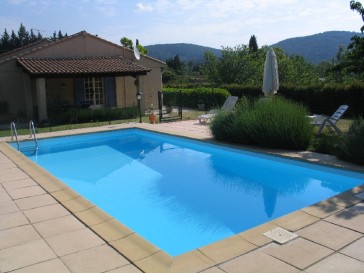
a swimming poolOh, the kid had a blast, so no worries about that. I however was my usual klutzy self and while fetching his ball for him, managed to careen down some steps in the water, and sprain the knee I’d hurt in 2008. Because I was in said pool, the act of spraining my knee joint happened in apparent slow-motion: stepping, stepping, ooooooooooh noooooooooo, owwwwwwww.

I carefully balanced on my not-just-sprained leg and cheered him on. And I did manage to get his ball back to him.

The rest of our trip has been joyfully uneventful of injury, if not sodden in 50+ percent humidity. I grew up in a swamp, I should know how to deal with this by now. For someone who has lived 38 of 40 years in dire summer heat and damp air, I really have gained very little in terms of strategies for contending with the climate. My best trick is to duck into a place with air conditioning. So it is that I’ve only progressed to 1957 standards for heat-busting technology. Not exactly a genius on this score is me.

But our two trips to the pool were interesting for getting to see toddler politics and drama in action.

Our little friend had brought two simple toys with him: the aforementioned, knee-killing ball, and a little toy boat. Say that 10 times fast. Given that parents want even 2-year-olds to appreciate the value of sharing, there still comes a time when hey, that toy is theirs and they get to play with it, too. I watched the pulling matches and the open-mouthed shock at other kids’ rudeness from our little friend’s perspective like I were viewing the war over Helen from a front-row seat.

From my vantage seat, I discerned the following rules: If there is a toy just floating in the water, it is fair game for anyone to play with it, at least for a few minutes. If the free-use toy is handed off to another child who also isn’t the owner, that kid may have to relinquish the object at any time, and they are expected to offer no resistance. If a toy is clearly in it’s owner’s use, another child may ask to see and/or play with that toy by simply putting out a hand as a sign of greeting and interest. They should also feel free, apparently, to add a verbalization—anything from “ahhhh?” to “can I see that, please?” is acceptable, depending on their fluency with language. While it is the toy owner’s prerogative not to hand over the toy, it is very bad form to say no to a polite request. Grabbing the toy from the owner is right out, and will summon apologetic parents from wherever they’ve been lounging, with the unfortunate result that the grabber is removed from the interaction, perchance the entire pool area, and most certainly will have to hand over the object un-played-with. When the toy owner does give the toy to the requester, that temporary user may play with the toy for a while, even for an extended amount of time, like 10 minutes. The amount of time appears to be commensurate with their concentration time.

I watched and learned. Sunlight reflected off of the broken water where the children stood. The fountain pumped joyfully behind them as they learned to share. And somewhere, off in the distance, I could hear Zarathustra’s epic music from 2001: A Space Odyssey. Sharing among the humans had been learned. Next, how to make fire.

But if he needed me to run after his ball again, well, that wasn’t going to happen.

To market, to market

Eastern Market doorI’m very excited to get back to Eastern Market this afternoon; having lived in walking distance of the market building, we went there on a regular basis for food staples and baked goods, and I for one greatly miss such easy access to fresh vegetables and the like. Once upon a time Washington, DC had several market areas tucked into its quadranted neighborhoods, but now, there is only one standing.

Even this market building suffered a serious blow from an electrical fire that swept through the brick structure, and only in the last six months is it back, having been painstakingly restored by the city. Good thing it sits next to one of the wealthiest and most historic neighborhoods in the city, Capitol Hill. It’s so beloved it is the namesake for its own local area, and the corresponding Metro stop. The mayor couldn’t possibly have turned his back on Eastern Market and lived to talk about it.

I’d moved from Arlington, Virginia into the city in 2004, never really venturing over to the brick building, where inside, deli counters, fish and seafood mongers, a baker, a cheese counter, and a couple of produce sellers stood, always grinning from ear to ear while they put edibles in one’s bag and pocketed one’s donation of green paper. Actually, I couldn’t have told anyone that these people existed when I moved because I’d never gone inside. Susanne, however, was a regular visitor. She lived a few blocks away from me and I’d never met her. But she knew the value of the market.

Once we started dating, some weekend or other rolled around and I went with her—much to her astonishment, I’d lived 10 minutes walking time from the place for more than a year and had not yet checked it out—and I was amazed. On Saturdays and Sundays more vendors flocked to the block like they were wildebeests descending on the only watering hole for miles, filling up the sidewalks with everything from pottery and paintings to local fruit and fresh in-season vegetables. Silver queen corn, cut yesterday. Pink lady apples. Yellow watermelon, the leaves still drying on one end. Stubby carrots that tasted like sunshine. Peaches that made even patient people beg while they waited for them to ripen. I could not believe these were my options in a city, and I spent my first working summers at a produce stand at the edge of New Jersey’s farmlands.

Canales' deli and SusanneIt wasn’t long before I’d made friends with the weekday vendors and knew what kind of small talk interested the weekend folks. Susanne just shook her head at me doing my extrovert thing. After we’d gotten engaged, the deli owners would ask us how the planning was going. Their daughter had tied the knot the year before and had lots of advice and enthusiasm for us. I totally fell in love with Eastern Market, but it had shown me its affection first.

We had just decided to try a new kind of sausage every week and were fixing to grill up some weisswurst when I heard about the fire in the South Building, the technical name for the weekday market center. I was crushed. We ventured over to see how bad the damage was, since brick seemed like a fairly sturdy construction material. The roof hung down in strips, the big gaps letting in the evening sky. Bricks sat in their rows, tidy, scorched, looking ghostly. This was a gravely wounded structure, and we weren’t certain anyone would get it together enough to repair it.

But the the groundswell of support came loudly and quickly, businesses saying they’d donate what they could, the mayor making all kinds of near-frenetic-sounding promises, and the proximate school lending over its playground so a temporary building could be erected while the displacement of the vendors continued. I was heartened that everyone’s focus was on the owners of the market shops and their families; we made it a mission to head over there at least as often as we already did to keep buying from them. And they counted us among their regulars, too stubborn to let a little 5-alarm fire get in the way of cured meat.

burned out Eastern market buildingThe restoration work began with the demolition of the ruined roof, and its reconstruction. Those days at the market we would make our purchases with the cacophony of drills, hammers, and saws cutting through the air to our ears.

The temporary building was sturdy, but reminiscent of what was probably dotting the landscapes of Iraq and Afghanistan. We didn’t care for military housing for our peaceful market, but we were glad the war hawks had invented something we could use to keep the vendors going.

The city sponsored a mural contest, inviting artists to paint window panels while the work continued. These would at some point—some point being when the glass was ready—be auctioned off to help pay for the restoration. It was as if art didn’t want to be left out as a helper to save the heart of the neighborhood.

City managers closed off 7th Street SE next to the market so the weekend vendors could gather there, since there was a fenced perimeter around the building, taking up a good chunk of the sidewalk space. It was brilliant, and why hadn’t they done it before?

restored Eastern Market buildingWe saw the estimated time of completion for the project and again were saddened because we knew we’d be moving away before its rise from the ashes. But last January we were back in town, and got to walk through the redone space. I could still see the sun through the roof, but this time it was because of a lovely line of sky lights. Eastern Market was back.

And so I smile every time I see the old brick building with its la grande dame makeover.

Jesus Christ on parade

My premiere gay parade took place in Syracuse, New York, in the early 90s, heralding the theme of Out*Rage*Us, which hopefully is self-explanatory as a message. We were 300 brave-enough-to-march souls: the owner of My Sister’s Words, the feminist bookstore, several students and staff from Syracuse University, a few employees of Carrier air conditioners, a few more from the local Phillips Magnavox factory, and some other locals. We took all morning to ready some jury-rigged floats and signs, and marched down what was likely the shortest parade route I’ve ever seen—four blocks in Syracuse’s downtown. The actual marching was over in minutes. We didn’t even have a chance to get bunched up as paraders, and that never gets avoided. It would be a couple of years before I would march in New York City’s Pride parade and if this was a triumphant moment for a newbie gay, that was like being dropped in the middle of Mecca at pilgrimage time.

Many years later, I moved to DC and grimaced every time I saw the “Capital” Pride signs. It’s Capitol, people, like the place, not like the investment. Whatever, they stick with this egregious error like it’s a tradition. Maybe nobody wants to buy out whoever owns capitolpride.org.

I’ve gone to this DC parade at least a half dozen times since I moved here, and it’s always the same:

  • It’s totally over-commercialized. I swear I have heard an MC at the musical stage, next to the actual Capitol building, proclaim, “Welcome to DC Pride, sponsored by Absolut! and Bank of America! Because every LGBT-identifying person needs to be drunk while wielding a checking account. What? This year they even had a “float” for Frito-Lay. Frito-freakin-Lay, people. This “float” was a Frito-Lay delivery truck with some rainbow flags duct-taped to the sides. This is what Susanne refers to as a “phoned in” float, cuz I know that truck just ditched the flags and turned the corner onto Massachusetts to make deliveries to the Giant Foods store like it’d never been throwing bags of Doritos into the streets for free. Damn closeted Frito-Lay truck.
  • It’s too hot to cheer. I understand the Stonewall Inn riots happened on June 28, 1969. It was New York City’s finests’ problem that they pissed people off in the heat. And now it’s every queermo’s problem, as we stand around fanning ourselves with moist paper, waiting for an interesting float to pass by, or at least the DC Cowboys. They shoulda done better at the America’s Got Talent show. If they can stay synchronized on a moving truck bed, well, that would throw people like Susan Boyle, I bet. The heat melts us all so quickly, even with the parade starting at 6:30, the best we can do is attempt to remain vertical, although clapping does generate a pithy breeze.
  • There are too many straight people. I can tell that DuPont isn’t the gay central it used to be, because I saw a hell of a lot of confused-looking straightniks yesterday, walking across the street, some of them in the middle of say, marching bands. People, that is rude as all get out! Pretend just for this evening that you’re afraid of us, okay? Next thing you know they’ll be pushing their baby strollers through Robert Novak’s funeral procession. I bet that actually happened.
  • Too many politicians come a’calling. Every single person running for every single office in a 40-mile radius was in the parade yesterday. The current mayor. The wannabe mayors. The folks running for council. The council-at-large contenders. Sheesh, I just wanted them to go away. Ain’t nobody gonna vote for them just because they showed up for the Big Gay Parade. It’s a Democratic city, you better be gay-friendly! Walking in a parade is the least you can do, especially when your GLBT Affairs Office does nothing for the community (I’m looking at you, Fenty).
  • Confusion regarding what kind of parade this was. All of the aforementioned politicians brought with them mardi gras beads, each some kind of color that was supposed to indicate which politician one supported. In this regard, it was coincidental that many of the folks running for office had colors for surnames: Orange, Gray, Brown. But clearly, the most gay-friendly pols were the ones who tossed us rainbow-colored necklaces. Susanne remarked that no way was she going to flash anyone for beads.

We watched, we waited, we saw all manner of church groups trolling for more congregants—excuse me, recruiting, excuse me communicating about their services—and we began wondering where the leather-clad men wearing chaps were all at. It’s not a gay parade without furry butts to avoid seeing.

At some point, our feet began signaling their discomfort, but there was nary a bench or spare spot of curb. The parade was in full tilt, bands of PFLAG people, united Methodists, gay foreign service workers (only in DC’s parade), and the always lively Different Drummers. Very few activist groups, and certainly none of the intentional freaks of the April Fool’s Day Parade in San Francisco graced the asphalt. If conservatives like Rush and Ann Coulter are concerned for the revolutionary potential of this assembly, rest assured they need not be.

The parade was drawing down, and I heard someone near me catch their breath. Up in the sky, a rainbow. A real rainbow.

Apparently God showed up at the event!