I’ve been curious about the people behind the newer eateries in downtown, so I decided to ask a few of them to give interviews about their lives as business owners, gourmands, and as part of a revitalized, local food community here. Last month, I sat down with the owners of the Colville St. Patisserie; this time around, I talked with the owners of Graze, a sandwich shop overlooking Mill Creek, and a catering business. Becca and John Lastoskie came to Walla Walla in a very food-model way: by sampling towns across the Pacific Northwest for a few days each. After some thought, they realized this was the town for them.
 EM: Tell me what drew you each into cooking.
BL: Well. . .
JL: You first.
BL: I was putting myself through school and working at the Olive Garden, and the kinds of friends that I had were really cool, and they were talking about how they were going to go to Paragary’s in Sacramento, and how great it was, and I had no idea what it was. So I went in and applied for a job, and it was this whole, brand new world. I started hostessing and did that to try to get to waiting tables and I bartended for a while. I did that for a long time.
JL: You did that for ten years.
BL: I did that for a long, long time.
JL: Yeah, and I knew nothing about good food. I started working as a dishwasher at an Italian restaurant. Went to college, got a degree, and as I was just finishing up college I got a job making French fries, chicken strips, and another cook there said, “my brother works at the best restaurant in Sacramento.” I really liked to cook, but I didn’t know anything about what the food was, or what, but I thought if his brother could get a job, I could get a job, so I met the chef and he asked, “what can you make?” And I said “I can make ranch dressing.” He asked, “how do you make ranch dressing,” and I gave him the recipe for it, half-part buttermilk, half-part mayonnaise, packet. And he was impressed, so he hired me. And I met Becca the first day working there.
EM: Wow. And that’s when you knew this new world of stuff was really interesting?
JL: Yeah, it was like the second week of work at Paragary’s and I had a sandwich with rosemary, pumpernickel, artichoke hearts and other things and I thought this is the best thing I’ve ever had in my life—what did you do? Is there magic dust in it? And from there I just turned to learning.
EM: Okay, so fast forward now to Graze and what’s your vision for your restaurant?
JL: You go first.
BL: Um, boy. Graze is . . .
JL: It’s like counseling, we’ve never done this before.
BL: The sandwich shop is kind of what we always thought it would be. I think the menu could be a little bit bigger, I think there are a few things I would change a little bit, but we’re just starting out having never done this before, but we’re on track with what we envisioned: simple, for people who don’t know much about food, and when they come in, might keep trying something different.
JL: They’ll start with the turkey bacon panini, and then they’ll see something with Béchemel, and say, oh wow, let me try that. Not to try to teach people but to have good, nice, honest food, we should be able to fit all people, have them walk in, want to eat something that’s really good, and I think we’ve kind of hit that whole demographic. When you look around the room, oh, there’s a couple kids who really know what they’re doing, all the way to someone who probably eats Chef Boyardee Stroganoff every night. And they’re equally comfortable ordering off our menu, so I think it’s the one great thing, we can serve all. We get them all. Not enough kids. We see two-year-olds, and then we don’t see them until their teens.
EM: You have some complicated flavor profiles in some of these sandwiches. How did you develop the menu?
JL: How would you know, Everett, you always get the turkey sandwich!
BL: He always gets the turkey sandwich?
EM: No, no, I get other things there.
JL: Turkey sandwich, no tomato. [Ed. note: this is patently untrue.]
BL: I don’t know why people put tomatoes on everything anyway. Even when they’re not in season, when they’re not good.
EM: So tell me, how did you come up with the menu?
BL: Well, we knew we had to have some standard things.
JL: You have to include things that make people feel comfortable.
BL: And then, we love chimchurri sauce, so we put that on. And that’s based on seasons, too; you can always get parsley and cilantro.
JL: Yeah, and the menu actually revolves around the space, because it’s based on a Subway. There’s no stove, there’s no oven, so we looked at the space and said, okay, how do we make this work for fast service, good price, and we developed a menu. A few years ago when we were catering, we thought a good promotional thing would be to go serve something at the farmer’s market. The first week at the farmer’s market, we made Belgian waffles.
BL: Oh my God, it was just bad.
 JL: Belgian waffles with raspberries and fresh whipped cream, it’s just heaven when you make them yourself. So, we thought we’d also make panini. Waffle for breakfast, then as the day goes on, panini. Well, I burned one out of three waffles, and I was so angry about it. For every waffle that I gave somebody that they paid for, I was basically giving it to them for free, because I’d burned the previous one and undercooked the second one, and they’re standing there for 15 minutes watching me fumble around with the waffle iron, but the paninis we sold out of those right away. Then I said, okay, we’re going to do paninis, and we sold out again, and so we started serving the turkey bacon panini that we serve here, and five weeks later, we’re selling 120 paninis. So we realized we were on to something. So that’s how the sandwich shop came about. Since we have a catering business there’s no way we’re opening a real restaurant. We’re cautious—you can lose a ton of money opening a restaurant. But that’s the evolution of it.
EM: Why Walla Walla? What is it you think about Walla Walla that’s interesting or a good place to set up shop?
BL: That’s a really good question. (laughs)
JL: It’s a good story. We were living in downtown Sacramento, on the verge of a [bad] neighborhood. In one direction, it was pretty nice, but 180 degrees in the other direction, it just got incredibly bad. Two blocks away were two murders. We decided to move to Portland, and then we started reading this book, called The Next Great Place, about smaller towns with a great quality of life.
EM: Was Walla Walla in that?
BL: No, no. Not at all.
JL: No. Although Walla Walla would probably be in that book if they rewrote it now.
BL: I’d always thought about living in a small town, I’d thought I’d enjoy small town life. Coming from California, it sounded kind of cool. So we thought, okay, we’ll sell our house and we’re gonna move to Portland, so we packed up with our kid who was 17 months old.
JL: We decided, after reading this book—
BL: You didn’t read the book.
JL: Yeah, I did. I read the book. So, we packed up our son, our stray dog, we tried to live in each of the towns on our list for three or four days. It sounds incredible, but we didn’t have a great plan.
BL: And in my mind, we went the wrong direction. We went northeast, to the desert side of the mountains, instead of going up the coast. We went the wrong way. So we made it up to Coeur d’Alene.
JL: So on our list were all the like, small cities and towns—
BL: Bend, Missoula, Boise. . .
JL: And then, when we were in Bend, someone actually said, a young couple with a couple of kids, said, what you’re describing sounds like Walla Walla, you should go there. Okay, so we stopped here on our way to Coeur d’Alene, and after just a couple of days, I was saying to Becca, it’s great, this is the place to come to. She agreed with me. So then we came here, and fought, madly.
BL: And we’d never fought before.
EM: But at that point?
BL: Yeah. Well, not so much a fight, but a discussion about what to do. We wound up going to Portland after our trip, and had a really good coffee. We went to a bookstore, heard some great music, talked about it.
JL: We decided [to] drive back to Walla Walla, spend a couple nights there, and see. We came back, and we stayed. It was completely the right move. If we were going to do anything with food, there were talented people here, didn’t have to spend a lot of money, or need a lot of experience. I was a school teacher in Sacramento, and to move out to Portland or Seattle to set up a shop and get in there was not as appealing.
EM: Are you saying there is something less pressured about Walla Walla?
JL: I looked around and decided, a catering business would work here. It’s way less risky than opening a restaurant. It’s more precision-oriented. At a restaurant, you’re gonna buy a bunch of food and you hope people walk in the door. If people don’t walk in the door, you throw a bunch of food away. So, at the time, nobody in Walla Walla was doing that kind of food in a catering business.
EM: It can be hard to break into a catering market.
JL: It was difficult, yeah. But a lot of interesting things happened and in a couple of years, the catering business—we have turned into a very large caterer, with lots and lots of events, with fairly high quality [food].
EM: Where do you see yourselves with regard to local or organic producers and the market here?
JL: The food costs for the catering business—my costs for the catering business are higher than any other catering business in town. I spend plenty on goods from local farmers. Number one we do everything from scratch. This summer we’ll probably buy 80 percent of our stuff from local farmers. As for the sandwich shop now, pretty much all of our stock is coming from a couple of local farmers. And I’ve told them, you walk in the door with it, we’ll buy it. So, they show up with salad greens, whatever. For summer weddings, I’ll show up at the farmer’s market at 7:30 in the morning and buy five giant boxes of things, fill up the back of the truck, take it to the catering kitchen, prep it, and then we’ll go to the wedding. So we try to have a good relationship with everybody who goes to the farmer’s market. It’s good to be tied to a community. We were asked [to do a May 15 wedding] so we got meat from Thundering Hooves, asparagus from Bonnie, we got milk and cream that we turned into butter from Pure Eire, we got garlic scapes and lettuces, the whole meal was 98 percent local.
BL: So how can you go wrong?
JL: Even being that local, you can get caught forgetting some of the things that are available, so on a menu that you arrange with somebody two months in advance, I show up at the farmer’s market and buy my stuff, and then I see something that would be awesome for today, but I can’t not give them what I promised, so it’s hard. We may show up with a different menu than we drew up! So that’s our relationship with food providers here. The only thing that stinks is that we only have a growing season of 8 months.
EM: Do you have anything you want to share about your next plans? New menu items?
JL: We’re opening three restaurants simultaneously.
BL: John maybe is, his vision is he’d like to open more Graze sandwich shops. Maybe one in Tri-Cities. I’d like to expand Graze here.
JL: The idea was to provide the high quality of food at a lower price with the fast service of a Subway. I want to have one central kitchen that serves a few stores. If we’re talking big picture, we still don’t know what’s really going on, but if [the sandwich shop] does what I think it can do, then the idea of putting up a number of them all in a similar geographic area, servicing from one central kitchen, isn’t crazy. It’s reproducing a whole nother business model. At the heart is the food. And really, I just want to eat nice stuff. I wouldn’t want to sell food if I felt like people weren’t getting a value. If you don’t walk away saying, I’m really glad I had lunch there—I never want anyone to walk away saying I don’t like what they did, because if they did that they wouldn’t want to come back.
EM: Now that summer is upon you, what ingredients are you excited to work with?
JL: I went to see this lady; we have a blog, and we went to Portland, and saw padrone peppers, and we got an email from a woman who said she had a whole back yard full of padrone peppers. I never met her, I don’t know who she is, but I really want someone here to grow padrone peppers. Put the word out, Everett.
EM: Okay!
BL: I’d love to see just basil and tomatoes. They’re just summer to me. I know it’s the same answer anyone would give, but to me, that’s what summer tastes like.
EM: Anything else you want to add?
BL: I’m really glad we’re doing what we’re doing.
Graze’s hours are posted at http://www.grazeevents.com/
 After lunch, we made our way to Luray Caverns, where we strolled through a large bey of stalactites and stalagmites, and the most amazing, Dream Lake. I couldn’t believe my eyes—the almost-still water reflected the ceiling perfectly, making everything look like we were on the inside of a gigantic clam shell. We curled around the walkways, taking in the formations and enjoying a break from the stifling late-June heat, but it did get a bit crowded in the caverns. This is what I dislike about traipsing through nature: there are too many damn tourists. I don’t have a leg to stand on, given that I’m a tourist, too. It’s not the same as being a resident of DC and feeling some moral justification in condescending to everyone in shorts and Teva sandals.
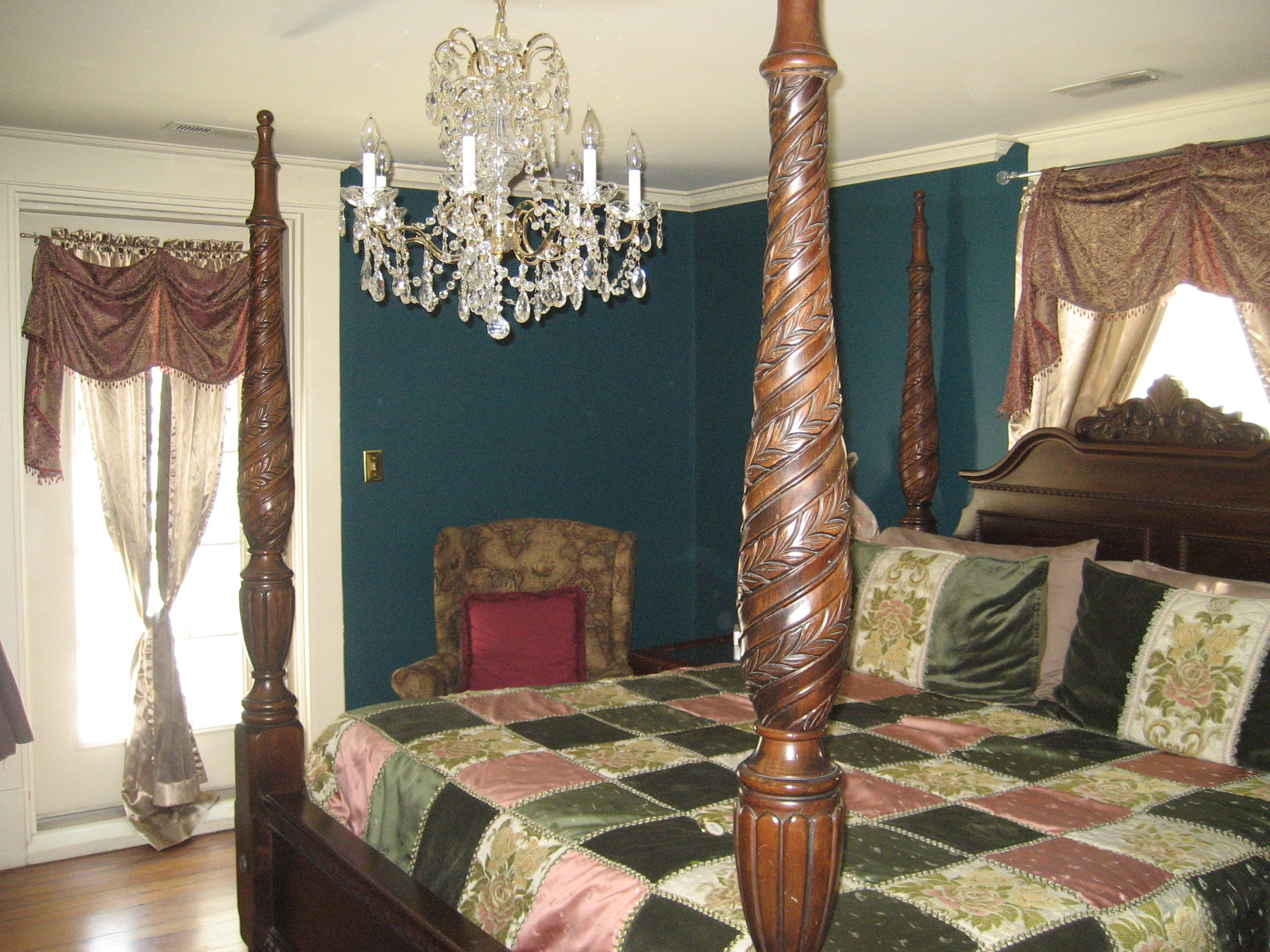
 Susanne caught the innkeeper just as he was heading out. When she inquired about how we checked in to the other inn, he punted. Just stay here instead, he said, as they didn’t have any guests for that night signed up. Really? I was surprised. He told us the rooms were nice, he wouldn’t charge us any more than we’d already booked for, so heck, we hauled our bags to the second floor and were astonished to receive the keys to “The Boudoir Suite.” Ooh. Boudoir. I hadn’t seriously thought about boudoirs since a senior colleague asked me to meet him at his boudoir, thinking it was a synonym for “office.” I attempted to correct him, but he would have nothing of being told he was wrong.
 Our trip to DC ends this weekend with a visit to Luray, Virginia, for our friends’ wedding, which is on some kind of animal farm. I have not yet made any jokes about this and promise I will refrain from any undue humor, at least until the nuptials have concluded. But I do wonder if late June is not on a collision course with animal dung in a very foul-smelling way. I suppose I’ll see on Saturday.
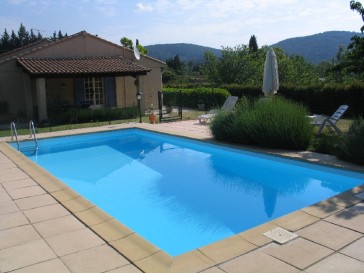 Oh, the kid had a blast, so no worries about that. I however was my usual klutzy self and while fetching his ball for him, managed to careen down some steps in the water, and sprain the knee I’d hurt in 2008. Because I was in said pool, the act of spraining my knee joint happened in apparent slow-motion: stepping, stepping, ooooooooooh noooooooooo, owwwwwwww.
 I am a fan of the contest. I just plain like the concept that for the trouble of sponsoring my own entry into it, I have earned the privilege of getting X chance in millions of winning whatever thing it is that I covet. It’s a tiny taste of exhilaration, made all the smaller by my intellectual understanding that I’m probably not going to win bupkus. But in the years of me entering contests, I have walked away victorious a few times. It’s like a siren’s song, drawing me back, distracted by whatever bauble or accolade is dangled in front of my head.
 A Panasonic stereo and 25 CDs. This was the strangest contest to enter in my personal history with contests. Sponsored by Dodge and Mothers Against Driving Drunk, or whatever it is they’re called, entrants had to guess how many CDs (in their cases) would fit inside the M.A.D.D. Music Mobile, a van that apparently was roaming around my college campus, hunting for drunk drivers, or something. That really sounds like an unsafe practice, but okay. I went upstairs to my dorm room, called 800 information (there was no Web, people!), and got the number for Dodge headquarters in Detroit. After a series of phone calls, I had the cubic dimensions of the van’s interior. I also, at the time, owned 12 CDs. I pulled two away so I would have an even 10, and I measured the cubic area, did some rough math—math keeps being so important! damn math!—and then went back down to the lobby to put in my guess. I’d all but forgotten about the contest when I got a letter in the mail, saying I’d gotten first prize. I’d missed the grand prize, which was oh, a sports car, but what would I do with a sports car in the snowiest place in New York? Crash it into the Music Mobile, probably, or a Delta Delta Delta on her way back from a drunken formal.
 I’m very excited to get back to Eastern Market this afternoon; having lived in walking distance of the market building, we went there on a regular basis for food staples and baked goods, and I for one greatly miss such easy access to fresh vegetables and the like. Once upon a time Washington, DC had several market areas tucked into its quadranted neighborhoods, but now, there is only one standing.
 It wasn’t long before I’d made friends with the weekday vendors and knew what kind of small talk interested the weekend folks. Susanne just shook her head at me doing my extrovert thing. After we’d gotten engaged, the deli owners would ask us how the planning was going. Their daughter had tied the knot the year before and had lots of advice and enthusiasm for us. I totally fell in love with Eastern Market, but it had shown me its affection first.
 The restoration work began with the demolition of the ruined roof, and its reconstruction. Those days at the market we would make our purchases with the cacophony of drills, hammers, and saws cutting through the air to our ears.
 We saw the estimated time of completion for the project and again were saddened because we knew we’d be moving away before its rise from the ashes. But last January we were back in town, and got to walk through the redone space. I could still see the sun through the roof, but this time it was because of a lovely line of sky lights. Eastern Market was back.
 The parade was drawing down, and I heard someone near me catch their breath. Up in the sky, a rainbow. A real rainbow.
 There were a few odd moments on our 3,500-mile journey to DC, not the least of which was the “I have no guilt” stockbroker cheering on the recession in Lava Hot Springs, ID.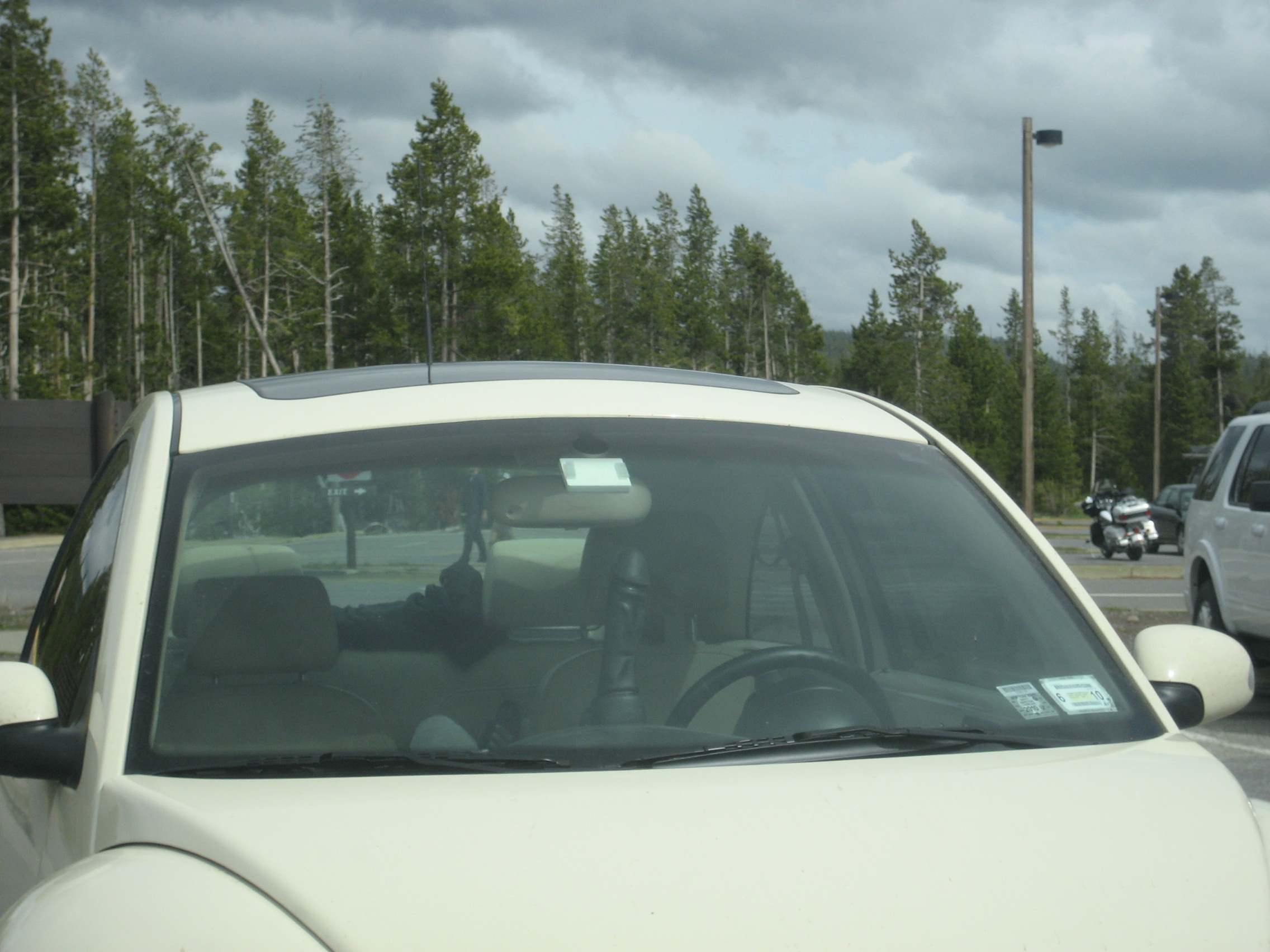





 Trans/plant/portation