Book Review: The Daughter Star
 Nobody writes a sullen woman like Susan Jane Bigelow. Don’t get me wrong; they have their reasons for their moodiness. Stuck on something of a forced sabbatical with their repressive family in a repressive country, girlfriend unreachable, this corner of the galaxy about to get into an interplanetary war—there are a lot of stresses on young women like Marta Grayline. Bigelow settles us into the tension almost immediately with two quick flashes of prologue, and then we’re immersed in Marta’s world, a familiar story for some of us, even in this far-future science fiction setup: can I hide my queerness while I’m spending time with my relatives?
Marta has tried in full earnestness mode to find her place, even if her choices began with an intense need to leave her home country, Gideon, on the gravity-heavy planet Nea. It’s almost as if it took so much energy to get distance from her preacher father and smothering family that Marta doesn’t have much left for self-confidence. And yet it’s that very sense of self that Marta needs to make a difference in the war between Nea and Adastre. And maybe conversely, it’s the painfulness of coming from a closed family in a closed country on a less-than planet that fuels Marta’s drive. Bigelow does a great job of layering on the sadness and strife that come with the legacy of paternal choices made for an entire people.
Marta finds herself commanded to join her planet’s forces in the war effort, and her little sister Beth worms her way in as an enlistee. Beth is a great foil for Marta: we’re not sure of her intentions for a good long while, and although she’s certainly from the same building blocks as Marta, she seems to be making different choices than her big sister has. There are a few warning flags as they find their way out of Gideon, but Marta is so excited to be back in her element that she overlooks them. Bigelow gives us just enough in the way of tone and word choice that we should be worried for the sisters, because of course outer space during war is not the same as piloting a trade ship in peacetime. Soon enough Marta’s ship is destroyed and she finds herself a captive on a space station, a clear prisoner of the crew there. And now the alien Abrax who were responsible for the Earth’s demise and who have been unseen for hundreds of years, make their reappearance. Bigelow does a great job of touching these presumably distant points back together—what does one young woman’s legacy, one man’s decision made once upon a time, one family’s grip on a made-up tradition all have in common?
Read the book and find out. Highly recommended. The Daughter Star will stick around in my head for a long while.
 Life this winter and spring has been less about balance and more about fulcrums. You know, like when you’re moving up and down a lot but not getting anywhere. At least a roller coaster has forward momentum and a few thrills along the way. A seesaw just lifts up and crashes down with a jolt at the end of each direction. Nearly all of the endeavors I’ve made since last fall have come with commensurate concussions. Case manager is leaving for a full-time job. Hire new case manager. Send in manuscript to potential agent and wait. . . finally getting rejected by potential agent (but in the nicest way possible). Move office to other side of town, deal with people yelling on the phone that the office has moved. Start new manuscript, get sidelined by a different project. Apply to literary contest, fail to make the finals. Apply to writer’s workshop with no hope of getting accepted.
 I first jumped back in time on September 21, 1980, just a few weeks into high school, but nothing about how that day started was odd in any way. It’s not like the sun popped out of the sky and said, “Hey Jack, how about if you take a trip to a completely different era where nothing makes any sense to you?”
 If only writing were just about writing. If only the time we could dedicate to delicious production would fall into our laps and procreate making oodles of more writing time that we could carry around like a jar of marbles. But barriers to our own prolificacy are real, and grotesque, and numerous. They’re sneaky buggers, shutting us down even when we’ve established a groove, or are in mad love with our story, or if this is the only day of the week where we can carve a new canal into the manuscript. There be monsters here, in the world, with the best of intentions of a writer’s project their preferred fare. To defend oneself I have cobbled a list of such wickedness in the hopes that we all can identify them more quickly and banish them back to their lairs.
 A writer friend of mine sent a question to me, suggesting I should have a column. So let’s pretend I have an advice column for writers. Feel free to add your own advice in the comments! Here’s our exchange: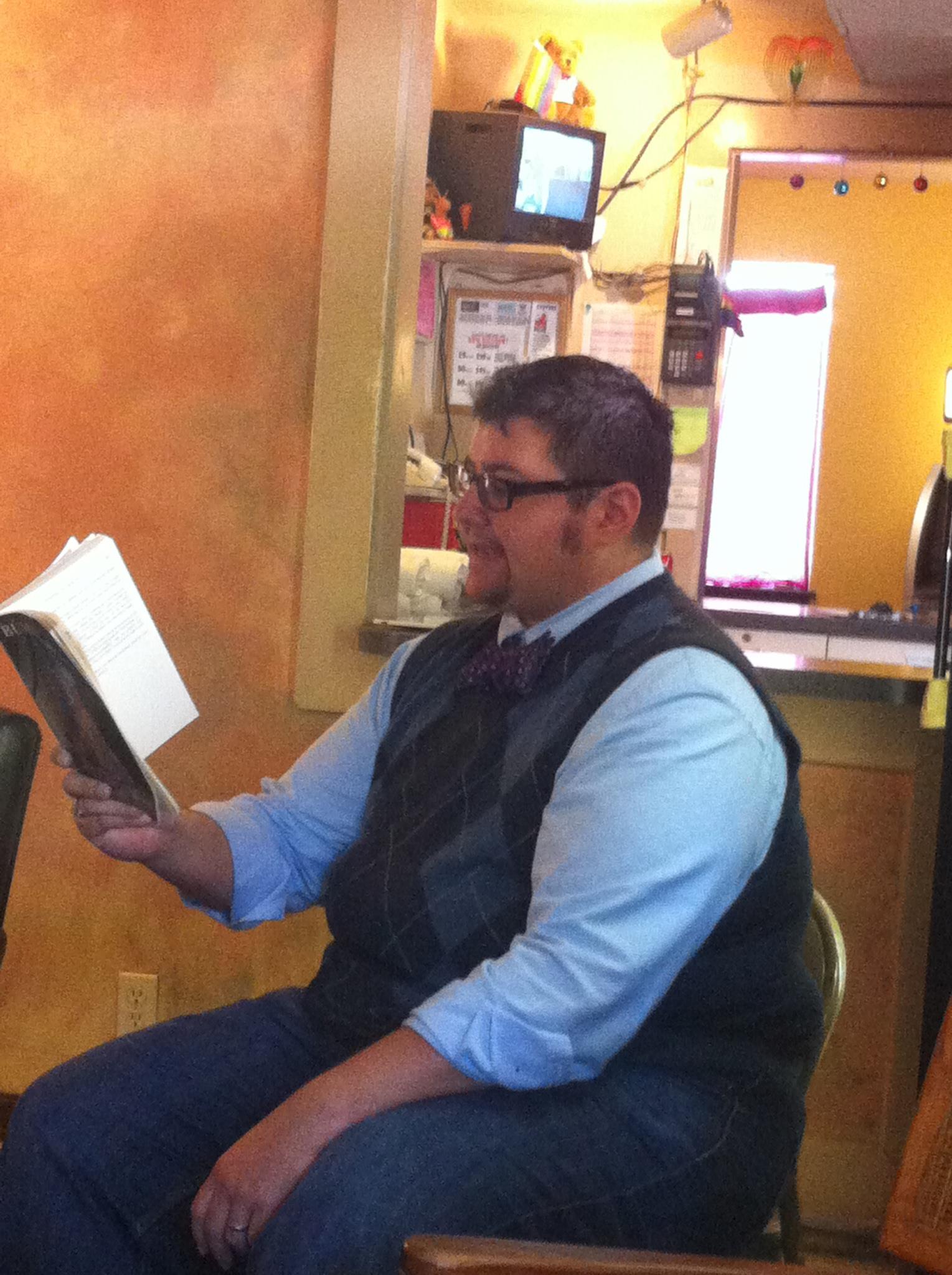
 Not only are jokes on the skids as humor goes–apparently there are more 21st Century ways to make humor than old stand-up one-liners–but coupled with the rise of GPS systems, and jokes about how men never ask for directions sound positively archaic. With a smart phone or in-car positioning system, one never need be mapless again. If our sense of direction is sub-par, no worries. In a new neighborhood or city, instructions for orienteering are just a few clicks away.
 Every now and again I write a little ditty about rejection letters, because in the world of the writer, they happen with great frequency. As many, many more talented authors than I have waxed about how rejections are good events because they push the writer forward, and are a sign that one is engaging in the publication enterprise.


 Trans/plant/portation