There is nothing that fazes the Seattle barista. She is self-assured, extremely well trained, and fearless. Every possible additive, custom request, and black market good has probably been mixed into brewed coffee in this city. I bet I could even find a barista to take my order in Klingon. (Not that I know Klingon.)
There are as many kinds of coffee shops in Seattle as there are permutations of coffee drinks. The sit and work shop, with loads of sturdy tables and electrical outlets. The drive-through shacks that look ready to fall over. Fancy, plush shops with comfortable seating but few places to hook up a laptop. Evil shops that make patrons pay for the wifi. Well, we all know I don’t spend any time at those.
If coffee shops are the standard bearer for commercial space in Seattle, then there are a few set uniforms one wears within their confines. The options, it appears to me, at least in my first month here, include:
The Very Serious Not Happy Rather Intense Intellectual—Ninety percent of these folks are men, because women have difficulty becoming quite this pretentious. Black hooded sweatshirt, rumpled jeans that, if one were to venture close enough, would smell of the carpet from the wearer’s bedroom, and black sneakers. At the height of summer the footwear could be flip flops, but only because the sneakers couldn’t be found under yesterday’s jeans. Optionally this person may be wearing thick black glasses, retro styled. It is questionable whether his eyesight warrants correction, however. But be quiet around him, because he’s writing something very important, and he doesn’t want his craft interrupted.
The Hat-Wearer—Also mostly of the male persuasion. We’re not talking baseball caps, either, since those are so omnipresent as to be unremarkable in every way. We’re talking either the old man’s wool cap like the one here, or the plaid Fedora hat, like the kind popularized by Jason Mraz. They’re definite statement-makers. Nobody puts on either of these head toppers without giving a good stare at themselves in the mirror before leaving home. Should it be cocked a little to one side? Tilted back? Pulled down low? Hmm, so many options to consider for one item. They’re clearly just accessories, as neither does anything to say, keep one’s ears warm in the winter.
The tech geeks—They have walked so far from their office, maybe even three-quarters of a block. They shield themselves from the bright lamp in the sky the rest of us know as the sun. They keep their work badges clipped tightly to their clothing, lest some non-techie refuse them reentry into their natural environment. These are the folks from Yahoo! or Amazon or Microsoft who felt some need to get caffeine from some place other than the 14 Starbucks in their office building. Nevertheless, all they talk about out in the real world is work. Fortunately for the rest of us in the coffee house, they never stay long. Their badges may self-destruct if they’re too far away from their computers for long.
The Shoppers—Lest everyone think I’m sexist, I do admit that this species comes in male and female versions. Few coffee shops in Seattle are all that far from some other retail establishment, zoning being what it is. They’ll sit down with their bags from REI, or Anne Taylor Loft, Sur La Table, or Banana Republic, drink up some brew, and head back out for round 2. We should all thank them for keeping up their end of the economy-consuming bargain.
The Holders of the Blackberries—At first, they look like good friends. Old friends. People who are out in the world, enjoying each other’s company. But then, almost with no warning, the small electronic devices are drawn, like guns at high noon, and then there they are, cramping their thumb muscles, scanning for some tiny typed email that they’ll care about for the next 18 seconds, however long it takes to scroll through, whichever comes sooner. Unless whatever missive is of interest to both of them, they’ll fall silent, typing and scrolling, clicking and chewing on their lips, lost to all of us in their hyperspace environment. And just when one forgets about them, up they’ll pop, back in our shared universe, giggling and tittering, or guffawing about the stupid spam their friend just passed along to them. Oh, those LOLCats are funny!
Despite all of this, I cherish the coffee house as a place to write, because as the youngest of many, I need external stimulation to tune out just to get in my groove. There is nothing worse to me than being able to hear a pin drop. So it’s a wonder why I went with Sprint for my phone service, but that’s another story.
Several writer’s groups in town meet in coffee shops, presumably for their ample flat surfaces and their stimulant-laced beverages. I finally made it to one yesterday, having been flummoxed in my first attempt by evening commute traffic. It was great to meet other science fiction writers, even if there were only two of them, and even if they gave me, individually, conflicting advice. I’ve signed up for a few more meet ups, and overall, I’m sure I’ll have some strong comprehension about how to rewrite my novel in progress. And if I don’t get that, at least I’ll have met some fellow lit geeks along the way. As long as the blackberry people stay away.
Just to note, Everett Maroon owns a black hooded sweatshirt, black plastic glasses, an a Kangol hat. But not a Blackberry.Note #2: Scott Perkins has decided to take some kind of offense to my blog post and make it all about him,but at least he had the courtesy to offer a defense of his hat-wearing, which, cleverly, is apparently for the protection of the people around him, and not his own laziness at styling the hair on his head. Well done, Scott!
Here’s the stereotype: the serious writer, a man of some undisclosed age, forehead pressed into wrinkles of determination, a bottle of almost good Scotch on the desk next to his trusty typewriter, pounds away on the keys creating the Next Great American Novel. Cigarette smoke hangs in the air from the three packs of unfiltered goodness that were previously consumed. He writes in isolation, lost in the characters, nuance, and craft.
Nobody wants to know this guy. This is the prat at the cocktail party who puts down everyone else’s work, deaf to the echoes of his own conversation. This writer is isolated because he can’t relate to anyone, and nobody wants to deal with him.
In reality, at the risk of sounding cliched, writers come in all shapes and sizes. We write all kinds of things, attesting to the more than million books published just in the US last year. And while I may not enlist a Greek chorus to sing behind me as I make words happen on the screen, I definitely need community. I’m not the only one who longs for other writers around me, either. Dozens upon dozens of writer’s lists and hashtags abound on Twitter, there are tons of groups on Facebook, and specific sites for writers on the interwebs, like the blogs and forums on Writer’s Digest, and places like WriterFace.Squidoo has a huge list of online communities, for further reading.
A couple of weeks ago, writer’s helper and publishing pro Jane Friedman interviewed Johanna Harness, a YA author seeking, like many of us are, an agent for her work. Harness started the #amwriting hashtag on Twitter, something used daily now by more than 2,000 writers, myself included. We do this because we want and need community. In her response to the interview, Harness said:
. . . as writers, we often don’t have the resilience of toddlers. A single rejection is like a stumble. “How many stumbles?” we ask. And, of course, the answer is, “as many as it takes.” Do toddlers stop and analyze and blame the floor and the furniture and the people and the dog for their fall? Not in my experience. They may wail, but they also adapt with equal passion.
This is a great analogy, one that the mean, bitter, isolated writer would spare no effect to mock, but it shows the importance of community: a reminder that we face the same struggles as unpublished (and even published) writers, and we all sting when we get another rejection or have another challenging writing day. Community is vital because we can put our few data points together and see patterns—everyone starts somewhere, everyone pours energy into writing well, everyone comes up against what looks like impossible resistance. And everyone thinks of giving up. It’s only when we see that others have been in these positions before that we figure out this is the topography, this is the process. We need to get backed into corners because then we fight for our work. We need to look at our writing and stay humble, willing to revise, always, but not let the bottom fall out and crumple it into the trash or, for 21st Century folks, delete the file and light the laptop on fire. So knowing other writers we have a built-in stop gap to keep us from our most desperate acts when we’re in the throes of self-loathing. Part of the process, part of the process, that frustration.
More pragmatically, community helps set us up as stronger writers. We know where the next contest is about to pop up, who just started a new literary journal, which agents are looking for that werewolf novel one wrote three years ago—but couldn’t sell because the market was all Team Jacobified—that may be just the thing to send in now. Many writers are forthright and helpful, sending out notices about scammers, peppering the Web with links of interest, and the like.
Fellow writers are also great critics. We know weak writing when we see it, but we’re not apt to rip it apart because we have empathy for our colleagues. Writer’s groups may not always be the most effective way of rewriting—sometimes people can’t see past their own creative choices when giving or receiving feedback—but only rarely are they disingenuous. And people who contribute to writer’s groups via a line of invective don’t last long.
I’d been a part of writer’s workshops when I was younger, and there really is nothing like the quickfire exchange of ideas around a room, when one can barely scratch out story ideas because they’re flying in so fast. We all need some amount of quiet time to just write and draft—except those of us who are true co-writers—but it is critical to have a coming back together to re-root ourselves before we forge ahead again.
Maybe people will find these sentiments cloying or over-reliant on others. Writers still need to get their work done, have their own stories to tell, their own voices come through in the work. But it’s a harder thing, for me at least, to pretend to be an island in all of this. I prefer acknowledging my colleagues.
Everett currently writes speculative fiction, memoir, and commentary in Seattle, Washington, and is eager to join a few writer’s groups there.
Over on Twitter last Monday, folks were conversing about the concept of confession—in 140 characters or less, which is more demanding that it might seem at first glance. It got me thinking, as good conversations do, about confession. According to Merriam-Webster, confession means:
1: an act of confessing; especially: a disclosure of one’s sins in the sacrament of reconciliation b: a session for the confessing of sins <go to confession>
2: a statement of what is confessed: as a: a written or oral acknowledgment of guilt by a party accused of an offense b: a formal statement of religious beliefs :creed
3: an organized religious body having a common creed
In the vernacular, confession seems a bit more broad, including the telling of a deeply held secret, not necessarily one created by the teller. But that aside, it’s clear that confession is powerful—character- and plot-changing, something that can twist our expectations of the same—but it also, on further inspection, can be done in a manner of ways, some novel and some cliche. I think there are ten miles between those poles, too. So just to look at some aspects:
When is the confession made? Up in the prologue, to be semi-forgotten until later? Opening scene? Two-thirds through? Final page, leaving up primed for a next novel?
Who makes the confession? Maybe we’ll be reading about a flawed protagonist making up for his/her misdeeds. Maybe we’ve seen into the mind of the antagonist, giving us a more complex picture of that character’s relationship to the protagonist. Maybe the confessor is a side character with a large measure of effect on everyone else.
Is the confession made voluntarily? Are we watching someone with a gun to his head, or a character so distressed they can’t hold it in any longer? Does the confessor think this confession will do good for the telling of it? Or is it made to harm someone?
Is the confession whole? There’s a difference between saying, “Samira is not your mother,” and saying, “I’m your mother.” How would the state of completeness generate further conflict or draw things to a crisis?
Where does the confession take place? Courtroom? Bedroom? Out in the woods over the grave one is digging for their victim?
Who hears this confession? People who will use it for good? For ill? Who will retell it accurately? People who are implicated by the confession? People who already knew the story before it was confessed? People who are not allowed to tell anyone else about the confession?
Confession can sure be hokey. Or absurd and unbelievable. It seems to me that confession is a pretty good barometer of how well one’s plot is holding together; if the confession seems funny when it’s serious, or causes eyerolls for the reader, it’s a bridge to far, and that means the plot has gone too far on its own out of solid story territory.
We should be engrossed in a confession, even if it only leads us to another big moment, but if that’s the case, this can’t be the pivotal moment. We writers all want to think that we can write in this twist and that, and that’s fine, but there can only be one big pivot, because that’s where the characters make their important shifts, if we believe in the “characters must change from the beginning to the end of a story” concept.
I believe in that concept.
Confession is not merely a revelation, and not merely the opening of a new angle to the story the writer has already shared with readers; it must shift something important within the bounds of the story’s world. Protagonist, possible outcomes, direction of the plot, something. It must be concurrent with the idea of that character who is telling it—drama divas usually deliver it with flair: “You can’t HANDLE the truth!” Quieter characters may tell it so softly it goes unnoticed for hundreds of pages. Or it could be something confessed only to the readers by a character not otherwise in the book or the Unseen Narrator.
What’s lovely and fascinating to me is that there are as many kinds of confession as there are characters. And I love it when they’re as well nuanced.
I’ve written before about having the wearwithal for taking up writing as a career, or if not a career, an ambition. There’s writing for one’s vertical filing cabinet, and then there’s writing with the intention of getting the thing published. When one isn’t a writer, it looks like a cakewalk. There’s the throngs of fans, the languid lounging at the hotel pool while on a book tour, the eating of many bon bons, and the excitement of the book signing or reading session.
I don’t think that world ever really existed, much as Truman Capote’s legend would have us believe. Writing is a thing people do because they feel a compulsion to do it. At the writer’s conference I attended this summer, I heard the same narrative repeated by many of the participants there—they have always felt an urge to tell stories, to write things down, to play with language. I have my story about my beloved Royal typewriter. It made me a pugilist just to use it, whaling on the keys and throwing the carriage back to pound another line of ink onto the page. And damned if I didn’t introduce a typo on the second to last line of a sheet. Nothing taught me typing accuracy like not having any correction fluid.
And yet, as soon as I came to the act of writing things down, I learned about rejection. Well, almost as soon. Rejection was nailed to the heels of excitement. This is great! We can’t use it. Welcome to our summer program! Sorry, you didn’t make it to our elite finalists group! You’re a finalist! Sorry, you didn’t win this year. We loved your piece but it doesn’t fit with our line right now.
Often, encouragement mixed with regret. Push, pull. Wait for another day. As Johanna Harness said in her blog last week, those rejections are still progress. It can be challenging to see that when one is bogged down in nos from agents and journal editors, and therein lies the way out of hopelessness.
Not everyone makes their career their identity. We writers often do. Just the word writer implies a connection between the act of writing and the human being performing that action. But it helps me, at least, to remember that this is a thing I love to do. There is more to me than writing stories and memoir and commentary about crazy politicians.
Rejections are never about the writer, they’re about the writing. I saw firsthand when speed pitching to four agents in 8 minutes that even face-to-face, they have no idea who I am or what I’m about. They can’t deduce anything in 2 minutes beyond the language I give them. The looks of disappointment and sincere apology that they’re not into my project are great reminders that I’m seeking a business relationship, and so are they. I’m sure I could have had a great conversation with any of them over coffee or a beer, but that’s a whole nother level of connection we weren’t seeking.
Because rejections aren’t personal, my ego need not get involved. This is tough on a daily basis, or more accurately, just after a nice rejection arrives at my in box. My tendency is to cringe that my writing, what I produced, truly sucks at awful nadirs of suckage, which makes me a bad writer and thus a bad person—see where this train is headed?—but then I recover. It’s my ego that does the heavy lifting here, telling me that actually, it’s just a bad fit for that agent.
To take the Freudian sense of the word, “ego,” in which I understand who I am in the world, and thus my relationship to others, I need to be ego-minded enough to take criticism and rejection and move on. My ego tells me that I still like writing and I still think I’m good at it and publishing is a goal I still seek.
This is different from being an egotistical ass, the vernacular of which means I’m immune to criticism because I think I haven’t earned any of it. This is not a writer with whom anyone cares to work. This is the guy who emails a certain science fiction-inclined agent every day for the last two years with the same bloody query, even though she’s rejected him a couple of times and gone silent to his repetition. This is the writer, peddling her unpublished first book of 160,000 words who just can’t understand why she would ever even consider cutting 60,000 of them, or turn it into two books. Never mind that agents and publishing houses love the multi-book deal.
I try to keep myself honest. I don’t declare that I’m the next David Sedaris, even when others have said that to me. I think I’m a good writer, and sometimes I’m funny as hell, which I hear has quite the comedy club going, somewhere on the third circle. But I do need a tough enough skin, enough confidence, enough ego to keep pushing even after getting rejected. Because it is, in fact, forward momentum.
I’ve heard from a few people recently—in the last few months, for sure—that they’re “against” adverbs. As if adverbs occupy a political position which one could oppose.
The point that each of them made was that adverbs get used way too often by lazy writers. Take the following example that I composed off the top of my head for illustrative purposes:
“Stop it,” said Lucinda angrily. “You know I hate popsicles.”
Do we really need the “angrily” here? No. We can tell Lucinda is angry. Or rather, we ought to be able to tell Lucinda is angry.
In yesterday’s Friday Flash fiction that I posted, I think I wrote “He was livid.” No adverbs present. It was a tell, for sure, but I had other reasons for putting it in the story. Letting an adverb expound on the action in the sentence, however, can take away from the rest of the line. Or, title, as in (already noted by Stephen King) Harry Potter and the Deathly Hallows.
So Stephen King is not behind adverbial use, either. As a long-time King reader, I have to say I’m not surprised to learn this, given his writing style. That’s like saying Ernest Hemingway didn’t much care for compound sentences or long predicates.
Of course adverbs can be used poorly, but so too, do other parts of speech make themselves rather unbecoming. Superlative, excessive, overburdening adjectives can destroy the simple peacefulness of a noun. Nouns themselves become pretentious when authors reach for “practicable” over “practical,” or “sublime” instead of the more accessible “awe-inspiring.” There may be reasons for their usage, certainly, or they could just be a writer pushing too hard or too dedicated to her thesaurus.
Conjunctions and articles, to their credit, are too utilitarian as to be go-to tools for the lazy writer. And verbs, well, verbs can get writers into trouble in one of two ways—the eternal passive voice problem, or its evil twin, the over-active verb. Again, let’s go to fake dialogue to emphasize the point:
“Katrina,” he screamed, “Why did you rub mud all over the sofa?”
“Because you love the sofa more than you love me,” she hissed menacingly.
I couldn’t resist the adverb there, sorry. There is no reason in the world, the whole entire, land mass and oceanic experience of Planet Earth, why we can’t just use “said.” Said is not pretty, not lyrical, not powerful, but whatever. It’s a great worker for what it does—letting the reader cognate that there is speech happening, and by whom, and then getting them to move on to the next bit. What’s important are the words around the verb. Sometimes the verb is important, sure. I would never tell writers to go for the most banal verb possible—”said” being a special exception, in a class of its own—but writers don’t need to hit every verb out of the park. Readers get stopped by highfalutin verbs. Yet, if the verb is right for the sentence, there’s little need for lots of adverbs to shore it up.
For me, as a writer, I don’t want to single out any part of speech and write its death certificate. Language isn’t about trends, and writers who attempt to write only for fashion are writers who will always be behind the times. Adverbs are great, all on their own. There’s no way to answer the question, “How are you” without an adverb. To focus just on adverbs is to frame the subject of poor writing incorrectly. Poor writing leaves a lot of hot mess in its wake beyond just adverbs. There are usually, in my experience, a whole host of similes and other metaphors floating in the water of bad writing. Nay, the cesspool.
Good writing lets us know it’s good writing because we don’t remember most of the pieces, save the exquisite sentences that we mull over long after we’ve closed the book. It’s not the adverb which is the problem.
Call me Captain Obvious, but after reading a lot—and I mean a LOT—of advice about face-to-face pitching story ideas to agents, I wasn’t quite sure how to go about it when the time really came due. So much of it was contradictory, or impossible to do at once, or over the top, or not applicable. So here is my list, after taking myself to my first writer’s conference, of what not to do, as obvious as some of these items may seem. I’m not saying I did these things, but I or someone I noticed did each of the things in this list.
Don’t use your pitch time or session for anything other than your finished work. They want to think you’re really into the thing you’ve written, and hello, you need to show you’re a closer and can finish a project.
Don’t get so into memorizing your pitch that you’re a nervous wreck when you sit down to pitch. I’m going to put on my usability evaluator’s hat and remind folks that we humans hear differently than we read. A few interesting words are fine, but agents aren’t going to dissect your perfect language by ear. I like the notecard approach, personally. You know your project, be confident you’ll advocate for it well, and leave the memorization to the . . . memorizers.
Don’t leave at the last minute to go to your pitch session. I don’t see how huffing and puffing and wiping sweat off one’s brow emits a glow of success. As I’m a classic overthinker, I also need to not give too much ramp-up time to myself, or I’ll work myself into a different kind of stress aura. Ten minutes beforehand to leave the workshop session, etc., is perfect.
Don’t waste your pitch time blowing smoke up the agent’s ass. They have to endure this so often some may have mounted smoke detectors inside their underwear. Which I guess would make it hard to sit, but that’s not the point. I think there’s a middle range agents like to see—where the writer knows a bit about their client list and book selections, and can compare their work with each. But there’s no point to looking like a stalker-in-waiting. That’s just freaky.
Don’t be an island unto yourself. Agents and editors and everyone in the book publishing business expects that writers are good readers—that we have knowledge of the other books in our genre of interest, that we know how to avoid duplicating other well known (or even somewhat known) plots and characters, that we want to contribute to the literature generally. Acting like we’ve been so well holed up in our literary caves that we don’t know what’s going on in the field won’t play well once the agent asks herself how we’ll market ourselves, because the answer will come back that we’ll look like asses.
For email queries, don’t rush querying. I know, I finished my memoir and went straight to the “How to Query an Agent” blogs and books. It was like a hot potato in my pocket, that manuscript. Hey, I have big pockets, okay? Go back and make it tighter. Hack out sections that really don’t need to be there. Let it sit in the drawer for a while and in the meantime, go fishing, catch a movie or *gasp* read a book. When you finally sit down, after all of that, to write your query letter, spend some quality time with it. What was the point in writing the best book ever if you’re just going to send out a half-baked query? The query is the singer of the band—the bassist may be great, but very few people will get past poor singing to notice the bass.
If an agent says no, leave them be and don’t hound them. One agent at the conference I attended says she receives the same query every day, starting more than a year ago. She’s never going to say yes to this person’s project. While that may be an extreme example, it’s a good reminder to respect an agent’s no. Keep refining your pitch and researching which other agents might be better advocates for your work.
I say all this in the midst of getting turned down for representation after the same agent asked for my partial manuscript, book proposal, and then full manuscript. That’s a long way to go in the process just to be rejected. It’s not easy, for sure, but I tell myself that if my project didn’t have any merit, I wouldn’t have heard back from anyone, much less the half dozen who’ve shown interest. And at least I know now that I should cut it down to about 80,000 words. It may be my baby, but heck, I’m trying to sell my baby, so who am I to complain about cutting it a little?
Okay, bad metaphor there. I do not encourage traumatizing babies, let me just point that out.
Writers, put yourselves out there. Keep pushing to be better. One of these agents, one of these days, is going to say yes.
One of the presentations at PNWA this past weekend focused on writing non fiction book proposals, those business-side documents that outline what the market is for a non fiction title and the pitch on why this new idea will sell, sell, sell. Rita Rosenkranz, one of the agents at this year’s conference, presented. I missed the first 15 minutes at an editor’s session, but here are my notes for the rest of her talk. While I’d learned much of this by making mistakes over the past year, I also found a lot of new information that I think will be really helpful for future projects.
What to put in your non fiction book proposal:
On the cover page:
Title
Book Proposal at top
Subtitle
Author info lower right or left hand corner—don’t bury the contact info.
Follow the file format the agent asks for.
Table of Contents (TOC) page—all the sections of the proposal with page numbers
The Overview—should make a case for the book and author showing how it meets a need on the publishing market. Create context for the book. What is the argument for the book. Why does this book need to be? It should not feel generic. It should be about a page, maybe a page and a half. Make sure that you’re not overwriting. Outline your social context that makes the book attractive to a market. Identi the market as well as you can, but don’t overreach or the agent won’t trust you. Talk about what’s practical and what you can control. Know how long it will take you to complete the work, and say it.
Qualifications—personal experience, professional expier., history as a public speaker.
Competition—would the editor agree with your opinion? How will the receiver review your work? What other books are in this market? Look at Amazon to see if your book has merit. You may see all the other books and worry your market is saturated. You have to make an honest case for your book and the reasons you’re particularly suited to write this book. List competing titles by title, publisher, year, and price. Include a description of the strengths and weaknesses of it. What is your twist? How will your book sell differently? Give about a page and half. The summaries should be concise, not long-winded. Different categories will require different time spans you’ll have to go back. Some books are old but still very ore sent in the marketplace.
Audience—be clear about your intended audience, even if it includes cross over. Is it a niche readership, and can you lifer demographics?
Marketing—will you have special sales? Will you buy quantities up front? That won’t clinch the deal, but it’s good to note. Many folks assume back room sales. What Web sites will mention your work? Are there natural tie Ins on the call dar to your work? Are there hooks to your work that could pique media interest? Are you a member of associations that could help with marketing? Could ppl you interviewed for the book help you market it? Read book marketing books. Not all marketing costs a lot of money. Put in your solid platform plan. Red hot internet publicity. Get known before the book deal.
Blurbs—get advanced blurbs for a submission if you can. Not necessary, but helpful. Quotes help attract attention to the work, requires advance planning, you must send the best version of your book to your blurb writers. Avoid using your relatives.
Include the book’s actual introduction, so you can show the voice. It should run no longer than three pages.
Book’s TOC. This sets up the body of work. It prompts a customer’s purchase. Should be comprehensive with a logical layout.
Sample chapters. Must see the first one, to show me how you frame the work and how it will welcome me. Also a key chapter that is a signature of the work, even ifi it’s chapter 20. If you have more chapters ready, let me know, so I can look at them if I want to see more. They will help me determine If I will bond with the author and will want to invest my time. You can put in a handful of graphs or illustrations if you think they’ll help make the book clear to me.
Book content—this should come at the end, since everything has been leading up to it. But don’t stress about the order of the other things.
It’s the single most important thing to sell the nonfiction book. It shows the editor what will be coming. No editor would consider an oral presentation an adequate substitution. The actual writing of the proposal is useful to yourself to work through what you’re writing, to make it the best book possible. It will help you reevaluate the work and that you’re presenting it the best way you can.
Cover letters are very important. The cover letter will show that you can communicate what the book is about, why it’s exciting. You must be adept at articulating what it is. It is your most effective advantage to getting your foot in the door. As a rule, a summary of the work. Just be clear, not lyrical. Second paragraph, about you. How are you aligned with your subject? No disconnects. Avoid saying the work is hard to describe. Don’t say you have 25 unpublished works. Manage a tone that jibes with the book. Limit yourself to one page. Include full contact Info. Don’t go on vacation the next day.
Rejections: we are all rejected, agents too. Rejections are part of our environment. What is in this letter that will help me get better? Don’t let rejection crush you. Be smart and savvy and know that rejection that tells you something is a gift. You’ll be able to get on to the job of selling your work.
Look at Amazon sales. Does the category consistently do well? Some of the numbers on amazon are misleading. Agents have bookscan, though. Just get a rough guess. Obviously bestsellers are doing well.
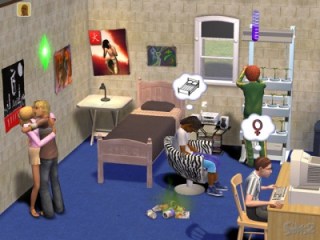
It was Saturday morning, and I kept thinking about the Sims, that role-playing video game in which the people in the town all have little diamond-shaped crystals hovering over their heads, indicating their energy and mood levels. When a Sim is content, the crystal is emerald and shiny, a bright beacon of happiness. When the crystal is faded, looking mostly transparent, the Sim is no longer a happy camper. During the course of any activity, the crystal will slowly fade, ticking down, as it were, into misery and joylessness. Fortunately for the game player, something as simple as going to the bathroom with make the Sim happier. But just given the tendency of time and entropy, according to the game’s designers, all Sims will end up in Funked Out Town. And I have made Sims die by leaving them in a room by themselves with no toilet, food, drink, or human companionship. It is awful to see what goes through their minds as they slowly fade into death. I swear I didn’t do this intentionally. I just forgot I’d left the game running and was in the next room watching reality television.
I took the 560 bus again, getting a salutation from the driver who now recognized me. He may be confused on Monday, but I’m betting he won’t care. This time I wasn’t going to wait for the courtesy vehicle. I decided to walk to the light rail station, remembering that I’d seen the conference center from the train on my first day in town last week. Sure enough, a 10-minute walk later, I walked right into where they were serving coffee and continental breakfast. I should have done that all along instead of waiting around for some hotel van.
No sooner had I put a few things on my plate that I noticed that a lot of people in the room had faded crystals over their heads. Everyone was as wiped out as me. We were all toughing it out but damn, we looked a lot more rumpled around the edges and worn out than we had just the day before. I know we all wanted to be there, but I began wondering if it wouldn’t have been helpful to have had a nap room, like in my old day care. Maybe minus the story time with teacher.
After a few gulps of hotel coffee, however, I had brightened my indicator by several shades of green, and I said hello to the folks I’d previously met. It was definitely nice to hear a stream of congratulations through the day from people who spotted my finalist ribbon. And in the back of my head, when so greeted, I would wonder anew if I would win one of the top three spots for memoir. I told myself not to get my hopes up.
I figured out which workshop to attend, found my chair and started typing away on my iPad to take notes. I’m the only one at the conference with this thing, and I hadn’t thought ahead as to whether any rabid anti-ebooks people would eschew me for carrying the device. I really do love paper books and find them easier to read, but the screen really is pretty good and when I’m really reading, I can eat through novels, so I appreciate having several in one place. Already this trip I’ve read through The Help, The Scarpetta Factor, and Confessions of an Ugly Stepsister. What can I say, I have eclectic reading tastes. I do miss my days as a book buyer because I loved getting uncorrected proofs and reading things before anyone else. But that was back in the era before Amazon reviews and online spoilers. Advance readers had smaller effects on others.
In the hallway I ran into one of the agents who handles science fiction and fantasy, and told her about my SuperQueers story, and she really liked it, handing me her card and asking for the first 10 pages. That made my morning! At that point, anyway.
It was time to go to the editor pitch session, in which a group of writers sits at a table with an editor and gets their take on our ideas and manuscripts. We writers have only a couple of minutes to give the idea and get feedback. While this may sound a bit insane—and it is—it at least mirrors the amount of time editors generally have to consider projects. I liken it to this:
I don’t think they get a lot of time to get the wrapping on at most publishing houses.
I gave the editor my pitch for my superheros novel, SuperQueers, that I started writing back in 2004 for National Novel Writing Month. It was a total turd by the end of that November, but I really liked my idea and so hey, I kept working on it for the next four years. I refused to watch Heroes because I didn’t want the narrative to disturb my project. I pitched the project to the editor, and she really liked it. I told her I often see the story as a graphic novel, and she thought about that for roughly 2 seconds, before smiling and leaning in toward where I was sitting.
“Actually, I think it’s a movie,” she said. I believe my mood indicator turned as green as the rolling hills of Ireland. I needed to get on this project next, take another look at the manuscript, since it has sat around for a while now, and see what needed freshening up before sending it to the agent, with whom I’d spoken earlier. The editor wanted me to make a few changes to the story so that it would be more marketable to a mainstream audience, unless I’d think that those changes would be paramount to selling out. I actually liked her suggestions. But I’d need to tell the agent, maybe, that it would be a couple of months before I’d be ready to send the manuscript out to her.
More workshops, another lunch eaten standing up while networking. My stomach was really starting to get pissed at me for eating so strangely these past few days. At least there was an awards dinner coming up in a few hours. But oh, I’d probably be nerve-wracked for that. I reminded myself again that I wasn’t going to win anything, so I should just settle down. I thought, nobody is going to give top prize to a sex change memoir, Everett. Get over it.
A writer I’d talked with the previous day came up and asked me if I’d like her speed pitching time slot. For memoir these had closed out two people ahead of me in line, when I’d tried to get assigned one, and she knew that. I asked why she didn’t want it for herself. She’d signed up, after all. Well, she explained, her longer-session pitches to the agent and the editor gave her enough information that she knew she needed to go back and spend more time reworking the story, so a speed pitch session would be a waste of time. I said sure, and we worked it out with the coordinators.
When the time rolled around for the speed pitch, I found the conference room and waited. Four of us were to meet with four agents. We got two minutes at each station, and had to listen out for the volunteers to call time, at which moment we’d move on to the next agent for two minutes. I walked into the room, and considered leaving, because taking one look at the group, I knew none of them would be interested in my project. They were:
A woman from a small agency in California who had thrown memoir in almost as an afterthought when she’d introduced herself two days earlier
A female agent from NYC who seemed really sharp but would be more inclined to take the next Eat, Pray, Love than Bumbling into Body Hair
A young female agent who rejected my email query five or six months ago
An older mam who probably didn’t know a transsexual from a puffin
The agent from NYC was my first pitch. She nodded, listened, as I talked a mile a minute. I hoped she could hear my “voice” with the Doppler effect from my almost stream of consciousness prose I’d memorized. She wasn’t the right agent, she liked the idea though. Fair enough.
Next was the young rejector. I told her, “you rejected this query a few months ago, but here it is again.” She honestly looked at me like a deer in headlights. This was a graduate from Northwestern? She seemed taken aback. That’s when I realized I like querying GLBT stuff through the Internet. I don’t like seeing distress on a human being’s face. Not the right agent, I get it. Thanks.
Older guy, taking notes as I talked. I gave him the title first, before my “hook” sentence. He nodded, and looked straight at my chest once he put two and two together. Memoir + story about a transgender person = this guy used to be a chick.
“I like that,” he said, scribbling on his pad, “good phrase, ‘gender reassignment.'”
I didn’t have the heart to tell him that wasn’t a creative phrase, it was just medical terminology. Oh those medical terminologists. Such poets, they are.
“Did you have your surgery in Sweden,” he asked.
“I had it at a strip mall,” I said. This is the God’s honest truth. And nobody gets their surgery in Sweden anymore. He was 50 years behind the times.
I sat down at the fourth table.
“This pitching is really not going well,” I said. This was my opening sentence to the agent. “I think I’ll just be wasting your time. We could talk about something else.” Seriously, I felt almost tortured. Little crystal over my head was ready to instruct me to begin a temper tantrum.
“Well, tell me what it is anyway,” she said. She didn’t smile, didn’t give me any false affect.
“The title is Bumbling into Body Hair: Tales of a Klutz’s Sex Change,” I said.
“Ooookay,” she said, and told me to go on. I gave her the briefest of synopses.
“But it’s funny,” she asked.
“It’s really, really funny,” I said. “Pinky swear.”
She asked for the first three chapters.
I learned that this writing thing is just a roller coaster and I need to get used to it. There is an advantage to having a thick protective coating around one’s nerves.
We finally, finally, at last, made it to the award dinner hour. I’d gone down to the bar during the break for a tall pint of beer, and some email checking time, and I felt refreshed and ready to finish out the conference. Finalists were treated to a glass of wine and a networking party, then were led into the dinner room ahead of everyone else. For some reason everyone else at my table was a screenwriter, but the volunteers assured me we’d been seated randomly with other finalists. The awards themselves were poorly coordinated, and rife with technical glitches, but we managed to get through them, after hearing a Shakespeare-checkered keynote speech by C.C. Humphreys, who was charming, but too fake British for the wife of one of the screenwriters. She tsk tsked through his speech, which I heard because we were sitting next to each other.
“That is not a proper London accent,” she told me. “He’s not really English.” I myself would never have noticed, being that I’m from New Jersey.
They called up the memoir and nonfiction finalists. I took my certificate and smiled as everyone applauded us. That was nice. The woman reading the nominee names and titles seemed confused and slightly repulsed by the first part of my title. The subtitle wasn’t on the screen. I’m sure she wondered if I were just an extremely hairy man, and why anyone would write a memoir about that.
I did not win a prize, but with three agents expressing interest from the conference, one agent corresponding with me from before the conference, and one set of really good feedback on my fiction project from an editor, I think I’ve won more than I imagined I would. And I’ve made some terrific connections with other writers, with whom I keep in contact.
I left the dining room to head back to the main lobby, catch a cab, and go to sleep. On the way out, I ran into the science fiction agent. I told her the editor had suggested I make a few changes to the manuscript. She smiled at me as we walked.
“Oh sure,” she said, “she really knows the business. Just put that PNWA in the subject line, take the time you need.”
I thanked her, and we talked a little about the craziness of this business, but how we love it anyway. In my head I started drawing up rewrite plans and schedules.
July 25, 2010 |Comments Off on PNWA: Editor’s forum
I’ll start off with my notes from the Editor’s Session on the second day, since I promised them earlier. Here they are. I do of course have my own opinions threaded throughout the conversation but hello, they’re my notes, so I get to put in opinions when I want to.
JB Haleck, WindRiver, publisher. Three imprints. Christian fiction, homeschooling, blah. Adam Wilson. Editor with Mirrorbooks, and Harlequin. Personally looking for romance suspense womens fic, also do Gina show alter. Largely women, but have some guys Michelle Vega, Berkely Publishing Group. Penguin, crime line. Cozy mysteries, paranormal, sic fi, urban fan. Peter Lynch, Sourcebooks. We do everything, he works adult side, memoir, history humor, hist fic, womens fic. Strong female pro tags. Paul Dinas, Alpha Books, Idiot’s Guides. Highly formatted. Little complex. Welcome first time authors. 100 new ideas a year. Monica Howick, Winthrop Pub. History and inspirational. General or religious market, looking to expand religious market. Also roman e and young adult. Michelle Richter, St. Martins Press. Not corporately owned, really commercial really diverse books. Some celebrity books. Looking for memoir with strong point of view, female protag, food writing but not cook, pop science, pop culture, no Christian, not paranormal, big fan of mysteries, police proceed, cozies. Shane Thompson, Variance Publishing. Like to get thrillers, military or special ops, YA fantasy is a new focus, sci fic. Looking for interesting voices. Pacing, plot, craft, voice. Got to have a voice. No gratuitous sex or violence or profanity. Want broad appeal. Market research shows that there is huge readership that don’t want that. Looking into ebooks. Lynn Price, Bailer Pubs, small independent press in southern Calif. Memoir with strong social relevance. Issues that are not cliched, timeless. Not interested in the what’s hot now. Paula Munier, of Adams Media. Not as polite as the other pubs up here. Lot of single title, in your face humor, sophomore guy humor. WTF series. 1001facts that will scare the shit out of you. Toxic Man. Why Men Love Bitches. Looking for self help, new age, YA.
Editors may love books, love the writing, but there is more to it. So what is it that gets a book in the door or gets a no? Shane: I got a bk, read a submission, liked it, gave it to his ten yo, and said he loved it. I was sold on it. What sold me on it was moral of the story, the themes. They were real, provocative, not raw or edgy. It resonated with me and the editorial staff. When we looked at logistics of pubbing a YA fantasy when we’re not in the market there, we thought it would be too tough, building a new author at the same time. But I asked her to send us the pitch again. If you don’t find success in selling me a book today, it’s just today. Adam: the worst thing is to get a book you love but can’t get to market right then. Some pubs are really corporatized now. Pubs are worried about the bottom line. There are a lot of pol with a lot of input. One of the worst things we can do is publish it and not support the author. We want to do this successfully, not taint an author’s numbers. We also don’t want to lose money. Moderator: how much editing do you all do still? Michelle R: when I get a submission I really love and I see things that need work, that’s part of the process. Plots that need work, chars that need strengthening. My job is to make it fit better I to what we do. To improve something thTs already great. Paula: editors still really edit. A lot of first time authors need a lot of help. Development edits, line edits, copy edits, at Adams we’re all editing. Youre going to get edited, you need to get edited. Lynn: if we get two good stories, we’re going to take the tighter one. On the other hand, we’re going to edit, if only to put it in our copy style. Moderator: I’d rather have it be edited now than have it go I to print with problems.
Questions from the audience. Culture of the business: how likely are any of you to call an Ed in another company and say this isn’t right for us but you may like it. Michelle R.: it just doesn’t happen. Lynn: I’ve done it. I ask the author first, but it’s not like they’re going to say no. I do, because I’m little. Michelle R.: that said, editors are a very incestuous group in new York. We all know each other. So it may happen. Q: Do you prefer direct subs or thru an agent? Lynn: little independents like agents because they’re good vetters. If you’re coming to me directly, I don’t know you. I go to agented authors first. JB: some really good quality works fall by the wayside. It’s a volume issue. You get three minutes of our time on the first pass. Random House gets hundreds of thous of sub,issions a year. Paul: I welcome direct contact with authors, ESP by email. Fiction is a little bit ,ore complicated. But I like it. A lot of times their agents follow up to negotiate the deal. Q: Explain strong social significance. Lynn: strong social sig from history? As long as you can bridge it to modern times and show how it will continue on, then great, that gets people talking. I they not to get too limited. I also have to be able to sell it to a wide audience.
I just published a fic in a smaller house in the Midwest. But do you have speed to market thoughts about using smaller pubs? JB: trade journals want four to six months ahead. Distribution channels take time. It’s not a printing issue. Come talk to smaller pubs if you’re an experienced author who didn’t lime bigger pubs. Michelle R.: ouch. You need that time to build the interest a,ong the sales force. We are trying to tighten up the process, but sometimes the work suffers I’d you crash it through. Don’t wreck your book. If you’re looking for a career, doing a book a year is really tough. Paula: for writing video game books, I’ve done it in 30 days. For crash books, first to market wins. But it does present problems. Peter: in all kinds of houses you’re going to find great and not so great ppl to work with. Some places won’t market it right. Find the right people.
If you self publish, does that hurt the book bc first rights are gone? Michelle R.: I worked with two docs who started self publishing and became traditionally published authors. We did follow ups with a diet guy and a cookbook guy. Adam: it’s not as big a deal in nonfiction. It’s a harder sell with fiction. Or eds might ask, what else do you have going on?
I hopped on the bus, a sudden expert at the King County 560 route to Bellevue via Seatac. I don’t even know what half of that means. But it was the same driver, same bunch of drones heading to the office, and it kept occurring to me that I wasn’t seeing as many coffee thermoses as I’d thought I would. Maybe they all had stashes of coffee tucked away in their bags. Maybe I was in a parallel universe where coffee so perfectly absorbed light beams that it was invisible to the naked eye. Maybe coffee is illegal on public transportation in Seattle. But that would be too weird.
The bus ride went smoothly and I had plenty of time to grab my own cup of joe at the hotel before the workshops started, but then it all changed. I was at the courtesy vehicle ramp at the airport waiting for the hotel van. Waiting. For the vehicle marked Godot, apparently. More than half an hour ticked by, and finally he rolled by, stopping to pick me up. This wasn’t actually his choice, as I’d pretty much stood in front of him and blocked his path.
Now with six minutes to go until the editor’s panel, I had just enough time to grab some watermelon chunks, a muffin, and the proverbial coffee. Good thing I was there to network my six minutes, while stuffing food in my face before I fell over from low blood sugar. It was a great way to make a positive first impression, of course. The editor’s panel was interesting; I’ve posted it at the end of today’s blog. It’s good and somewhat dejecting to see how many kinds of editors, publishing houses, and distribution channels there are in this business. In my mind, trying to get that first book published looks like a daunting Venn Diagram: Agents in one circle, Editors in the second, Publishing Routes in the third.
Getting a book on the market is like playing pin the tail on the donkey, hoping you land in the sweet spot of the middle of the overlapping circles. In other words, it’s the dream of an ass.
And I’m all fine with that. I can ass around with the best of them. Especially while crunching my way through a few watermelon chunk seeds.
I went to a panel titled something like, “Vampires, Werewolves, and Zombies, Oh My!” and I appreciated the tip of the hat to The Wizard of Oz. It was great to hear what’s selling in that market right now—hint, it involves urban fantasy—and what is about to be done with, at least for a while. So I’ll have to shelve that book idea for the teen vampire romance, and here I thought I was being all original. I do actually have a book project going on right now that isn’t done enough to pitch, but I hope to lay out the concept and see if they think it’s marketable. These poor agents can barely stand in line to use the rest room without getting accosted, so I try really hard not to be “that guy” who doesn’t know when to shut the hell up. And by try really hard, I mean I don’t stop agents from urinating. Unless of course, my ideas during the pitch session are so bad that they spontaneously evacuate their bladders. That kind of effect I just can’t help. But when someone says, “Wow, I really need to go to the bathroom,” it’s only proper that you let her go, even though you know in your heart of hearts that if she just listened to The Incredible Idea she’d never have to pee again. That’s her loss.
I networked, I talked to other writers, a couple of editors, who are really my kind of people. I know what they do up close. I’ve done it, albeit for much drier material than this. But I get who they are as people, so I feel comfortable with editors. Agents just make me want to throw up with nervous energy. I have to dedicate a portion of my consciousness to slowing down when I speak with them so I don’t rattle off words like a machine gun.
I saw that my pitch session—which is a 10-minute block of time writers get at this conference with an agent one-on-one—was at the tail end of a workshop I wanted to attend. Its focus was on humor. I like humor. I walked in, looking for a chair near the door, but it was in a very small conference room, because hey, who gives a crap about humor? Note to PNWA conference coordinators, give a bigger room to humor next year. We nearly had to velcro attendees to the ceiling to fit us all in there.
I walked up to the presenter, Gordon Kirkland, who is Canada’s answer to Dave Barry. As if Dave Barry required answering. I apologized, saying I had to leave the session early and I didn’t want to be rude.
“Well, you’re going to be rude, but thanks for telling me about it in advance,” said the presenter. This was going to be a good workshop.
Kirkland had, legend tells it, basically locked himself in a room with a couple other writers in Edmonton, Alberta, to write a book in 72 hours. Fortunately we Americans don’t have to convert the time—it’s the same here as in Canada. But Kirkland brought this story up in his workshop, saying that nobody comes out of Edmonton except alcoholics and hockey players. I rolled my eyes, but most of the US folks in the room didn’t know the reference well enough to laugh too hard. Ha ha, they thought, hockey players. Those silly Canadians.
Some banter, as one can imagine, ensued. We talked about writing about our families, how humor works, etc., and then it was time for me to start practicing my pitch before my session. I stood up and started making my way through the throng to the door.
“And where do you think you’re going,” Kirkland called out to me.
“I’m going to my pitch session,” I said, “and by the way, my wife is from Edmonton!”
The room erupted in laughter.
Later, a writer to whom I had just told this story informed me I had left out a line in my response to him.
“You should have said, ‘my wife is from Edmonton, and she’s a hell of a hockey player!”
And that, right there, is why I love this conference.
I sat out in the hallway, and pulled up my pitch on my iPad. I read it something like 40 times in 10 minutes, not necessarily trying to memorize it, but so that I could hit every point in the synopsis/pitch. Gotta keep “edge of burnout,” gotta mention the bad hair dye job, gotta bring up the social networking profile for my cat. Once our time drew nigh we were to sit in chairs outside the ballroom doors and wait to be led in. This did nothing to lower anyone’s anxiety about the moment. Then a volunteer poked his head out and motioned for us to enter the inner sanctum. I drew my +3 Vorpal Blade.
Wait. Wrong story.
We walked down a hallway and then we saw the room of agents, each sitting behind their own table, each with a beverage at some point of fullness/emptyness. I had to walk by the agent with whom I’ve been corresponding. I nodded hello to her and she wished me good luck tomorrow, meaning the awards ceremony, for whom I’m a finalist (give a little yay! here). I found my agent and sat down. He was much smaller than I’d realized when I saw him sitting at the agent’s forum earlier in the day. He was actually a pocket person.
“I’m nervous,” I said. Jesus, Mary and Joseph, shut up! Just give the pitch, you dumb ass!
“That’s okay,” he said. “We can just talk.”
Suddenly this exchange had the tone of a teenage boy going to see his first prostitute. I figured I should just get up and walk away. Exploiting prostitutes isn’t right.
I told him I was going to pitch him a memoir. He sat back a little, waiting.
I said, “As Henry Miller supposedly said, the way to get over a woman is to turn her into fine literature. But that’s not why I wrote this memoir.”
Of course he wasn’t following me yet, because he didn’t know the Huge Transgender Topic of the memoir. But he didn’t look disinterested, per se. I told him the title, which is a giveaway on the whole book concept.
He looked straight at my chest. What a cute little pocket person agent. Thank God I usually query in letters. We talked for a bit, me giving the synopsis and then talking about my other writing, the speculative fiction stuff and the pop culture critique stuff.
“What other books are on the market like this,” he asked. I told him I’d made a book proposal with a full market analysis section, and he said, “oh good.” Quite the terse fellow, this one.
He never seemed really interested and I couldn’t get a feel for how I was coming across. I think perhaps future conferences should have a drop button so the writer can just fall through the floor onto a landscape of pillows. At least you’ll know their sentiment. He slid his card to me as the time for the session expired, asking for my book proposal. And then it struck me.
It was pity sex, this card. But I’d follow up and send it out to him. It wasn’t going to show him much in the way of voice, but it would show him that people buy books like this.
Next up was the dinner. This was a fiasco, as we stood in line for the buffet for half an hour, the hotel running out of food in the first 10 minutes and needing loads more time to restock. I was not pleased. When I sat down, other people had come to the table, not realizing folks were already seated there. I tried to turn it into another get to know new people thing. The keynote speaker was funny, but done way early for her time slot.
Several science fiction writers and I made our way down to the bar in the lobby, and decompressed from our day. It was a good day. I was glad my pitch session was over. Partway through my first 7&7 my friend who’s been hosting me arrived and he joined us. I could tell just in the car ride that I was going to crash once my head hit the pillow. And I did.
Day three starts in a few hours.
By the way, I lied, I’ll put the editor’s forum notes in another post.
"Everett's work is luminous, brilliant, thoughtful and brave. I am so proud to be on this earth with him. He is who we all fight for, and he is the future of our community."
—Margaret Cho, comedian and author of I Have Chosen to Stay and Fight
"Everett Maroon has written a book that is brave, funny, smart, and true. I admire his courage, his wit, his unflinching eye, and most of all, his persistance and determination to be himself. This book is a gift from a very generous writer. The story of Everett's journey will stay with me for a very long time."
—Lesléa Newman, author of October Mourning: A Song for Matthew Shepard and Heather Has Two Mommies
"Reading Bumbling into Body Hair by Everett Maroon—LOVE IT! Great message for trans folk on being our whole selves—AND it's funny."
—Kate Bornstein, author of My New Gender Workbook and A Queer and Pleasant Danger
 There is nothing that fazes the Seattle barista. She is self-assured, extremely well trained, and fearless. Every possible additive, custom request, and black market good has probably been mixed into brewed coffee in this city. I bet I could even find a barista to take my order in Klingon. (Not that I know Klingon.)
 The Hat-Wearer—Also mostly of the male persuasion. We’re not talking baseball caps, either, since those are so omnipresent as to be unremarkable in every way. We’re talking either the old man’s wool cap like the one here, or the plaid Fedora hat, like the kind popularized by Jason Mraz. They’re definite statement-makers. Nobody puts on either of these head toppers without giving a good stare at themselves in the mirror before leaving home. Should it be cocked a little to one side? Tilted back? Pulled down low? Hmm, so many options to consider for one item. They’re clearly just accessories, as neither does anything to say, keep one’s ears warm in the winter.
 The Holders of the Blackberries—At first, they look like good friends. Old friends. People who are out in the world, enjoying each other’s company. But then, almost with no warning, the small electronic devices are drawn, like guns at high noon, and then there they are, cramping their thumb muscles, scanning for some tiny typed email that they’ll care about for the next 18 seconds, however long it takes to scroll through, whichever comes sooner. Unless whatever missive is of interest to both of them, they’ll fall silent, typing and scrolling, clicking and chewing on their lips, lost to all of us in their hyperspace environment. And just when one forgets about them, up they’ll pop, back in our shared universe, giggling and tittering, or guffawing about the stupid spam their friend just passed along to them. Oh, those LOLCats are funny!
 Here’s the stereotype: the serious writer, a man of some undisclosed age, forehead pressed into wrinkles of determination, a bottle of almost good Scotch on the desk next to his trusty typewriter, pounds away on the keys creating the Next Great American Novel. Cigarette smoke hangs in the air from the three packs of unfiltered goodness that were previously consumed. He writes in isolation, lost in the characters, nuance, and craft.
 This is a great analogy, one that the mean, bitter, isolated writer would spare no effect to mock, but it shows the importance of community: a reminder that we face the same struggles as unpublished (and even published) writers, and we all sting when we get another rejection or have another challenging writing day. Community is vital because we can put our few data points together and see patterns—everyone starts somewhere, everyone pours energy into writing well, everyone comes up against what looks like impossible resistance. And everyone thinks of giving up. It’s only when we see that others have been in these positions before that we figure out this is the topography, this is the process. We need to get backed into corners because then we fight for our work. We need to look at our writing and stay humble, willing to revise, always, but not let the bottom fall out and crumple it into the trash or, for 21st Century folks, delete the file and light the laptop on fire. So knowing other writers we have a built-in stop gap to keep us from our most desperate acts when we’re in the throes of self-loathing. Part of the process, part of the process, that frustration.
 Over on Twitter last Monday, folks were conversing about the concept of confession—in 140 characters or less, which is more demanding that it might seem at first glance. It got me thinking, as good conversations do, about confession. According to Merriam-Webster, confession means:
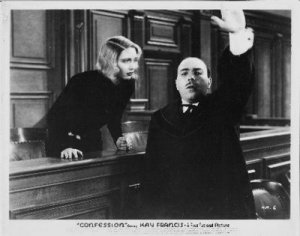 Confession can sure be hokey. Or absurd and unbelievable. It seems to me that confession is a pretty good barometer of how well one’s plot is holding together; if the confession seems funny when it’s serious, or causes eyerolls for the reader, it’s a bridge to far, and that means the plot has gone too far on its own out of solid story territory.
 I’ve written before about having the wearwithal for taking up writing as a career, or if not a career, an ambition. There’s writing for one’s vertical filing cabinet, and then there’s writing with the intention of getting the thing published. When one isn’t a writer, it looks like a cakewalk. There’s the throngs of fans, the languid lounging at the hotel pool while on a book tour, the eating of many bon bons, and the excitement of the book signing or reading session.
 I’ve heard from a few people recently—in the last few months, for sure—that they’re “against” adverbs. As if adverbs occupy a political position which one could oppose.
 Call me Captain Obvious, but after reading a lot—and I mean a LOT—of advice about face-to-face pitching story ideas to agents, I wasn’t quite sure how to go about it when the time really came due. So much of it was contradictory, or impossible to do at once, or over the top, or not applicable. So here is my list, after taking myself to my first writer’s conference, of what not to do, as obvious as some of these items may seem. I’m not saying I did these things, but I or someone I noticed did each of the things in this list.
 It was Saturday morning, and I kept thinking about the Sims, that role-playing video game in which the people in the town all have little diamond-shaped crystals hovering over their heads, indicating their energy and mood levels. When a Sim is content, the crystal is emerald and shiny, a bright beacon of happiness. When the crystal is faded, looking mostly transparent, the Sim is no longer a happy camper. During the course of any activity, the crystal will slowly fade, ticking down, as it were, into misery and joylessness. Fortunately for the game player, something as simple as going to the bathroom with make the Sim happier. But just given the tendency of time and entropy, according to the game’s designers, all Sims will end up in Funked Out Town. And I have made Sims die by leaving them in a room by themselves with no toilet, food, drink, or human companionship. It is awful to see what goes through their minds as they slowly fade into death. I swear I didn’t do this intentionally. I just forgot I’d left the game running and was in the next room watching reality television.
 We finally, finally, at last, made it to the award dinner hour. I’d gone down to the bar during the break for a tall pint of beer, and some email checking time, and I felt refreshed and ready to finish out the conference. Finalists were treated to a glass of wine and a networking party, then were led into the dinner room ahead of everyone else. For some reason everyone else at my table was a screenwriter, but the volunteers assured me we’d been seated randomly with other finalists. The awards themselves were poorly coordinated, and rife with technical glitches, but we managed to get through them, after hearing a Shakespeare-checkered keynote speech by C.C. Humphreys, who was charming, but too fake British for the wife of one of the screenwriters. She tsk tsked through his speech, which I heard because we were sitting next to each other.
 Now with six minutes to go until the editor’s panel, I had just enough time to grab some watermelon chunks, a muffin, and the proverbial coffee. Good thing I was there to network my six minutes, while stuffing food in my face before I fell over from low blood sugar. It was a great way to make a positive first impression, of course. The editor’s panel was interesting; I’ve posted it at the end of today’s blog. It’s good and somewhat dejecting to see how many kinds of editors, publishing houses, and distribution channels there are in this business. In my mind, trying to get that first book published looks like a daunting Venn Diagram: Agents in one circle, Editors in the second, Publishing Routes in the third.


 Trans/plant/portation