Tag Archives: the business of writing

Pitch Preparedness for Writers

stack of books from mid-2000sLet me come right out and admit that I have a terrible track record when it comes to making pitches at conferences. At least, I’m not so good at selecting the right agent for my four-minute sit-down appointment. Cherry Weiner waved me away with one stroke like she was a cynical fairy godmother and I was a wanna be frog prince. Or more specifically, a frog.

But then lo and behold, I had great pitch conversations on the fly, when I hadn’t been prepping and when I wasn’t trying to impress. Which leads me to today’s post—if you’re a person who works best fully prepared and working from some memorized text, these bullet points of advice probably aren’t up your alley. On the other hand, nothing read, nothing gained. Read More…

Writers’ Bad Habits

antique printing pressThere’s something about looking at a fresh, crisp trade paperback book that belies the messiness of the publication process, and writing itself. Books have bright covers, a little bit of heft when you pick them up, sharp edges, and lovely summaries on the back or inside covers–what a perfect little package of enjoyment. And oh, what it took to get there.

An idea, a cast of characters, copious hours spent writing, rewriting, ripping out words and inventing new ones. Then there’s the swaths of time just getting into writing mode, which I personally need to decrease this year, what with an adorable infant vying for my attention and all (and he gets it, no problem). After so many revisions and passes through the manuscript, beta readers come in and make the author rethink everything they considered perfect or innovative, or interesting. More rewrites. Boil down everything into a synopsis, fret over the book’s query letter, and email those lucky agents who could decide the manuscript is a gem. Handle the rejections, revise the synopsis, pitch it in person at a conference, dust off other projects and get started writing something new. And finally an email appears that someone wants to represent or publish the book.

And that’s just the beginning. I haven’t even mentioned publicists and press kits yet. My point is, if all of this goes into making a book happen–or its cousin, the ebook.

Writers don’t need any distractions or dead weight in this process of inspiration to printing press; bad habits are the one thing we can identify on our own and work to eliminate. And yes, I’ve exhibited or performed nearly every bad behavior in the following list. Read More…

Finding an LGBT Audience

gay youth buttonsThis post originally appeared over on GayYa.org.

I’ve looked at stories, characters, plot devices, layering, the writer’s mission, and some of the tropes around gay YA and genre fiction this past month or so, but left to examine among many other aspects of writing is audience. Not all writers seek publication, and that’s fine, but for those of us who want to get our words communicated to the world outside our heads should understand our options, the market, and readers’ expectations. Read More…

Doubt, Work, Struggle, Success: My Road to Publication

The joke between me and a close friend is that it took a relocation to a tiny town, a blown knee, and a national economic collapse to bring me back to writing, so I had better get serious and back to it. I am one of those people who turned away from creative writing as a career because it wasn’t practical enough, and my parents are nothing if not dedicated to middle class pragmatism.

My exile from writing began with excuses—I needed to experience the world and grow as a person, I was busy working, I wasn’t any good at making words happen—and then blossomed into a series of non-starter short stories, some of which I finished poorly and most of which I left to rot on a 3.5-inch floppy disk. By the time I turned 30, I felt miserable about how I’d treated my writing life and I turned, once again, to my journal. I wrote a series of new stories that decade but not for a moment did I presume I was an authentic writer anymore. Read More…

The Uselessness of Likert Scales in Rating Books

Likert Scale exampleBack in my usability days, I talked often about measurement error, the idea that something throws a monkey wrench into an otherwise careful attempt at accurate observation. Biases, for example, pop up in all sorts of interesting and confounding ways—I’ve seen users struggle with a site but say they loved their user experience. If not an issue with the Web design itself, users bring expectations with them as they use Web sites; one man I interviewed for the Social Security Administration consistently used an interface wrong because he didn’t personally identify himself as disabled, even though it took him 10 minutes to cross the room with his walker before taking his seat.

Usability scientists who aim to measure the success and efficiency of online systems have created an arsenal of tools for gathering more accurate information that can stem the effect of whatever measurement error is in play. One of those tools is a Likert Scale. We’re all familiar with them, those are the “rate this from 1 to 5, 1 being least and 5 being most,” items that float around opinion surveys and rating systems like Yelp. In truth, a scale can go from 1 to 3, 1 to 4, or 1 to 10, or whatever the designer thinks the range should cover.

But Likert Scales are notorious in the world of usability data collection, because very few people design them correctly, and very few respondents react to them appropriately. Read More…

The Road to Publication. . .

still from the movie Airplaneis riddled with nausea. Well, at least in my case. After all of these years of sprained joints, broken bones, bouts of mono and shingles, I can’t say I’m surprised when acute illness or accident pops up, especially when it’s least convenient. Just a couple of years ago I had to flee the Census worker’s orientation with a sudden case of stomach flu. Seems like many times when I’m finally celebrating something terrific, like my own wedding, that’s exactly when part of my body gives out, like my left knee. I know I’m enacting a confirmation bias here, but I still worry there’s some grand curse on my bones and where they meet up with sinew and muscle.

So after something close to 20 rejections on my memoir, right about when I was thinking of self-publishing it just to get it out on the market, I received an email from a publisher I’d met at this year’s Pacific Northwest Writer’s Association, back in early August. He said he’d like to talk with me about where they are in the process of considering my memoir.

I spent 10 minutes rereading the three sentence email.  Read More…

My Goals as a Trans Writer

This post originally appeared over on GayYA.org, a great place to talk about all things LGBTQ in young adult literature.

Like many writers I know, I took a meandering path to this writing profession, starting out confident and then dedicating a long decade in quicksand—I think it’s called self-doubt—after which I think I found myself in the center of the earth, and let me just say, it’s hotter than I thought it would be down there. During this long break I suppose I opted to have a sex change, and then I realized that I needed to write about my transition. I didn’t want to relate a tale of anguish and grief. Instead, I focused on the ludicrous situations that popped up as I navigated through gender roles, gathered information on doctors, civil courts, and resources, and klutzed into whatever manhood I now find myself. Where I have ended up as a writer is not where I estimated I’d find myself, but I understand now that all of my wanderlust has made me a much better storyteller. And along the way, I’ve identified my audience in young adult readers, in whatever stripe of gender and sexual orientation (or questioning place) they may be. I now have a good idea of my goals as a writer of transgender and queer experience. Read More…

Love the Antagonist

Don Corleone in black and white

This post originally appeared on the amwriting blog.

Copious bubbles of advice flow out of the Internet for new writers—everything from opening lines that work to hanging in there through the middle of the first draft. Once a novel is completed, emerging writers can spend the majority of their waking hours searching for that perfect agent or press, hopeful that such recipients will go wild for their pages. All of the eagerness and pride and delicious fantasies about our future success—for we are nothing if not avid daydreamers—are blown away when rejection after rejection rolls in, clogging one’s in box. Suddenly that stream of advice looks chalky, harder to interpret, and the messages around handling professional no-thank-yous another cold stab of curtness. It’s difficult to hear the “just keep writing” mantra and adhere to it with the same level of joy as before. But take heart: this is all part of the process. Read More…

Story Scalability

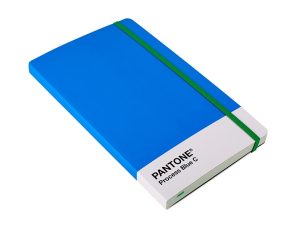
pantone notebook where I keep my ideas about my short storiesThis past summer I published a short story that generated some feedback from readers, much of it the same. Happily enough, they said they wanted to see 200 more pages to the story; I’d flung a world at them that was similar to our own, but askew in several ways, most dramatically in that this world’s children all metamorphosized, sooner or later, into fantastic and mythical creatures.

Readers and publishing pros I know wanted to know why this was happening, something I knew in my own mind but hadn’t explained in the confines of the story, which only runs for 1,200 words. My goal in the story was to show the big and subtle changes that the main character—precociously named Hannah Pace—emerges with at the end of the story, but readers wanted to know what happened the next day. And the next after that. It was a flattering response. I smiled and wrote back, not communicating that this was all I’d intended. I was on the cusp of getting started on a new novel about a 500-year-old mummy in the 22nd Century (take that, genre purists), and I didn’t need ideas like lengthening a one-off short story into a long piece crowding my vision.

Well, it didn’t just crowd my plans, it upstaged them and then threw them out of the theater. Read More…

Efficiency and Effectiveness for Writers

Many thanks to Ev for inviting me to guest blog today.  I’m so happy to be here, especially as it gives the new parents more time to spend with Emile. Congratulations to the whole family!

gold clock faceMy husband is a project manager and sometimes I’ll be mulling some idea about how I’m spending my writing time and he’ll drop an idea on me that stops me in my tracks.  Here’s one of them:  being effective is not the same as being efficient.

Being effective is about results.

Being efficient is about process.

(He’s not responsible for any of this further mulling. So if you know Greg, don’t ask him to explain any of what I’m thinking. He gave up on that a long time ago.)

All the writers I know have other gigs in their lives.  Time is precious.  It’s not enough to be effective or efficient; we need to be both. Read More…