Presiding Juror (The Aftermath)
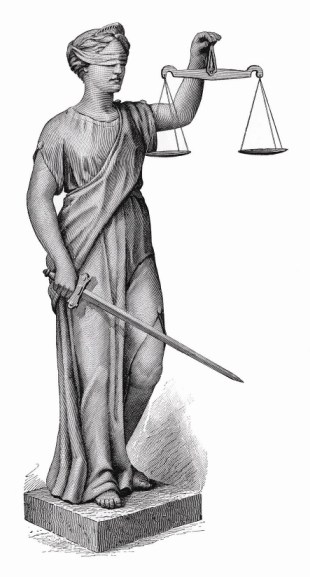 The twelve members of the jury walked back into the deliberation room, after we’d handed over our verdict and individually attested that we voted freely and according to the instructions from the court.
“Did you see his face,” asked one juror, meaning the defendant.
“He looked like the weight of the world came off his shoulders,” answered a juror. Kiffen was her name.
The mason grumbled. “He looks like he dodged a bullet.”
Soon thereafter the judge came into our room. He’d said he had a quick question for us, but we peppered him with ours first. They came out all in a barrage—why didn’t we hear from Grumpy and Stretch? why isn’t Officer Tony’s dashboard camera working? why was the testimony so vague? Did we just let a guilty man go free? What did you think about his guilt or innocence?
He tried to answer them in turn. He looked much smaller standing in front of us instead of occupying his perch above us, and his robes looked like they could smother him.
“Nobody can find Joaquim (Grumpy) or Stretch,” he said, looking like he was trying not to sound dismissive. “If we could have located them, we would have brought them in for questioning.”
Juror number 4—the woman who had sat in front of me the whole trial—asked why Stephanie wasn’t coached to be more assertive on the stand.
“Ms. Adele was brought here by officers, as a material witness. The prosecutor had to put out a warrant to get her here, and she stayed at a motel with a guard so that she would testify.”
Well, that explained the very large bailiff who’d accompanied her to the court. Read More…
 The criminal justice system in the United States seems to be founded on constraints. Who can get selected to serve on a jury. When the defendant can speak. Who can ask questions, and how those questions must be worded to be allowed in the courtroom. There are also the presumptions—the defendant is innocent until proven guilty, the jurors are presumed to be impartial, the judge is also presumed to be a fair referee in the battle between the opposing sides. Above all it is expected that justice will prevail. But nobody in the average criminal trial defines “justice,” even as they go to pains to map out the boundaries of “reasonable doubt.”
 He gave us a look, tilted his head to one side, and then told us we would be breaking for lunch.
 It started with a perforated postcard in the mail, back in early April, saying I was on the docket for June 2013. Walla Walla’s Superior Court uses a system in which jurors need to be on call to make an appearance on any given date during the month. Opening up the sealed card, one will find a short questionnaire which is supposed to be mailed back to the court right away. It tells the court if there are dates one can’t serve (I said I’d be out of town after a certain date in June), if one is or is not a United States citizen (Susanne gets out of all her jury duty for being Canadian), a resident of the county, and older than 18. It asks if one can read, speak, and write in English (illiterates need not apply?), and asks things about whether one is currently employed, and if so, what kind of work it is. There were other things on there, but I’ve forgotten them.


 Trans/plant/portation