Latest from the Blog

Reading List of Trans YA

Yes, there are other books out there, but these are good books (my own notwithstanding)! For your edification:

Trans YA Authors

AUTHOR

GENRES

TITLES

Charlie Anders

Literary

Choir Boy

Susan Jane Bigelow

Science Fiction

The Daughter Star, Sarah’s Child

Kate Bornstein

Humor, Self-Help, Memoir

Hello Cruel World: 101 Alternatives to Suicide for Teens, Freaks, and Other Outlaws

Ivan Coyote

Literary, Short Stories

One in Every Crowd, One Man’s Trash, Close to Spider Man

Calvin Gimpelvich

Urban Fantasy

Wolfmen (online graphic novel)

Nick Krieger

Memoir

Nina Here Nor There

Sassafras Lowery

Literary

Kicked Out; Roving Pack

Everett Maroon

Science fiction, Humor

The Unintentional Time Traveler

Rae Spoon

Literary

First Spring Grass Fire


Trans Characters

AUTHOR

GENRES

TITLES

Cris Beam

Literary

I Am J

Kristin Elizabeth Clark

Literary, Experimental

Freakboy

Tanita S. Davis

Literary

Happy Families

Kim Fu

Literary

For Today I Am a Boy

Rachel Gold

Literary

Being Emily

Bryan Katcher

Literary

Almost Perfect

s.e. smith

Magical realism

The Transformations of Tabitha Grey (forthcoming)

Ellen Wittlinger

Literary

Parrotfish


Notes from the Writing Trans Genres Conference

I like to write up my thoughts as I’m attending a conference or just after I walk away from it, while the plethora of conversations are still swirling around in my brain. It’s a little reminiscent of how I studied in primary school, by taking in as much of the school day as  Icould and then writing up my notes later. Maybe I need to move my fingers around to set the thoughts in place, I’m not sure.

I just finished up my participation in the Writing Trans Genres conference in Winnipeg, Manitoba. There were at least four generations of trans authors and thinkers there, maybe 250 of us, roughly. At least it felt like a quarter of a thousand. I didn’t do a head count and I didn’t ask the organizers. I didn’t want to miss even a moment of it—unlike truly humongous conferences like the Popular Cultural Association Conference or the BookExpo, where there is no hope of going to every panel, this was more intimate and almost comprehensible in scope, until people started talking. At that point there were so many ideas all in one animated stream that it took a lot of energy on my part to keep up with the conversation and concepts. But maybe I’m just an exhausted parent of two kids under the age of three. This conference was marked by several laudable characteristics not commonly found at conferences: Read More…

The Thing About Writing a Book Series

little box writing a letterThe Unintentional Time Traveler may be my debut novel but it is also the first in five planned books about Jackson Inman/Jacqueline Bishop and their adventures. I’ve taken the long game approach and drawn out the character and story arcs for the protagonist(s), and mapped out the antagonists for each episode in the series (there will be a continuing villain and a “local” antagonist specific to each). Despite my best laid plans, I’m prepared for the story to veer a bit from its supposed trajectories. Back in my project management days, I would have called this tendency “scope creep.”

Nowadays I’ll just say that it comes with the territory of the subconscious—because some significant percentage of my creative writing process is done by the characters themselves. Or maybe the tips of my fingers have their own intentions. Or maybe what Chip Delany refers to as the “dark matter” of his mind is a thing that happens for other writers, too. I was working on a completely different project a few weeks ago—an ensemble novel about four gender non-conforming people from different eras who come together to build a high school for queer and trans youth—when I realized the scene was getting away from me. As if I wasn’t my own person, I was typing out that the character was getting in someone’s face in a law firm, and then security showed up and hauled him away, his shoes leaving temporary scrape marks in the beige carpet. Wait, what? That’s not how this scene goes. That’s not what I architected to happen. And I’m the creator of this little universe, correct? Read More…

All the Things I’ll Miss About Cristina Yang

Sandra Oh from Grey's AnatomyOne of the biggest badass characters on television is leaving next week and I couldn’t be more heartbroken about it. It’s not just that Sandra Oh is arguably the best actor on Grey’s Anatomy (or broadcast television for that matter), it’s that the character she plays, Cristina Yang, has been an unsung feminist presence in a series often marked by obsession about heterosexual relationships and the men that inhabit them. Dr. Yang had been through bad relationships, abandonment at the altar (“It’s not that Burke broke up with me, it’s how he broke up with me.”), and an on-again, off-again affair with the chief of surgery, but she leaves the narrative at the top of her game, prioritizing her own needs, and inspiring other surgeons in her field. But let me get more specific about the aspects of Cristina that I adore so much, and thus the reasons I’ll miss seeing her around the hospital.
1. Her self confidence has never wavered—She started as an intern with the others, but came out of the gate maximizing her procedures hours and stating what kind of surgeon she would be. Maybe Izzy floated around not knowing which sub-specialty to take up and maybe George was trying to listen to his heart to figure himself out and maybe Meredith was fighting the shadow of her eponymous mother, but Cristina was all focus, all the time. Read More…

After Transition, Try Not to Become Insufferable

In a country that has as its national mantra, “I’m special,” it can be difficult to see the overlaps and similarities we have with other people. We mark our sense of style as unique to each of us, even as we shop at the same globally positioned clothiers, or second hand shops that sell the mass-manufactured fashions of thirty years ago. We rail against the evil of larger systems from our seats in the college auditorium. We complain about nasty customers as we daydream about spitting into their food that we’re trying to prepare for them. We lament the oligarchs even though there are so many of us who loathe them that we could theoretically do something about their power if only we banded together about it. Instead of maybe standing in our fierce independentness. But I digress. My point is that we may have distinct DNA and unparalleled lived experience, but we have great similarity to our families (chosen or not), our friends, and even to strangers.

Being a parent for thirty-two months is not much of a history, I know, but it’s enough to realize that many other people have had experiences near the ones I live through these days. Even though I am singularly located in my own place and time and history. There are so many parents out there that I see every day, bargaining with their children, looking joyful or exhausted or proud or revolted (“BOOGER, Daddy!”), sharing a scoop of ice cream or just trying to fucking get their kid into the car because they needed to leave five minutes ago. They are everywhere, parents. There’s no denying it, no hearings on Capitol Hill about whether they exist or not, even as we walk away from broad access to contraception and family planning and free breakfasts for poor kids and welfare to help support families through hard times. Nobody says we can convert parents into being non-parents. The head of Jelly Belly isn’t shelling out five million samoleans to prevent parents from existing in California. We parents know we are something of an entity, even if we don’t go around calling ourselves a “community” per se. Read More…

Transience

It’s an obvious statement to declare that I’m tired. I still get hammered with rapid-fire thoughts but the parts of my body I use for speech can’t keep up, so I wind up cutting my sentences short and fingering the lid of my iced mocha. I’m living at DEFCON 3 of irritation. Things like red light runners, people who take up spare seats next to them with their possessions so nobody else can sit down, line cutters, are all a hair away from my personal rendition of the riot act. No, you can’t put your plate of crumbs on my table at the coffee shop. Gee, I would rather you not drive in two lanes or loud talk your way through the produce aisle as if I care about the conversation you’re having with your invisible Bluetooth friend. I marvel that we’ve gone from Copernicus to nanotechnology in less than a millennium, but I’m a little perplexed that we use our progress for cat videos and Katy Perry. (No offense to Ms. Perry. Your video with Elmo is adorable and it keeps my toddler happy for two minutes and forty-one seconds.)

There’s an upside to having scant shreds of time for oneself and limitless aggravation, however. Priorities are quickly reset. Relationships, ranked. Anything lower than say, dedicated hobby, is truncated right off the schedule. Annoying people, curtailed. Poof, gone, vamoose. Bye Felicia is spoken to anyone who isn’t long-term important. And conflicts, when one needs to have them, are over in short order. Don’t process with me as you argue, because I’ll cut to the base issue. Dang, if only this had been my strategy when I was 23 and not 43. I could have lived a couple of additional lifetimes or something, with all of the saved time.

Limited time has also sped up my writing process—when I can get my brain to work well enough to generate writing, that is. But if the circuits are firing, I find I’m not dilly-dallying with junk like Facebook and email, I’m just writing. I carved out three new story arcs for my time travel series this week (Note to self: negotiate with publisher about the series) and got restarted on writing those 10,000 words I lost when my hard drive died last month. I don’t know when I’ll have a steady block of writing time again so I WRITEWRITEWRITE whenever I have the chance. Tomorrow may not show its face. Write when you get the chance, Maroon. Read More…

Dear parents, you are being lied to.

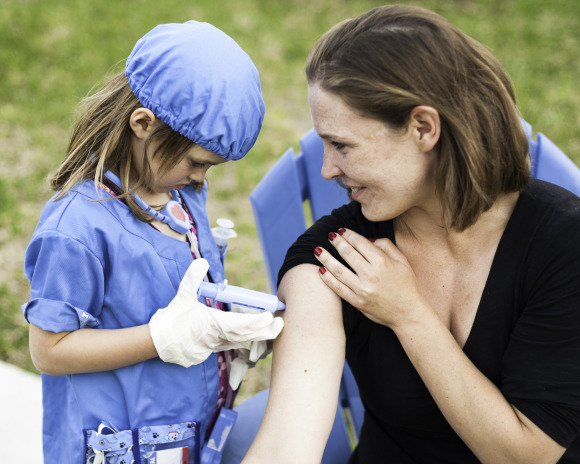
Word. As someone who was quarantined along with my family for whooping cough even though we’d all been vaccinated (resulting in a more mild illness for us), I can say that anti-vaccination stances are all based on misinformation and fear. Vaccinate your kids. You may be saving a life.

Jennifer Raff's avatarViolent metaphors

Standard of care.

In light of recent outbreaks of measles and other vaccine preventable illnesses, and the refusal of anti-vaccination advocates to acknowledge the problem, I thought it was past time for this post.

Dear parents,

You are being lied to. The people who claim to be acting in the best interests of your children are putting their health and even lives at risk.

View original post 1,134 more words

Questions Nobody Asks Me About My Novel

cover for TUTTOne of the reasons I enjoy interviews about my writing (other than the most ridiculous ego-tripping reasons, of course) is because it gives me insight into how people are interpreting my work, which is often something new or that I wasn’t creating intentionally. Sometimes an interview veers in an unexpected direction, and then I’m joyful as I get caught up talking about texts and narrative and form and extrapolating into popular culture more generally. But often there are pieces of the story that I think are glaring for readers but that never come up in conversation. So for my love of talking about textuality and literature, I thought I’d go over a few aspects of The Unintentional Time Traveler that haven’t come up in any of my Q&As.

The protagonist’s name(s)—I could answer this self-imposed question in a few different ways. First, “Jackson” is an intentional play on patrilineage, which the character winds up disrupting by choosing at the end to spend a lot of time as Jacqueline instead of in the time of Jackson’s actual life. But more important to me was the iconic use of the name “Jack” as it appears in scads of children’s literature: nursery rhymes, Jack & Jill, Jack & the Beanstalk, Jack Frost, Jack Sprat, etc. It’s almost at the level of generic marker for boys. So I wanted to create a narrative that took the mainstay name and immersed it in a novel that was focused on LGBT themes and characters. I want to see our stories and our lives within this greater mythology and literature, not apart from it. Jack was the perfect moniker to use to make this kind of a statement. And Inman is the name of a family I know from Washington, DC, but it’s also a great double entredre.  Read More…

On Male Privilege

Today’s post is guest authored by my old friend Shiloh Stark.

I know male privilege because I went from not having it, to having it.

At different points in my life, I’ve been perceived as a girl, perceived as a boy, perceived as in-between. As straight, as lesbian, and as a gay male. I’ve always been the same person, but the Rubik’s cube of my life was extra jumbled up there for a while. Each different setting, though, uncovered a new lesson in how gender works.

When people perceived me as a straight, white, heterosexual teenage girl, every time I took a walk alone, in the back of my head, a part of me worried that I might be raped. It was more present than a fear of being mugged, and carried more dread. I don’t know if all women feel that, or if it gets better over time — I just know that it was the kind of feeling you actively try to discredit, and can forget about for stretches of time, but that you can’t shake.

When I cut my hair shorter and donned more gender neutral clothes, people saw me as a lesbian. Occasionally a man would shout “dykes” when I walked down the street with a girl. I still worried about being sexually assaulted, but the tenor changed: the concern was that some straight man would feel compelled to “teach me a lesson.”  Read More…

Twitter for Writers

A few folks have asked me about Twitter over the years and how such a terse medium can be helpful for writers. What content can one even get communicated in so few characters?

The answer is: a lot. If we stop thinking about Twitter as the site of traditional content that takes eight hundred or more words to convey, and start thinking of it as a touchpoint and springboard or longer form pieces, then the possibilities open up. There are scads of great posts out there on growing followers, how to identify good accounts to follow, and so on, so I’m not going to reinvent the wheel. Here are a few of those, as introductory Twitterverse items.

The thing for writers (or anyone, really) to do to get started on Twitter is to set up a profile, find people who are already on Twitter who you know or by your interests, and start generating content. Let’s take these in turn. Read More…