There are two kinds of writers in the world, those who overwrite and those who work for test laboratories.
I often write more than will end up in a story or piece of nonfiction, and I see this as a blessing rather than a curse, since trying to pack things on a skeleton of prose is for me, difficult and prone to introducing everything from a non sequitur to a blatant inconsistency—I’m much more orderly when I stick to my process, which is:
Write down initial idea—this can be anything from a character I keep thinking about to a rare astrophysical condition to some circumstance that would explain a mystery
Expand on initial idea—Aliens on Parade grew out of a question I had about how traveling by wormhole could go wrong once in the hands of a lazy or in-over-their-heads government. I started thinking about technology: if we “discovered” how to open wormholes in space, would we also inadvertently be inviting people in? If answer = yes, then what happens?
Identify the actors—my bio sketches start out very simple and I grow them from there. Age, race/ethnicity, gender, orientation all help me figure out their positions, power, and privilege in society, whether it’s a society I’m trying to reflect or invent. Because I see these things at play in the actual world, I feel responsible to bringing them to bear in my writing. But their back stories are more complex. I’ll put in things like “was mugged two weeks ago,” “has unmanaged bipolar disorder and self-medicates with alcohol,” “won’t let anyone meet her mom because she’s on welfare.” I don’t feel the need to write out absolutely everything about them if I’m writing a shorter story, and I try to come up with circumstances for them that let me see greater depth of character when I need to.
Visualize the scenes—this gets harder for longer work, so I keep it flexible, and I will add and subtract to this list over time. I think of this like one would map out a scene shoot for a film. What do we have, where do we have it? I deeply appreciate any writer who can create scene description and keep it interesting, and not just because it’s a magical street in a magical city, which is supposed to be magically interesting all on its own. Once I’ve got a sense of my characters, I try to come up with places where they will be best expressed and then make sure it will work with the plot. If I can find a perfect setting to enhance the tone, then great. In my short story, Underwater, I tried to paint a minimal picture to ask the user to fill in with their starkest memories, while keeping the places in the story bereft of emotion other than tired and empty. I think it works for a story that’s under 2,000 words like this one. My novel-length sci fi piece, Superqueers, spends a lot more time showing different neighborhoods in Washington, DC, because I wanted to work against the every-city feel of other comic book hero stories. Incidentally that story grew out of an image I knew I needed to write 20 years ago, of a small greasy spoon diner and a very large man who drinks coffee there, spilling a lot of it and using many, many packets of sugar in the process.
Do the first draft and don’t stop—At this point, I can’t not write any longer; I have to type words out through my fingers now now now. I will take a few pages to get up to speed, although I don’t like seeing it this way. I’d love to think my work was perfect out of the gate, but in reality I’m in last place until the final turn, to drag the metaphor through the mud, mix it and beat it like a dead horse. I and most everyone I know need to do an awful lot of rewriting before I will say the words have been crafted. No blacksmith made a nail with the first strike. But this rewriting process will come later. I don’t worry about it because I’m writing, I’m progressing, I’m telling the story. I may not use the section or piece of dialogue later, but I will save whatever I write in the first draft. Everything lives in the first draft. If I sit down at the computer on Day 2 and I hate everything I wrote, I can start anew if I can’t write anything else, but I will not delete the crap from Day 1. Draft Number 1 holds onto everything. While I’m getting through this first draft I will return to the character bios and the scene list and the original idea, and update them. Matilda is allergic to strawberries. I need the boat out at sea, not at the dock. Those two characters are too similar so I’ll merge them into one and make a note to rewrite the dialogue in chapters 1–3.
Rewrite until it doesn’t suck—other people may have higher expectations for their writing, but I’m shooting for not laughable. Perhaps I’m being too modest; I think I’m a good writer, but I don’t want to get stuck on myself, and I know by now that things can always be improved. I have no love for self-absorbed writers, no matter their level of talent, so I strive not to become one myself. I can’t say when I think a story is done, but when I go through on say, the 20th pass and only have tiny changes to my language, it starts to occur to me to work on something else. I’m either blind to the quality of prose or I’m deadened to making changes and now’s the time to go revise something else or start something new. All the while pitching my best stuff to agents and journals. But that’s another post for another day. This rewriting phase starts out intense and mellows out, kind of like March. I’ll cut whole scenes, chapters, characters, change the ending, put in or take out subplots. Thank goodness I’m writing and not building houses, because I’d destroy every budget I saw.
With that in mind, here is the very original dream from my memoir that drove me, eventually, to transition. It’s no longer in the memoir itself, but it’s referred to and is the backstory for the main character—uh, namely me—and I revised it something like 10 times before I struck it entirely, so it’s rougher than the rest of the writing at this point.
Trees, everywhere, mostly evergreens. He looked around at them, some clumped up closely, branches looped together with their neighbors, some isolated from the rest, the lot of them with varying heights and apparent ages, climbing up the side of the mountain. Far below the side of the mountain the trees were reflected back almost perfectly from the surface of a very still, large lake. He wondered how he’d gotten here, patting himself down absentmindedly, as if identifying the things in his pockets would reveal a useful memory. Looking down at his clothes, he recognized an icon of sorts. Is that what they’re called? Icons? Stereotypes? He was struck by the idea of lumberjacks. This was probably because he was wearing a red flannel jacket, or shirt, he wasn’t sure. It was something in between, and it would later occur to him that there is in fact, a hybrid jacket-shirt-thingy for sale on the men’s fashion market, if one used a very loose definition of the term, “fashion.” But he did notice, after taking in the color and texture of it, that it wasn’t quite warm enough for the brisk morning air. Wait, was it morning?
He squinted at the sky, a pearly blue with a few wisps of cirrus clouds high, high away. Well, he knew what the hell a cirrus cloud was, that was a start. When had he learned about cirrus clouds? He had a clear memory of Mrs. Warms’ 8th grade science class at that crappy Catholic school on the main drag in Princeton. The one with the scary nuns. And then on graduation day with their caps and robes on, they all looked like nuns and none of their parents were clued in to the trauma that their children were experiencing.
So okay, he’s made it past elementary school. Good to know.
He took a few steps, only then realizing he had on light brown worker’s boots, with his jeans pulled down neatly over the tops. It occurred to him to touch his head, and to his shock he realized he had on a knit cap. He took it off and inspected it. Navy blue, maybe, or black. Size 7. Carhart brand.
Holy shit, he really was a lumberjack. That couldn’t be right, could it? He looked around for an ax and a large blue beast of burden.
Before he could continue on trying to figure out who the hell he was, he heard a voice behind him.
“Daniel! Daniel! What are you doing over here?”
He turned around and saw a woman running up a trail he hadn’t noticed, what with the sky looking gorgeous and the trail looking blah. She was wearing her own knit cap, plaid jacket, jeans, and work boots. There apparently was some kind of outdoorsy uniform going on here. Her cheeks were bright red from the cold and her spontaneous bout of jogging. Brown curly hair stuck out in gravity-defying directions as soon as it cleared the tight hat. She left the impression of looking like a balding Troll doll that had spent some good quality time under a diffuser.
He had no idea why he knew what a diffuser was.
“Hi, Kathryn,” he mumbled. He knew her name. Another surprise. Who was Kathryn?
“Daniel, we need you at the mess. Why are you all the way up here? We’re running out of pancakes and French toast, and Jackie doesn’t know how to make the dishwasher run.” She put her hands on her knees as she bent over, panting.
“Daniel?” He looked at her. He knew her name, but he didn’t know why she was calling him this.
“Yes?”
“Who’s Daniel,” he asked.
“You, silly.” She stopped a moment. “What’s wrong with you?”
“Nothing. I just didn’t think that was my name.”
“Uh, what did you think your name was?”
He started to say and then stopped. It wasn’t right. Under this brightening sky, in the cold air, dressed like an extra from a Monty Python movie, something wasn’t right.
“Nothing, I’m kidding. I just wanted to catch the last of the sunrise.”
“Well, we need you, Dan. Come on, before the President runs out of breakfast.”
“The PRESIDENT is here,” he asked, following her, feeling his footsteps crunch as he made them on the frosty ground.
“The President of the Bucks County PTA. It’s their group that picked the campground for their stupid conference this weekend.” She looked at him like he’d lost all sense. She wasn’t far off the mark.
“Right, right.”
“Jesus, what did you do last night?” Her hair bounced around as she shook her head. He had the distinct impression that her cap was about to shoot off of her head from the pressure of her curls.
They walked into the mess and half a dozen children were upon him, tugging at his shirt/jacket and looking for more flapjakcs as if they might be hidden in his pockets. He hoped he could remember how to make a pancake, if he didn’t even know this name she was calling him.
He passed by a mirror, and got a look at himself just before entering the kitchen. Tallish, with a big, thick beard, hairy wrists and hands, twinkling brown eyes, wrinkles that implied he had smiled more often than frowned in his life. He was a mini Paul Bunyan, in fact. He realized precisely then that he had always wanted to be Paul Bunyan and only Paul Bunyan. He loved who he was now more than ever, and it had taken a long time for him to become the man these people needed and cheered. And that was really odd, for some reason.
And then I woke up.
 I went to the
  And what a ballroom it was. We walked in needing a second wind and hoping to find it on the other side of made-to-order eggs. I looked around and wondered to myself just how many people had had their wedding receptions here. All of the tables were empty save one in the far corner that had something like a dozen older men I presumed were Lodge members. I have to imagine that all of these groups—the Elks, the Masons, the Rotaryians, or whatever they’re called—are having trouble finding new members because all of these people were eligible for AARP.
 Nearing the end of our initial stint in Wallyworld, I feel it only appropriate to take stock of what lessons I’ve learned thus far, as part of what I’ve tried to do while living here—otherwise known as how to carry on when lots of things in one’s life have gone awry. Through a torn ACL and meniscus, the free-fall of the world’s strongest economy, 30-some-odd inches of snow, for which our passengers tires were completely insufficient, and the sudden adjustment that accompanied moving from a town in which 70 percent of the residents were registered Democrats to a town that went 57 percent for McCain in the last election, I’ve tried to keep up, somehow, with my new reality. And along the way I’ve picked up a few things that I promise to take with me as we start our road trip and half-year sabbatical. These are, in no particular order:
 Reflecting on all of the intersections within Walla Walla, I can’t recall a single NO LEFT TURN sign. Not by the Bi Mart, south side of town. Not at any point on Isaacs Road, which is a straight shot east into the Blue Mountains and which is littered with fast food shacks, auto parts stores, car washes, and oodles of plain gray parking lots. Not in the small downtown, even though every other city I’ve tromped through has boasted at least one stubbornly red sign.
 So we’ve sketched out and thought about and worked our way through to some summer plans, and wireless connectivity what it is, will be relaying our journey on this very blog, in what will wind up being a reverse travelogue of our trip in August 2008. Once June rolls around I will also be guest blogging for Bitch magazine, so I will have to get a bit creative in the early part of the month on ways to get my posts published. But as far as trans/plant/portation goes, here is a preview of our trip back east:
 I am a stickler for cleanliness in food preparation. I actively think about cross-contamination, heating temperatures and holding temperatures, the timing of separate dishes, and the kinds of food that go well in one’s stomach and not just with one’s taste buds. I dedicate myself to these tiny causes as if I were wielding a neon green small plastic fork, usually only suitable for battles with tasteless green olives before they are drowned in a sea of gin and tonic. My persistence comes not because I was scared into it by countless local news broadcasts, but because I have intersected salmonella before, and have vowed to avoid it from here on out if at all possible. And I certainly, most definitely, to the nth degree do not want to unleash that kind of hell onto anyone else.
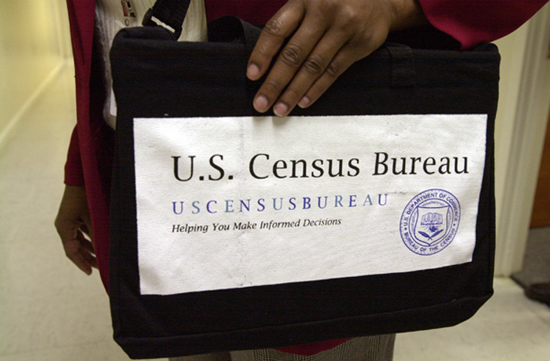
 I was excited to start my Census training the next day, on Monday. Well, excited might be a bit of an overstatement. I was happy to get back to work, and interested in knowing where they’d send me and what my door-knocking experience would be like. I had a little stack of items the recruiter had said I’d need, a little bundle of my personal identifying information or PII as the government calls it. The government has never met an acronym it didn’t like. TGHNMAAIDL. Well, maybe that one.




 Trans/plant/portation