Latest from the Blog

To market, to market

Eastern Market doorI’m very excited to get back to Eastern Market this afternoon; having lived in walking distance of the market building, we went there on a regular basis for food staples and baked goods, and I for one greatly miss such easy access to fresh vegetables and the like. Once upon a time Washington, DC had several market areas tucked into its quadranted neighborhoods, but now, there is only one standing.

Even this market building suffered a serious blow from an electrical fire that swept through the brick structure, and only in the last six months is it back, having been painstakingly restored by the city. Good thing it sits next to one of the wealthiest and most historic neighborhoods in the city, Capitol Hill. It’s so beloved it is the namesake for its own local area, and the corresponding Metro stop. The mayor couldn’t possibly have turned his back on Eastern Market and lived to talk about it.

I’d moved from Arlington, Virginia into the city in 2004, never really venturing over to the brick building, where inside, deli counters, fish and seafood mongers, a baker, a cheese counter, and a couple of produce sellers stood, always grinning from ear to ear while they put edibles in one’s bag and pocketed one’s donation of green paper. Actually, I couldn’t have told anyone that these people existed when I moved because I’d never gone inside. Susanne, however, was a regular visitor. She lived a few blocks away from me and I’d never met her. But she knew the value of the market.

Once we started dating, some weekend or other rolled around and I went with her—much to her astonishment, I’d lived 10 minutes walking time from the place for more than a year and had not yet checked it out—and I was amazed. On Saturdays and Sundays more vendors flocked to the block like they were wildebeests descending on the only watering hole for miles, filling up the sidewalks with everything from pottery and paintings to local fruit and fresh in-season vegetables. Silver queen corn, cut yesterday. Pink lady apples. Yellow watermelon, the leaves still drying on one end. Stubby carrots that tasted like sunshine. Peaches that made even patient people beg while they waited for them to ripen. I could not believe these were my options in a city, and I spent my first working summers at a produce stand at the edge of New Jersey’s farmlands.

Canales' deli and SusanneIt wasn’t long before I’d made friends with the weekday vendors and knew what kind of small talk interested the weekend folks. Susanne just shook her head at me doing my extrovert thing. After we’d gotten engaged, the deli owners would ask us how the planning was going. Their daughter had tied the knot the year before and had lots of advice and enthusiasm for us. I totally fell in love with Eastern Market, but it had shown me its affection first.

We had just decided to try a new kind of sausage every week and were fixing to grill up some weisswurst when I heard about the fire in the South Building, the technical name for the weekday market center. I was crushed. We ventured over to see how bad the damage was, since brick seemed like a fairly sturdy construction material. The roof hung down in strips, the big gaps letting in the evening sky. Bricks sat in their rows, tidy, scorched, looking ghostly. This was a gravely wounded structure, and we weren’t certain anyone would get it together enough to repair it.

But the the groundswell of support came loudly and quickly, businesses saying they’d donate what they could, the mayor making all kinds of near-frenetic-sounding promises, and the proximate school lending over its playground so a temporary building could be erected while the displacement of the vendors continued. I was heartened that everyone’s focus was on the owners of the market shops and their families; we made it a mission to head over there at least as often as we already did to keep buying from them. And they counted us among their regulars, too stubborn to let a little 5-alarm fire get in the way of cured meat.

burned out Eastern market buildingThe restoration work began with the demolition of the ruined roof, and its reconstruction. Those days at the market we would make our purchases with the cacophony of drills, hammers, and saws cutting through the air to our ears.

The temporary building was sturdy, but reminiscent of what was probably dotting the landscapes of Iraq and Afghanistan. We didn’t care for military housing for our peaceful market, but we were glad the war hawks had invented something we could use to keep the vendors going.

The city sponsored a mural contest, inviting artists to paint window panels while the work continued. These would at some point—some point being when the glass was ready—be auctioned off to help pay for the restoration. It was as if art didn’t want to be left out as a helper to save the heart of the neighborhood.

City managers closed off 7th Street SE next to the market so the weekend vendors could gather there, since there was a fenced perimeter around the building, taking up a good chunk of the sidewalk space. It was brilliant, and why hadn’t they done it before?

restored Eastern Market buildingWe saw the estimated time of completion for the project and again were saddened because we knew we’d be moving away before its rise from the ashes. But last January we were back in town, and got to walk through the redone space. I could still see the sun through the roof, but this time it was because of a lovely line of sky lights. Eastern Market was back.

And so I smile every time I see the old brick building with its la grande dame makeover.

Jesus Christ on parade

My premiere gay parade took place in Syracuse, New York, in the early 90s, heralding the theme of Out*Rage*Us, which hopefully is self-explanatory as a message. We were 300 brave-enough-to-march souls: the owner of My Sister’s Words, the feminist bookstore, several students and staff from Syracuse University, a few employees of Carrier air conditioners, a few more from the local Phillips Magnavox factory, and some other locals. We took all morning to ready some jury-rigged floats and signs, and marched down what was likely the shortest parade route I’ve ever seen—four blocks in Syracuse’s downtown. The actual marching was over in minutes. We didn’t even have a chance to get bunched up as paraders, and that never gets avoided. It would be a couple of years before I would march in New York City’s Pride parade and if this was a triumphant moment for a newbie gay, that was like being dropped in the middle of Mecca at pilgrimage time.

Many years later, I moved to DC and grimaced every time I saw the “Capital” Pride signs. It’s Capitol, people, like the place, not like the investment. Whatever, they stick with this egregious error like it’s a tradition. Maybe nobody wants to buy out whoever owns capitolpride.org.

I’ve gone to this DC parade at least a half dozen times since I moved here, and it’s always the same:

  • It’s totally over-commercialized. I swear I have heard an MC at the musical stage, next to the actual Capitol building, proclaim, “Welcome to DC Pride, sponsored by Absolut! and Bank of America! Because every LGBT-identifying person needs to be drunk while wielding a checking account. What? This year they even had a “float” for Frito-Lay. Frito-freakin-Lay, people. This “float” was a Frito-Lay delivery truck with some rainbow flags duct-taped to the sides. This is what Susanne refers to as a “phoned in” float, cuz I know that truck just ditched the flags and turned the corner onto Massachusetts to make deliveries to the Giant Foods store like it’d never been throwing bags of Doritos into the streets for free. Damn closeted Frito-Lay truck.
  • It’s too hot to cheer. I understand the Stonewall Inn riots happened on June 28, 1969. It was New York City’s finests’ problem that they pissed people off in the heat. And now it’s every queermo’s problem, as we stand around fanning ourselves with moist paper, waiting for an interesting float to pass by, or at least the DC Cowboys. They shoulda done better at the America’s Got Talent show. If they can stay synchronized on a moving truck bed, well, that would throw people like Susan Boyle, I bet. The heat melts us all so quickly, even with the parade starting at 6:30, the best we can do is attempt to remain vertical, although clapping does generate a pithy breeze.
  • There are too many straight people. I can tell that DuPont isn’t the gay central it used to be, because I saw a hell of a lot of confused-looking straightniks yesterday, walking across the street, some of them in the middle of say, marching bands. People, that is rude as all get out! Pretend just for this evening that you’re afraid of us, okay? Next thing you know they’ll be pushing their baby strollers through Robert Novak’s funeral procession. I bet that actually happened.
  • Too many politicians come a’calling. Every single person running for every single office in a 40-mile radius was in the parade yesterday. The current mayor. The wannabe mayors. The folks running for council. The council-at-large contenders. Sheesh, I just wanted them to go away. Ain’t nobody gonna vote for them just because they showed up for the Big Gay Parade. It’s a Democratic city, you better be gay-friendly! Walking in a parade is the least you can do, especially when your GLBT Affairs Office does nothing for the community (I’m looking at you, Fenty).
  • Confusion regarding what kind of parade this was. All of the aforementioned politicians brought with them mardi gras beads, each some kind of color that was supposed to indicate which politician one supported. In this regard, it was coincidental that many of the folks running for office had colors for surnames: Orange, Gray, Brown. But clearly, the most gay-friendly pols were the ones who tossed us rainbow-colored necklaces. Susanne remarked that no way was she going to flash anyone for beads.

We watched, we waited, we saw all manner of church groups trolling for more congregants—excuse me, recruiting, excuse me communicating about their services—and we began wondering where the leather-clad men wearing chaps were all at. It’s not a gay parade without furry butts to avoid seeing.

At some point, our feet began signaling their discomfort, but there was nary a bench or spare spot of curb. The parade was in full tilt, bands of PFLAG people, united Methodists, gay foreign service workers (only in DC’s parade), and the always lively Different Drummers. Very few activist groups, and certainly none of the intentional freaks of the April Fool’s Day Parade in San Francisco graced the asphalt. If conservatives like Rush and Ann Coulter are concerned for the revolutionary potential of this assembly, rest assured they need not be.

The parade was drawing down, and I heard someone near me catch their breath. Up in the sky, a rainbow. A real rainbow.

Apparently God showed up at the event!

A new kind of stick shift

This post contains adult content.

There were a few odd moments on our 3,500-mile journey to DC, not the least of which was the “I have no guilt” stockbroker cheering on the recession in Lava Hot Springs, ID.

Then there were the children, all through Grand Teton and Yellowstone national parks. Screaming children, temper tantrum-having children, sobbing, inconsolable about something children. There was even one kid who started hitting his mother while Old Faithful was going off, because she wanted to watch it and he, apparently, wanted to do something else. Buy some moose fudge, maybe. Note to self: if my 3-year-old is hitting me or Susanne, I will need to rethink my parenting approach.

We noticed out in the wild West that many things that call themselves “hotels,” “inns,” and “suites,” are in reality, motels. If you drive up to your room’s door, it’s a motel, people. It’s okay to be a motel. Don’t worry, motel owners, that people still think Psycho when they see you. I don’t really care if it’s a motel or hotel if the inside of my rented room is nice, and free of a boil water notice (it’s happened before).

The Corn Palace, in addition to serving as basketball arena, community center, and kitsch emporium, is also a venue for corn-created ethanol gas. There were two or three displays about ethanol with some misrepresentation of corn’s value—corn is actually the toughest crop to turn into the substance, with switchgrass being one of the easiest. I also didn’t care for the subject-verb agreement of the following sentence that was in one of the displays: Guess where livestock gets their food?

Collective nouns, people! Livestock is a collective noun, like army, staff, or herd.

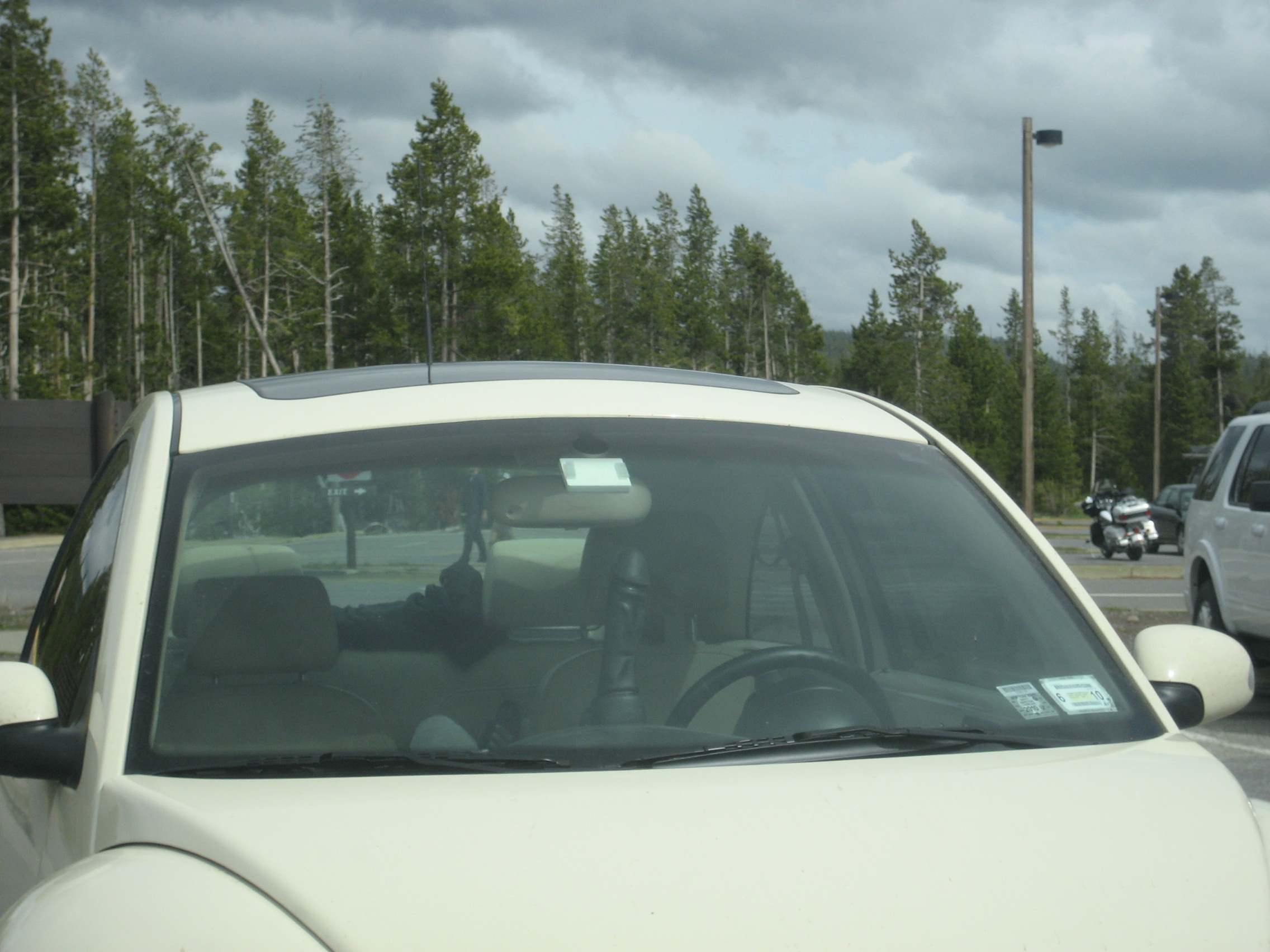
But the winner of our strange, hilarious, bizarre moments on the road belongs to whoever owns this car:

dildo on a WV dashboardThis was in the parking lot of Old Faithful. Lemme tell you about some old faithful!

I think I prefer seeing a daisy in the bug-standard flower vase.

Friday link love

Ev at the Corn PalaceI’m hitting the road again, this time on my way to the greater Washington, DC metropolitan area, and just in time for DC Pride. So in the meantime, enjoy these other nuanced and flavorful writings:

Snarky’s Machine: She takes on Eat, Pray, Love, one of the most annoying memoirs I’ve had the opportunity to listen to while driving. I didn’t even make it past Italy. And the book was about food!

Tasha Fierce over at Red Vinyl Shoes sounds off with some skepticism about news coverage of this week’s primary elections, and I always love me some skepticism.

When I feel the need to laugh long and well, I check out Go Fug Yourself, introduced to me by the supreme English professor friend of mine in Walla Walla. She knows who she is, and you don’t need to know. Just chuckle at Helena Bonham Carter’s outfit!

S.E. Smith shares my same morbid fascination for Sarah Palin, deconstructing Palin’s brand of “feminism.” Whew! I’m glad she cleared that up for us.

Over on Bitch Magazine’s blog page, later today, will be my latest entry, also on Sarah Palin (and Carly Fiorina, and Helen Thomas), and Snarky’s latest cinematique. Enjoy!

Interview with Graze

I’ve been curious about the people behind the newer eateries in downtown, so I decided to ask a few of them to give interviews about their lives as business owners, gourmands, and as part of a revitalized, local food community here. Last month, I sat down with the owners of the Colville St. Patisserie; this time around, I talked with the owners of Graze, a sandwich shop overlooking Mill Creek, and a catering business. Becca and John Lastoskie came to Walla Walla in a very food-model way: by sampling towns across the Pacific Northwest for a few days each. After some thought, they realized this was the town for them.

EM: Tell me what drew you each into cooking.

BL: Well. . .

JL: You first.

BL: I was putting myself through school and working at the Olive Garden, and the kinds of friends that I had were really cool, and they were talking about how they were going to go to Paragary’s in Sacramento, and how great it was, and I had no idea what it was. So I went in and applied for a job, and it was this whole, brand new world. I started hostessing and did that to try to get to waiting tables and I bartended for a while. I did that for a long time.

JL: You did that for ten years.

BL: I did that for a long, long time.

JL: Yeah, and I knew nothing about good food. I started working as a dishwasher at an Italian restaurant. Went to college, got a degree, and as I was just finishing up college I got a job making French fries, chicken strips, and another cook there said, “my brother works at the best restaurant in Sacramento.” I really liked to cook, but I didn’t know anything about what the food was, or what, but I thought if his brother could get a job, I could get a job, so I met the chef and he asked, “what can you make?” And I said “I can make ranch dressing.” He asked, “how do you make ranch dressing,” and I gave him the recipe for it, half-part buttermilk, half-part mayonnaise, packet. And he was impressed, so he hired me. And I met Becca the first day working there.

EM: Wow. And that’s when you knew this new world of stuff was really interesting?

JL: Yeah, it was like the second week of work at Paragary’s and I had a sandwich with rosemary, pumpernickel, artichoke hearts and other things and I thought this is the best thing I’ve ever had in my life—what did you do? Is there magic dust in it? And from there I just turned to learning.

EM: Okay, so fast forward now to Graze and what’s your vision for your restaurant?

JL: You go first.

BL: Um, boy. Graze is . . .

JL: It’s like counseling, we’ve never done this before.

BL: The sandwich shop is kind of what we always thought it would be. I think the menu could be a little bit bigger, I think there are a few things I would change a little bit, but we’re just starting out having never done this before, but we’re on track with what we envisioned: simple, for people who don’t know much about food, and when they come in, might keep trying something different.

JL: They’ll start with the turkey bacon panini, and then they’ll see something with Béchemel, and say, oh wow, let me try that. Not to try to teach people but to have good, nice, honest food, we should be able to fit all people, have them walk in, want to eat something that’s really good, and I think we’ve kind of hit that whole demographic. When you look around the room, oh, there’s a couple kids who really know what they’re doing, all the way to someone who probably eats Chef Boyardee Stroganoff every night. And they’re equally comfortable ordering off our menu, so I think it’s the one great thing, we can serve all. We get them all. Not enough kids. We see two-year-olds, and then we don’t see them until their teens.

EM: You have some complicated flavor profiles in some of these sandwiches. How did you develop the menu?

JL: How would you know, Everett, you always get the turkey sandwich!

BL: He always gets the turkey sandwich?

EM: No, no, I get other things there.

JL: Turkey sandwich, no tomato. [Ed. note: this is patently untrue.]

BL: I don’t know why people put tomatoes on everything anyway. Even when they’re not in season, when they’re not good.

EM: So tell me, how did you come up with the menu?

BL: Well, we knew we had to have some standard things.

JL: You have to include things that make people feel comfortable.

BL: And then, we love chimchurri sauce, so we put that on. And that’s based on seasons, too; you can always get parsley and cilantro.

JL: Yeah, and the menu actually revolves around the space, because it’s based on a Subway. There’s no stove, there’s no oven, so we looked at the space and said, okay, how do we make this work for fast service, good price, and we developed a menu. A few years ago when we were catering, we thought a good promotional thing would be to go serve something at the farmer’s market. The first week at the farmer’s market, we made Belgian waffles.

BL: Oh my God, it was just bad.

JL: Belgian waffles with raspberries and fresh whipped cream, it’s just heaven when you make them yourself. So, we thought we’d also make panini. Waffle for breakfast, then as the day goes on, panini. Well, I burned one out of three waffles, and I was so angry about it. For every waffle that I gave somebody that they paid for, I was basically giving it to them for free, because I’d burned the previous one and undercooked the second one, and they’re standing there for 15 minutes watching me fumble around with the waffle iron, but the paninis we sold out of those right away. Then I said, okay, we’re going to do paninis, and we sold out again, and so we started serving the turkey bacon panini that we serve here, and five weeks later, we’re selling 120 paninis. So we realized we were on to something. So that’s how the sandwich shop came about. Since we have a catering business there’s no way we’re opening a real restaurant. We’re cautious—you can lose a ton of money opening a restaurant. But that’s the evolution of it.

EM: Why Walla Walla? What is it you think about Walla Walla that’s interesting or a good place to set up shop?

BL: That’s a really good question. (laughs)

JL: It’s a good story. We were living in downtown Sacramento, on the verge of a [bad] neighborhood. In one direction, it was pretty nice, but 180 degrees in the other direction, it just got incredibly bad. Two blocks away were two murders. We decided to move to Portland, and then we started reading this book, called The Next Great Place, about smaller towns with a great quality of life.

EM: Was Walla Walla in that?

BL: No, no. Not at all.

JL: No. Although Walla Walla would probably be in that book if they rewrote it now.

BL: I’d always thought about living in a small town, I’d thought I’d enjoy small town life. Coming from California, it sounded kind of cool. So we thought, okay, we’ll sell our house and we’re gonna move to Portland, so we packed up with our kid who was 17 months old.

JL: We decided, after reading this book—

BL: You didn’t read the book.

JL: Yeah, I did. I read the book. So, we packed up our son, our stray dog, we tried to live in each of the towns on our list for three or four days. It sounds incredible, but we didn’t have a great plan.

BL: And in my mind, we went the wrong direction. We went northeast, to the desert side of the mountains, instead of going up the coast. We went the wrong way. So we made it up to Coeur d’Alene.

JL: So on our list were all the like, small cities and towns—

BL: Bend, Missoula, Boise. . .

JL: And then, when we were in Bend, someone actually said, a young couple with a couple of kids, said, what you’re describing sounds like Walla Walla, you should go there. Okay, so we stopped here on our way to Coeur d’Alene, and after just a couple of days, I was saying to Becca, it’s great, this is the place to come to. She agreed with me. So then we came here, and fought, madly.

BL: And we’d never fought before.

EM: But at that point?

BL: Yeah. Well, not so much a fight, but a discussion about what to do. We wound up going to Portland after our trip, and had a really good coffee. We went to a bookstore, heard some great music, talked about it.

JL: We decided [to] drive back to Walla Walla, spend a couple nights there, and see. We came back, and we stayed. It was completely the right move. If we were going to do anything with food, there were talented people here, didn’t have to spend a lot of money, or need a lot of experience. I was a school teacher in Sacramento, and to move out to Portland or Seattle to set up a shop and get in there was not as appealing.

EM: Are you saying there is something less pressured about Walla Walla?

JL: I looked around and decided, a catering business would work here. It’s way less risky than opening a restaurant. It’s more precision-oriented. At a restaurant, you’re gonna buy a bunch of food and you hope people walk in the door. If people don’t walk in the door, you throw a bunch of food away. So, at the time, nobody in Walla Walla was doing that kind of food in a catering business.

EM: It can be hard to break into a catering market.

JL: It was difficult, yeah. But a lot of interesting things happened and in a couple of years, the catering business—we have turned into a very large caterer, with lots and lots of events, with fairly high quality [food].

EM: Where do you see yourselves with regard to local or organic producers and the market here?

JL: The food costs for the catering business—my costs for the catering business are higher than any other catering business in town. I spend plenty on goods from local farmers. Number one we do everything from scratch. This summer we’ll probably buy 80 percent of our stuff from local farmers. As for the sandwich shop now, pretty much all of our stock is coming from a couple of local farmers. And I’ve told them, you walk in the door with it, we’ll buy it. So, they show up with salad greens, whatever. For summer weddings, I’ll show up at the farmer’s market at 7:30 in the morning and buy five giant boxes of things, fill up the back of the truck, take it to the catering kitchen, prep it, and then we’ll go to the wedding. So we try to have a good relationship with everybody who goes to the farmer’s market. It’s good to be tied to a community. We were asked [to do a May 15 wedding] so we got meat from Thundering Hooves, asparagus from Bonnie, we got milk and cream that we turned into butter from Pure Eire, we got garlic scapes and lettuces, the whole meal was 98 percent local.

BL: So how can you go wrong?

JL: Even being that local, you can get caught forgetting some of the things that are available, so on a menu that you arrange with somebody two months in advance, I show up at the farmer’s market and buy my stuff, and then I see something that would be awesome for today, but I can’t not give them what I promised, so it’s hard. We may show up with a different menu than we drew up! So that’s our relationship with food providers here. The only thing that stinks is that we only have a growing season of 8 months.

EM: Do you have anything you want to share about your next plans? New menu items?

JL: We’re opening three restaurants simultaneously.

BL: John maybe is, his vision is he’d like to open more Graze sandwich shops. Maybe one in Tri-Cities. I’d like to expand Graze here.

JL: The idea was to provide the high quality of food at a lower price with the fast service of a Subway. I want to have one central kitchen that serves a few stores. If we’re talking big picture, we still don’t know what’s really going on, but if [the sandwich shop] does what I think it can do, then the idea of putting up a number of them all in a similar geographic area, servicing from one central kitchen, isn’t crazy. It’s reproducing a whole nother business model. At the heart is the food. And really, I just want to eat nice stuff. I wouldn’t want to sell food if I felt like people weren’t getting a value. If you don’t walk away saying, I’m really glad I had lunch there—I never want anyone to walk away saying I don’t like what they did, because if they did that they wouldn’t want to come back.

EM: Now that summer is upon you, what ingredients are you excited to work with?

JL: I went to see this lady; we have a blog, and we went to Portland, and saw padrone peppers, and we got an email from a woman who said she had a whole back yard full of padrone peppers. I never met her, I don’t know who she is, but I really want someone here to grow padrone peppers. Put the word out, Everett.

EM: Okay!

BL: I’d love to see just basil and tomatoes. They’re just summer to me. I know it’s the same answer anyone would give, but to me, that’s what summer tastes like.

EM: Anything else you want to add?

BL: I’m really glad we’re doing what we’re doing.

Graze’s hours are posted at http://www.grazeevents.com/

Our trip in pictures

Starting out in Oregon:

Oregon hills

Next, Wyoming:

MIllion Dollar Cowboy Bar

Jenny Lake

Yellowstone National Park

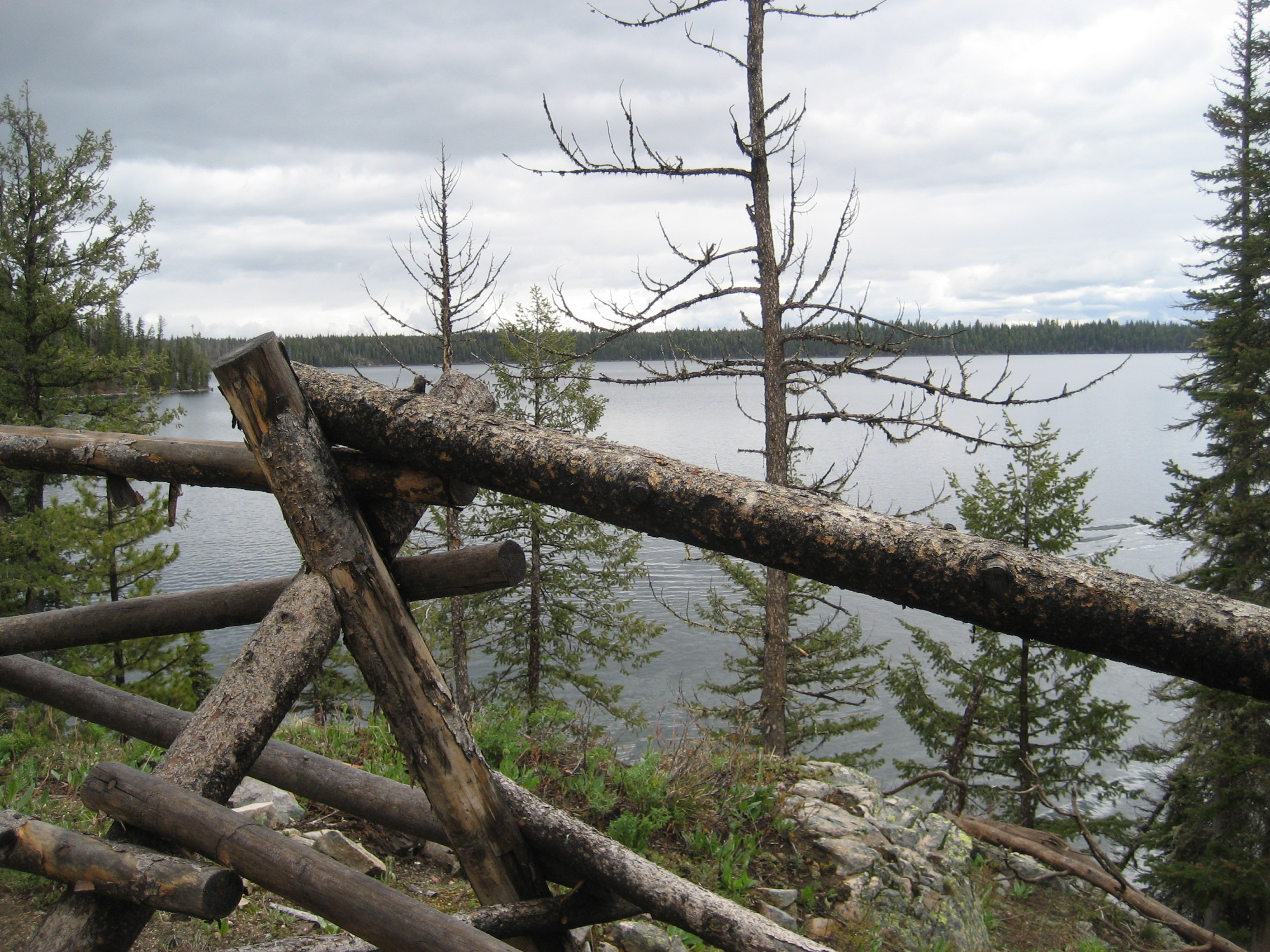
Yellowstone Lake

Yellowstone hot spring

South Dakota:

Bighorn National Forest

Mt. Rushmore

Badland National Park

Badlands and bad attractions

badlands national parkAfter seeing the Grand Teton and Yellowstone parks, I wondered if my retinas could take in any more amazing landscapes. Not to worry, apparently we had Bighorn National Forest and Badland National Park to get through, and those blew me away. Before last summer I’d never had occasion to climb around the side of a mountain high enough that I could gaze down on all of it like an eagle. And though I’ll always love my Jersey shore and the calm I feel just listening to the Atlantic surf, I also think I’ll never tire of the euphoria of being at the top of a mountain chain. If I wasn’t such an accident-prone scaredy cat, I’d seriously think about climbing to an actual peak.

We headed out from Cody, Wyoming, after our quality time with Old Faithful and its friends, first stopping at the local Albertson’s to get a few provisions. It was there that the cashier told me that 9 people had been struck by lightning at Old Faithful just two days earlier. Egads! And nobody was talking about it when we were there, not that I walked up to the rangers and asked if there had been any bizarre accidents near the geyser lately.

The actual spewing of sulfury goodness was pretty fun to watch. Old Faithful should have a subtitle of The Big Tease, because it spews a little and stops, vapor billowing out the whole time, then some more water, back and forth until kablam! the thing is off to the races. An annoying guy who kept trying to make eye contact with me had a devil of a time trying to capture a photo of the lead-in frothing before the big release, but he kept failing because he insisted on turning off his camera between attempts at getting a shot. People, charge up your camera batteries before you attempt to take pictures for hours. Or just buy a nice, professional photo in the visitor’s center. They have plenty.

So with our educations edified about the safety hazards of Jellystone, we departed our friendly grocery store and started pushing eastward again. We’d gone a ways from the main interstate to get into the national parks, so  we were cutting our way back when we spotted a small post office. I for one love small post offices, for several reasons, including the lack of long lines and the earnestness of the service—smacking just the tiniest amount of desperation to see another human being, but mostly just free from the crushing bitterness that comes with being a public servant in a busy, crowded office. We pulled into the parking lot, which had three spaces in it, and headed inside.

A lovely transgender postmistress greeted us, and we chatted with her for a few minutes as we figured out our postage needs. It’s always hard for me in those kinds of moments not to jump up and down and do a trans dance, but truth be told, there is no ballet of the trans, as much as I’d like for there to be one. And there’s no way not to sound creepy with any such announcement, so I just bit my tongue, trying my best to look extremely happy to procure stamps. We left, wondering what it is like for her in a town with a stated population of less than 100. Were people supportive? Had she lived here her whole life? It didn’t escape us that her employment came from the federal government and not say, from the local farmer’s cooperative or some other local business. She was cheery and smart, and I figured she’d won most everybody over with her charisma, but maybe I just like thinking that. We were fairly satisfied that we’d met the GLBT community for the tiny town, if not the vast majority of it.

Maybe I’ll send her a postcard sometime and tell her how much I appreciated the experience, but probably that’s still too creepy.

Eventually we made it to a 75mph road and triumphantly made our way into South Dakota. This meant we drove through Bighorn National Forest, which looked like this:

Yeah, that was what we thought, too. We had set our compass for Mt. Rushmore, mostly because we didn’t think we could miss it while driving this close to it, but also to see what we presumed would be grandeur and awe. As opposed to shock and awe, which neither of us, frankly, would drive to experience.

Roughly 2.7 million people visited the monument last year, which means that nearly 3 million folks were disappointed in spending the $10 parking fee to see some sculptor’s ego carved into the rock. The guy was a little kooky, preparing to sculpt “famous Americans” and put them into a vault called the Hall of Records for what, some alien civilization to discover? Something that would stand the test of time after we’ve obliterated ourselves from the face of the earth? I don’t get it.

We saw the monument, and I didn’t appreciate it because it was football fields away from me, giving me to sense of its real size. The curating of the exhibits were fourth grade level and didn’t answer any of my questions about why those presidents, why that order. I much prefer the Lincoln Monument in DC, the FDR Memorial, the exhibits that allow some kind of intimacy with the work and the subject, but I grant [sic] that that’s just me.

Next up was the Corn Palace, which not one but five friends insisted we stop and see on our drive. The last time I listened to such pushiness was for taking the Maid of the Mist in Niagara Falls, and it didn’t let me down. So naturally I presumed this would be pretty awesome in all of its kitchy-ness.

It wasn’t. While once upon a time the corn palace was completely redone every year, now only the panels on the building change, and they’re mildly interesting, but not interesting enough to warrant driving through Mitchell, the townies of which must just hate all of us tourists. It was fun enough, and I remarked that it was better than Mt. Rushmore because we didn’t have to pay for parking and we got some very tasty popcorn to boot.

Finally, we hit Sioux Falls on the east side of the state and met up with my friend Anna for lunch at the Phillips Avenue Diner. Note to everyone: fried cheese curds are an excellent bad for you snack, and I recommend them when they’re on the menu. Sioux Falls had an interesting feel to it, somewhere between Portland’s sprawl and the downtown of a small city, like Savannah. Anna showed us the actual falls, which cascade over pink quartz. I can not believe how much rock there is in the United States. Why don’t we export more rock? Where is the rock economy? Nobody is talking about rock getting us out of this recession, and we’re sitting on so much of it! We have to play to our strengths, people.

Clearly, it is time for breakfast. Pictures galore in the next post.

Deducing the tourist

We’ve been through four hotels in as many nights, and after our repeated exposure, I’m now prepared to say a few things about the Tourist of the West, at least as far as hoteliers are concerned. Using the set ups of our rooms as indirect indicators, I’ve deduced the following:

  1. Tourists in the West like extremely hot showers. If you are not a Tourist of the West, you need only turn the shower dial three-quarters of a scant inch to get the water in the hot tub range of 100–103.
  2. They are likely to bring along their small-to-medium size dog, even to national parks where the rangers tell them that those dogs only look like tasty snacks to the bears. Because clearly, they aren’t just dogs to the Tourist in the West, they’re part of the family. Would you leave your little sister at home while you go on vacation? (That’s rhetorical.)
  3. They still smoke. Nothing cuts through the crisp air of Wyoming and Idaho like a fresh Marlboro.
  4. They appreciate the free continental breakfast. Even the 2.5 star motels have a free continental breakfast of Costco-purchased food. Nothing says roughing it like making your own burned waffle while CNN plays on a communal television.
  5. The Tourist in the West either doesn’t noticed or has actually caused every bed in the hotel/motel circuit to be as lumpy as spoiled cottage cheese. Perhaps using topographical maps as beds is a form of massage that I simply haven’t yet noticed.
  6. The Tourist in the West likes to fancy herself a horse-riding, white water-rafting expert, although it would appear that she has done neither in a long, long time. The people out there riding horses and braving the Snake River seem to be different tourists altogether.
  7. The Tourist in the West likes to wear a ball cap from a college they attended roughly 40 years ago, or a ball cap from some relative or friend’s college attended roughly 20–40 years ago. This is because they think, it appears, that they are thus wearing a conversation piece on their head. DO NOT engage the Tourist in the West in any conversation, however, unless you have half an hour to kill.

Now then, back to my vacation! We’re going to see Mt. Rushmore today, and thus discover why South Dakota’s tourism revenue far, far exceeds that of North Dakota.

The human race is doomed

Another brief run-down in numbers of our trip. We’ve now spotted:

  • a beaver, who regarded us from about 10 yards away and let us get a couple of good pictures
  • a white wolf, who went running by our car on the side of the road at the Grand Tetons
  • two bald eagles, separate sightings
  • a hawk or osprey, who flew away when we got too close
  • a mountain blue bird, who literally posed for me
  • at least 30 bison, one of whom walked next to our car
  • an elk couple, gnawing on some grass
  • a grizzly bear, too tired to stand so decided flopping over on his side was preferable
  • a couple pronghorn sheep on the side of a cliff

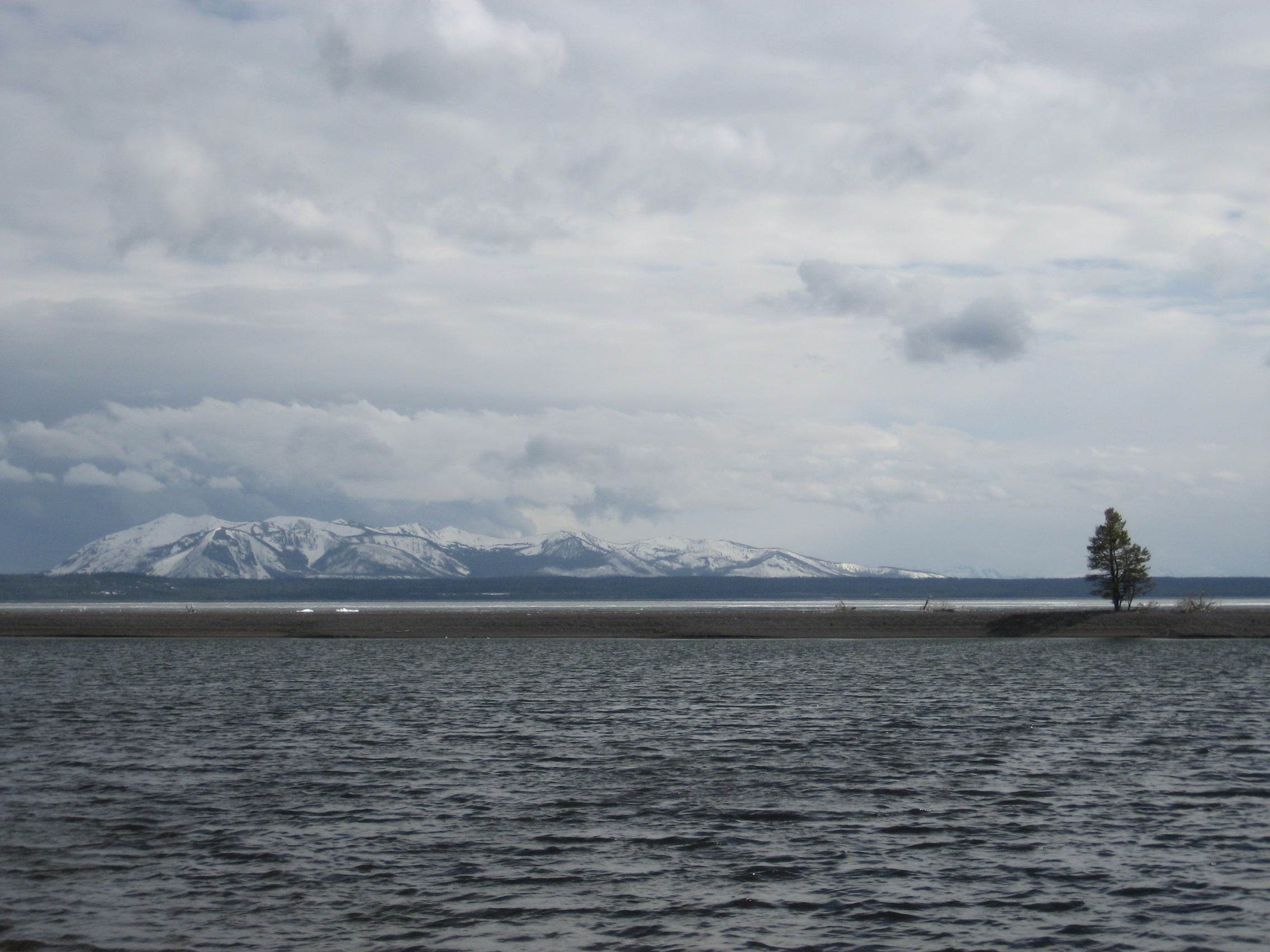
The Grand Tetons and Yellowstone are really incredible, simply put. There are so many different kinds of features I have a hard time fathoming that we’re in the same 300,000 acre area. Hot springs, geysers, mud pots, and volcanoes on the west side of the parks, enormous canyons, mountain-fed waterfalls, iced-up lakes and evergreens on the east and southern sides. And everywhere, precarious cliff drops, beasts and birds of prey, natural wonders I’ve never laid eyes on before, I could look in the same direction for 10 minutes and keep seeing new and interesting things.

The other thing I’ve realized on this trip is that it takes a hell of a lot of work to make a national park functional, from building in trails and roads without disturbing the ecosystem, staffing the park with rangers who know what they’re doing, writing up points of interest accurately and interestingly, and effectively keeping people aware of safety hazards and relevant laws. This last one cannot be understated as challenging for the park service. There were so many times Susanne and I saw people behaving with total ignorance of their surroundings, or what I can only imagine was disregard for rules, laws, and guidelines.

Passing a sign telling us that this area was “frequented by bears,” a hiker pulled out a sandwich and started eating it as she walked. Mm, tasty human with tasty roast beef sandwich!

At a hot springs basin in which all manner of sulfur-living bacteria floated on the water, smelling like dead bodies, a woman dipped her hand in the water, for what reason I have no idea. Susanne and I were astonished at her carelessness—she could contract a parasite, or worse, become the Undead Swamp Woman. Or so I imagine.

At the same hot springs basin, a sign warned travelers of the thin crust to the earth, and to stay on the raised platform. Here is the sign:

dangerous ground signThis sign clearly shows a boy off the raised path, regretting his action, while a woman with a pained expression on her face looks on, trying to figure out what to do as the child begins boiling himself. Notably, a man with a bag in the background walks on, aloof and indifferent to the entire ordeal, which tells us something important. Never trust a guy with a man purse. Let’s please also note that this sign is in five languages, and topped with an eye-catching red banner. There really is no reason not to at least glance at this sign. You’re about to walk through a lava field, people. Aren’t you the least bit interested in what the rangers saw fit to share with you?

hot springs in yellowstone

Does this look like you should stand next to it?

So what did we see happen four feet from the start of the trail? An entire family, one by one, getting off the platform, walking right up to a bubbling crevice, kneeling next to it, and pointing at it, the other members of the clan gleefully snapping pictures. Of what could be their last moment on earth. I think my jaw dropped.

Later that day we saw several vehicles stopped along the side of a road, and we figured something interesting must have been happening, so we slowed down, since rubbernecking is okay in these parts. Lo and behold a grizzly bear was sitting in the brush, just hanging out. We had also read by this point no fewer than 10 pieces of instructions regarding bear encounters, everything from how to photograph them safely, to proscriptions against feeding them, to what to do if one attempts to rip out your throat (note, it does not involve climbing a tree).

None of the people taking pictures of this grizzly were abiding any of the very incredibly sensible rules around bear trauma avoidance. No one was keeping a safe distance, all of them were out of their cars, presumably going on some kind of numbers game—he’ll probably attack someone other than me, so I’ll have a chance to run back into my Hummer3. One woman with her crappy Canon PowerShot (hey, I’ve got one too, so I know about these things) asked another person, “do you see any cubs?” What the hell, lady? Susanne rightly knew that if there were cubs around, this bear would not be nearly so docile-seeming, and chaos would have already ensued. There’s nothing like a real vacation killer than running for your life because you had to get a close up of a baby animal and your zoom just wasn’t cutting it. People seem not to realize that the professional photographers of the wilderness world have amazing equipment that lets them get extremely close shots from very safe distances. The amateur’s stupid Pentax is not going to be the same. Just by the $10 poster print in the national park store and be done with it.

I can only glean from all of this bad behavior that our time is fairly limited on this planet. Those hot springs have been pulsing out boiling water way longer than we’ve been around, and they’ll be here after we lose out to the cockroaches and sparrows of Earth. But it’s a shame—we humans went to the trouble to create language, and then we spend so much energy not listening.

And all that aside, the Grand Tetons and Yellowstone are really amazing places. More on that tomorrow.

Enter ye springs of heat

I have been dreaming of sitting in a hot tub for months now, knowing that we’d planned it for the first leg of our cross-country journey. Having spent a week in Radium, British Columbia, last summer, I had some expectations about what Lava Hot Springs would be like in Idaho. It’s actually the first set of expectations I’ve ever had for Idaho that didn’t involve either potatoes or white supremacists. And while I’m sure that’s not entirely fair to a state that hasn’t actually done anything to me personally, I have driven by Disciple Way in the northern part of the state, and it made this Lebanese boy rather nervous.

Our original plan was to leave early today, the day after we vacated our house, but the thought of getting up at 6 in the morning to drive for seven hours was just overwhelming. I didn’t think we’d manage it, actually, or if we did, we’d be off on the wrong foot, all cranky and overtired. So we caught our second wind yesterday and drove as far as we could until it was time to turn in. Well, logistically speaking, we had to figure where we’d be likely to find safe and decent accommodations, so we identified that it would be either Baker City or Ontario, OR. We pushed it and made it to Ontario, which made Walla Walla seem like a veritable metropolis.

The front desk of the Holiday Inn was happy to tell Susanne that this was a full-service hotel, I suppose because it had a “Tap Room” and a sit-down breakfast available at the Country Kitchen. We had hit the big time. As it was, we were excited to get out of town quickly, so we pulled into a Burger King and got breakfast: two crossanwiches, two orange juices, one water, one coffee. I drove away as Susanne popped open her orange juice, the iPod humming with some catchy pop song dittering along. My coffee was way too hot drink for a while, so I looked for some OJ.

“Oh no, they only gave us one,” she said, looking around.

I eyed her small container expectantly. And I was astonished at what she did next.

She saw me seeing her juice box and rushed to get her mouth around the straw so she could finish the last sip! Yes, she raced to finish the juice!

I drove with my jaw hanging open.

“I really wanted that juice,” she explained, as if articulating her awful behavior would somehow provide impunity. I muttered something about sending an email to Burger King.

lava hot springsAfter five hours, we rolled into Lava. It wasn’t nearly as pristine as Radium, but at least it didn’t have any kitchy fake Bavaria presence. We quickly changed into our bathing gear and the warmth was all around us. Susanne and I positioned ourselves in front of two hot water jets. The joy was indescribable. After 20 months in Walla Walla, a week of constant packing, and months of anticipation, we were here, our feet floating in 104 degrees.
On the other side of the pool, an interesting conversation emerged:

Older woman who identified herself as a beekeeper: So what is it you do?

Guy who had been chatting up everyone at the springs: I was a stockbroker for 30 years.

Beekeeper: Oh. So I suppose you haven’t been doing very well in this economy.

Asshole stockbroker: Oh, this is when people make the most money, actually.

Beekeeper: And how well do you sleep at night?

Asshole stockbroker: Oh, I sleep fine.

We decided we liked the beekeeper, who also took the guy to task over saying the mortgage industry collapse was all the fault of poor people who couldn’t afford their houses.

Afterward, we started driving again, through valley system after valley system, cutting through five or six rows of mountains. As soon as we would get used to one style of mountain—say, tree-lined—we’d round a corner on a pass and would then befall a new style, like snow-capped rocky outcroppings. All above us, clouds and sky. The sky is so big out here, actually, that just standing on the bottom of the canopy one can see entire weather fronts, rolling this way and that. When lightening strikes it gives all of itself away, from the start to the terminus, and for 50 miles around, everything is bright, just for a few seconds.

Finally we drove along Stateline Road that divided Wyoming from Idaho, and I’ve never seen anything as informal as that boundary. It’s not like the state line between Washington and Oregon is lined with armed guards or fences, but there are signs denoting the two states’ territories, and oh, road lines. This was a rung or two up from a seasonal road, and it was barren of all markings, as if each state were refusing to spend money on painting the surface. Unleashed dogs ran around on the shoulder, and buildings that had been abandoned long ago had also at some point given up their ghosts and just crumbled to the ground. It was a rural brand of poverty that made me realize a little better how many Americas there are in one big country. And all that mountainous beauty amid such a dispossessed people. When we finally came across rich houses with four-car garages, I sensed my own frustration at the inequity.

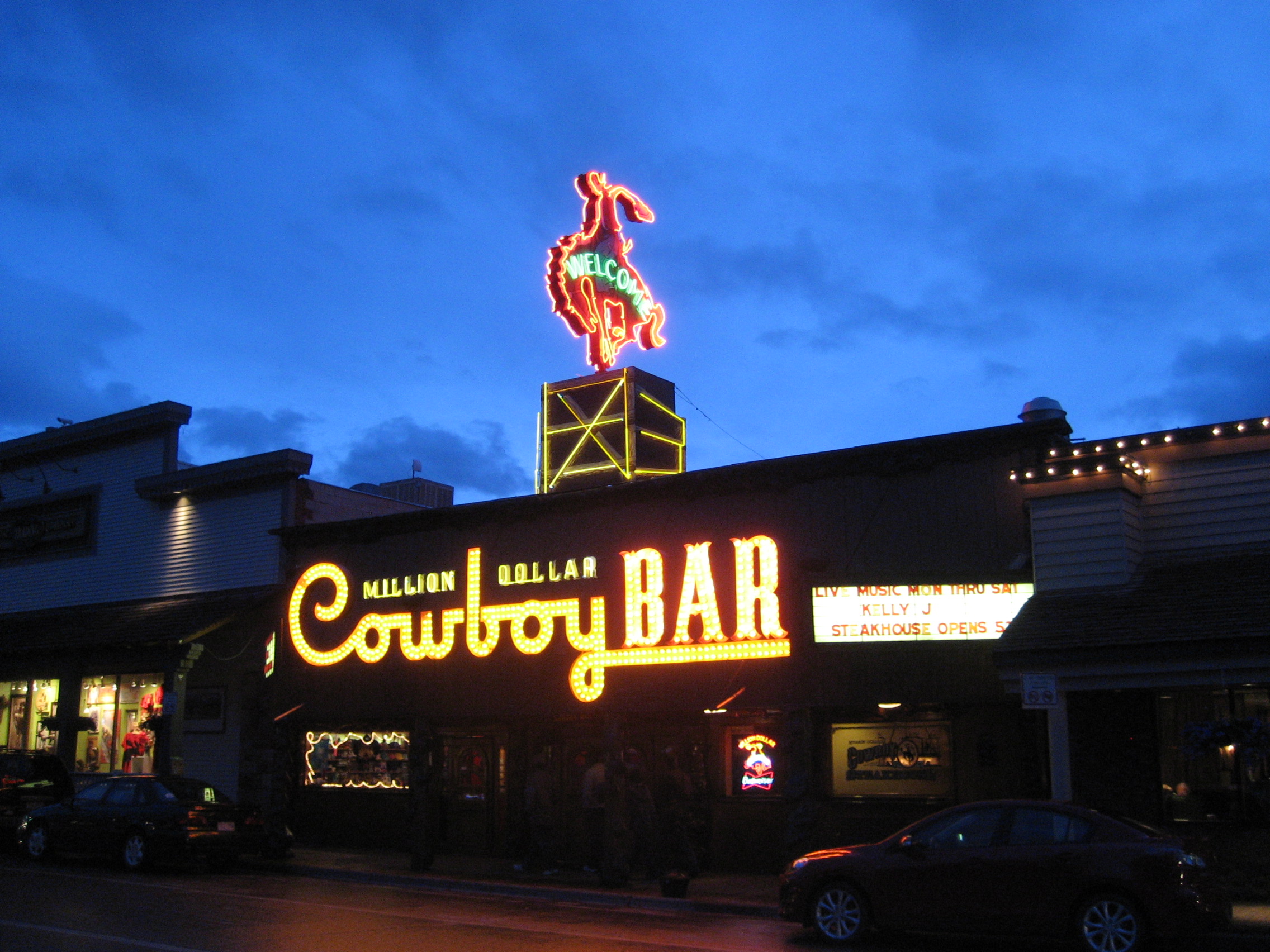
million dollar cowboy barWe motored on, driving under a ridge of a T-cell storm, the rain literally on one half of the car, and pulled into Jackson Hole. I’m not sure where the tourists are form who visit here, but there are a lot of tourists. It was late enough that most of the shops and tourist-boutiques (read, fake nice things) had closed for the day, but we wandered in to the Million Dollar Cowboy Bar, or perhaps I should say we sidled up to it. Sure, sidled is better. Susanne and I ordered up a buffalo and an elk burger from the window and watched a local band belt out some country music. I still can’t see country folk and not think they’ll have Southern accents, but I’m trying.

Then it was time to turn in. We’ve got some exploring of the Grand Tetons tomorrow. I wish I’d never realized that “teton” is French slang for boob. Crazy French trappers.