 The first time I came to the PNWA Conference I was by myself, staying as a guest in the man cave of a friend’s house and commuting to the conference hotel by bus. I got to the event early and stayed all day, rumbled home on uneven roads, and zonked out until it was time to repeat the process in the morning. The next year I came with my sweetheart in tow, who was 9 months pregnant at the time, so I ducked out often to grab a meal with her or check in. This year I’ve got a family with me, meaning that I’m attempting to cram baby watching time in with networking, going to panels, and pitching stories to industry folks. Now that exhaustion from two years ago seems tame in comparison.
Also, this is the first year I’ve attended the conference as a published author. That’s pretty rad. Even still, my self-pessimistic nature continues to knock at my mind’s door. Oh, look at your puny stack of one book. And you call yourself a writer?
I’ve written before about how I’ve sent my inner critic away on a permanent vacation. Sometimes it pops back for a rendezvous with the rest of my thoughts, and I have to shoo it away again. Yesterday it tried to set its suitcases down and I handed it a ticket to Argentina. Go see the llamas and glaciers, I said. It slumped off, pissed and dejected. Read More…
 I had a great blog post almost ready to launch earlier today, really I did. It was about moving my office from one location to another clear across town, and who thinks what about it, what went wrong during the move, ending with why all of this is funny.
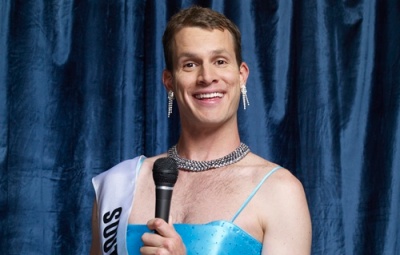 Last week, a brouhaha erupted on the Internet after Daniel Tosh, a lackluster comic and host of Tosh.0 on Comedy Central made a joke about rape. Or rather, he attempted such a joke, knowing full well that somebody out there in the world, if not his audience, would find it unfunny and offensive.
  I don’t pretend that this is news, for I first learned about false dichotomies in 1991, as the prequel war began in Iraq. Actually the rhetoric around that conflict gives good context for this discussion, because it was presented by the media to all of us as a fight between good and evil, the granddaddy of all dichotomies. George Bush the Elder seemed not quite the thousandth point of light to we idealistic college students, and although Saddam Hussein clearly wasn’t a benevolent leader for his country, many of us questioned the purity of malignancy that our government suggested he represented.
 We adult-type people recognize that life is hectic, tilted toward entropy, and full of aggravation. Big moments, unexpected problems, and the aforementioned garden variety pressures get us stressed out, and I know that is an understatement. But the writing (and the dinner making, diaper changing, phone call returning, toothbrushing) must go on. Of course nothing resolves stress like actual problem solving, but let’s presume that some stress is ongoing or can’t be eliminated before one needs to spend quality time with their project. Just what is in my particular box of tricks? For writers like me, having a toolkit of tactics to deal with chronic stress so the creative whatnot can flow is critical stuff. Check out the following:
 From time to time I’ve posted excerpts from my works-in-progress. I did several for Parallax, now called The Unintentional Time Traveler. Here’s one from my very latest project, about a world in which teenagers reach adulthood via a fantastic metamorphosis. Don’t look for perfect writing, as I’m still in first draft mode. But to see where I’m going with this project, here is a brief scene from early on:
 It is an understatement to say I’ve spent quality time around horses. I hung out at Tara Stables in New Jersey as long after a riding lesson as I could; I’d go for 1- and 2-hour rides with friends in the forests around the Delaware River Valley, and twice I went to horse camp. Because once necessitated a sequel, I suppose. I learned how to ride horses in the Western and English styles, and I took a horse riding class in college as my one and only “fun” class in 120 credits of my undergraduate career. As a tween I drew horses for hours and collected small statues of the animals in the way that kids are strangely encouraged to identify hobbies.
 A good friend who lives in chichi Northern Virginia described how parents jockey for their children’s position in educational institutions, taking a comprehensive assessment approach. They quizzed instructors, toured facilities, reviewed budgets of these organizations, and commiserated with parents of alumni, all before the enrollment advocacy began. As these things go, there are only so many available spaces, and many, many applicants.
 First lines are the mules of literature these days—they do the heaviest lifting in a given book, needing to “hook” the reader into reading more. Writers, I’ve been told, need to show the characters, the overall context for the story, at least a glimpse of the story’s novelty, and the conflict that will drive the plot. That’s a ton of work for the start line of any marathon. Come to think of it, real starting lines only mark a space. First sentences in fiction mark well more than the small area they occupy. Blog after writing blog expresses concern for writers who send in the first several pages of their manuscript—are there enough motivators for readers right at the outset? One conference I attended had a “first page review” with a panel of agents and editors, and more often than not, the industry experts laughed at the submissions presented to them. Surely there were a few ugly dogs among the contenders, but even so, one mere sentence that is supposed to stand above all others is a precariously high bar, and it’s something that feels (to me) less about art or creative integrity to the piece, and much more about marketing standards and focus group data. Consider the following first sentences:


 Trans/plant/portation