Latest from the Blog

The Name Game, or, Why Judges Matter

blind justiceUPDATE: There is now a petition to remove this jurist from office.

A regional newspaper from Oklahoma reported this weekend that District Court Judge Bill Graves repeatedly denies legal name change requests from transgender people when their cases are assigned to him. But let me take a step back and provide a little context for why I’d pluck this one sad story out of the bin, and why this matters to transpeople and all of us.

Several hurdles stand in the way of any individual’s transition; in addition to the social shifts involved in telling one’s friends, coworkers and family about their gender identity, and on top of navigating the health care and mental health industries to make one’s chosen medical changes, there is also the myriad of legal rules and guidelines to manage. Making the legal changes even more complex for transfolk, most of the laws that transect gender identity weren’t designed for this purpose, leaving us to cobble together a paperwork patchwork to get what we need in the way of identity documents and necessary legal guidance (like wills or power of attorney). And just to throw another monkey wrench into the mix, consider that the requirements for obtaining new identity papers or altering old ones are different not only from state to state, but sometimes from jurisdiction to jurisdiction. For example, some states will grant a new birth certificate with no notation on the form that there has been any change from the original name or sex marker, other states will show that the certificate has been amended, and some states, like Ohio, forbid any changes to their issued birth certificates, no matter the reason.  Read More…
5 Mistakes Emerging Writers Make

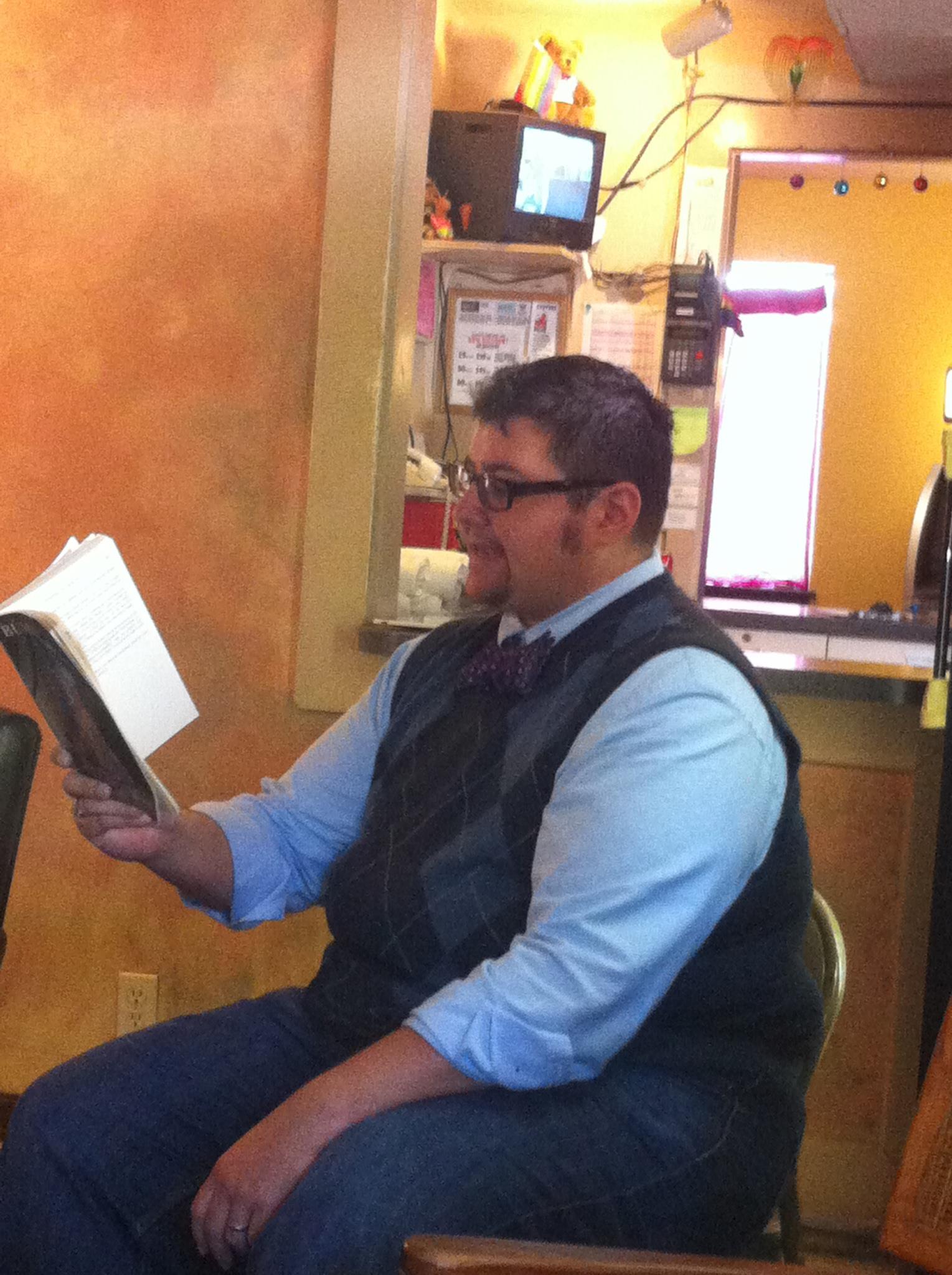
Everett reading in San FranciscoDepending on how I tabulate my time trying to get published, I’ve either been at it for 26 years or 4. (Long story.) At long last I found a publisher for my memoir, and a few journal editors who agreed to publish short work of mine. I’m grateful for those opportunities, understanding that all of this work amounts to a series of tiny steps toward making my writing a part of LGBT literature, however miniscule that part may be. When people come up to me and thank me for creating something that resonated with them or with which they could identify, I am beyond pleased. Writing is not about making money, after all, at least not for me. It’s about connecting people and adding what I think is a rare voice in the market. I neither apologize for being transsexual or bringing humor into my delivery, because both of those aspects are sorely missing in literature about people in my community.

I admit there are many ways for an emerging writer to keep her/himself from reaching the market, however. And I speak from experience on several of these points, as I’ve fought against making them or have actually gone full bore into materializing these errors. I’ll also note that this is certainly not an exhaustive list. Feel free to add on in the comments. But as I have lived it, the big missteps are these:

1. Grousing–There is so much stress associated with being an unknown writer, I get it. We worry if our work is any good, if anyone will notice our value, we incur piles of rejection slips, even while we watch vapid celebrity book projects get tons of hype from traditional publishing (hey, ghostwriters need to make a living too). One expert will tell us our book is too long, another says it’s not long enough, and so on. But if you’re working on establishing an audience, remember that readers–seasoned readers in your genre especially–have no tolerance for complaining. Nothing will make you look unprofessional faster and with less effort than negative statements about how crappy the publishing industry is or how blind agents are to your talents. Complain in private, among your most solid friends. Read More…

Of Larvae and Vomit

big pile of candy cornPerhaps every day comes with its own set of expectations–if we’re looking forward to a particular event, those expectations are probably higher, and conversely, if we are dreading something on the calendar, well, one won’t ask for much from that day. We may have most or least favorite days of the week. There could be influences mediating our expectations more generally, like fighting through depression or riding a high from a recent success. If I were a master mathematician, I would write out an equation to explain these shifting thresholds, but I think we all know I balk at calculus. Actually, I can barely spell “calculus.” It’s not an easy word to type on a standard QWERTY keyboard.

This Monday really didn’t have much of a chance, as I knew I’d be saying goodbye to my mother and stepdad after their visit to our home. The shared birthday celebration last weekend, recreational board game quality time, wine tasting tour, and US Open Tennis Tournament cheering was all coming to an end, so really, September 10 didn’t stand a chance.

Even by the anemic standards set for today by my personal immediate past, Monday fell far short.

Yes, the family photographs on the front lawn in the early morning sun–under our weeping birch tree, Susanne clad in a housecoat and pajama pants–was nice and bittersweet. Emile is a dedicated giggler in the hour after his morning meal. I waved goodbye to my folks and aimed the car at my office. I swung by a popular vendor for espresso drinks, and pulled into the parking lot at work.  Read More…

More Injustice, This Time at the Walla Walla Farmer’s Market

Once again, Walla Walla gets mired between petty politics, entitlement, and good people.

To Jeff Smisek, CEO of United Airlines

TO: Jeff Smisek, CEO United Airlines

FROM: Everett Maroon, Mileage Plus Member XXXXXXX

DATE: 9/4/2012

RE: Series of poor service incidents from UA Staff

Please let me begin by saying that I appreciate the challenges present for commercial air carriers in the United States today. Your recent merger announcement with Continental is of course predicated in part on finding efficiencies in both business models and improving the destinations and flight coverage for passengers overall. I can’t imagine what pressure your business must be under regarding the logisitics of such a large merger of corporate climates, staff, benefits packages, strategies for future development, and heck, the terrible cost of jet fuel these days.

Because of these oft-reported limitations and tensions, I have been willing to put up with a certain level and number of inconveniences as a frequent traveler–the disappearance of the in-flight meal (they weren’t very good anyway), and later, of the small bag of pretzels, the addition of checked bag fees, and the changing, increasingly invasive security process, which I understand is not under the control of the airlines. Along with these shifts I’ve seen consequences for how I travel–I head to the airport much earlier than before, I plan for snacks ahead of time, I bring only certain bags that are within weight limits or will fit in such-and-such an overhead compartment. I have rejiggered my traveling strategy because now I have a 1-year-old child, and I acknowledge that my customer experience expectations have evolved because of all of these changes from the airlines, the world we live in, and my personal life. Read More…

Television’s Sidekicks of Color

Author’s note: This post originally appeared on I Fry Mine in Butter in June 2011. 

Feeling somewhat blue in the doldrums of summer reruns and the NFL off season, I gladly tuned in last year to see the then-new show, Royal Pains. It was about an E.R. doctor who gets unjustly fired from his job for helping a sicker but less wealthy patient, and winds up going into extremely private practice for the extremely wealthy in the Hamptons, New York. Catch the irony there? It’s subtle, I know.

It was enjoyable enough, with Mark Feuerstein as the good doctor Hank Lawson (son of being lawful, get it?), Paolo Costanzo as his well intentioned, extremely frustrating brother Evan, and Reshma Shetty as Divya Katdare, a woman of Indian heritage who secretly becomes a physician’s assistant, hiding her vocation from her family. Watching through the season, it was her character who supported the brothers through Evan’s monotony of stupid schemes—how his character didn’t take the grand prize in the Darwin Awards, I have no idea—and Hank’s challenging sense of insecurity to become the backbone of “Hank Med,” Evan’s stupid name for the practice. She reminded me a bit of Stephanie Zimbalist in Remington Steele, although Hank was by most measures not a complete charlatan.

Then the fall rolled around and I took in the premiere of The Good Wife,which I’ve written about on here twice now. And lo and behold, in the midst of the fictional Florrick Sex Scandal of 2009, there’s a cutting-edge investigator at the defense attorney firm: an Indian woman, Kalinda Sharma, played by Archie Panjabi. Wait a minute, my brain fired at me. Is this just coincidence? What’s going on here with the sidekickery? Read More…

Why God Hates Us

rush limbaugh with cigarThis was originally a post on I Fry Mine in Butter from 2010.

In the beginning, there were good preachers and there were scary preachers. The good preachers seemed kindly, they talked about love, they talked about forgiveness, they talked about acting as Jesus did, minus all the getting betrayed and walking up a huge hill with a board, and getting crucified. And that was good. And they have remained basically the same, still talking about love and forgiveness and modeling.

There were also the scary preachers. They ranted about hell fire and damnation, and sin. Lots of sin. Everyone a sinner, with the implication, never acknowledged, that they must be sinners too. And while scary preachers could raise a ruckus, most people preferred the other kind of preacher, especially when the scary preacher got embroiled in personal scandal, showing that despite their invective, they were not better than the rest of us. Read More…

Out of Order

Author’s note: This is reblogged from I Fry Mine in Butter, from June 2011 when I originally wrote it.

I was still a teenager when Law & Order started on NBC, and while I liked it just fine, I don’t remember being immediately taken with it. Actually, it seemed a bit like one of my boyfriends, the first of three Scotts I dated in high school and college—fairly likable, but I wondered about how long it would last. Law & Order, on the other hand, grew on me over time; I may not have caught each and every episode as they aired that first season, but I would read the tiny printed previews in my parents’ TVGuide and remember to watch. Hey, it was 1990, after all, and the newspaper’s television guide was often wrong. Oh, life was so hard.

I wanted to know what was up with Ben Stone, the ADA who seemed a little, well, crazy. Robinette was the cool and collected one, often mediating between Stone and Adam Schiff, the District Attorney. Every episode the cops were nearly precognitive, until the attorney’s office took over and had to deal with the technicalities that threatened to have the case for the people thrown out. It was as if Giuliani’s New York weren’t even possible because these criminals knew it was a cakewalk. Still, with a little bit of magic and finesse, and a hell of a lot of drinks over what I can only presume were extremely old bottles of scotch, Schiff got his convictions. Or at least very intimidating plea bargains. Read More…

It’s Not the Same Press Anymore

This article originally ran at I Fry Mine in Butter.

Once upon a time, newspapers like the Boston Globe, the New York Times, the Philadelphia Inquirer, the Washington Post, and so on all had reporters posted in far away places from Moscow to Johannesburg, Rio de Janeiro to London. These folks were part of a press corps that wrote daily or near-daily stories and sent them back to their editors in the paper’s home town. Each paper published different articles on similar topics, because the ideas around what was “newsworthy” were generally the same, although it was common for one paper to run a story and another not to, if the first paper had confirmation of all of the details but the second one couldn’t muster them together. This is how we all came to know the concept of “getting the scoop” on the competition. Political reporters tried to form relationships with people in the political arena, so that they could get first dibs on juicy quotes or source material. I presume that a lot of backroom dealmaking popped up in this kind of relationship. Agreeing not to mention President Roosevelt’s wheelchair meant that one got to continue to sit in the White House press corps, for example. Agreeing not to mention JFK’s many affairs got them something I don’t know. But something. Read More…

The Coen Brothers Know How to Murder

Author’s note: This is reblogged from I Fry Mine in Butter, published in May 2011.

Please note, this post contains and focuses on images of fictional violence.

I was a fan of the Coen Brothers before Fargo came out, and then it was all over, I was nuts about Coen Brothers movies. I still think there’s never been a better movie opening than the one in Raising Arizona. There are a lot of things I could write about with regard to their work, but fortunately for me, it’s mostly been covered by the blogosphere. What I haven’t seen, however, is this, and coincidentally enough, it’s one of my most favorite aspects of their work—it is freaking hard to kill someone. On a larger level, it is inordinately hard to be a criminal. Shit just doesn’t work out very well.

In two films, the aforementioned Fargo and Burn After Reading, people who are otherwise desperate or ignorant try to deal with their circumstances by identifying get rich quick schemes. They even had the best intentions to start out, but faced with two juggernauts as adversaries—well established, smart and greedy businessmen, and oh, the Russian embassy, respectively—they fold like a house of cards in a day care center. Read More…