 Like many people, I have mixed feelings about Father’s Day. Sure, there are lots of tweets and Facebook posts that go something like “to all the Dad’s [sic] out there,” obliterating that actually, there are better and worse examples of those who parent from the masculine zones of gender. A few years ago I joked with at least four other individuals in the room that we should start a “I Had a Shitty Father” club. We could emboss t-shirts and stamp out buttons and make zines. Why not turn personal trauma and angst into fun? Misery loves a good zine. But there are definitely moments I shared with my father that I carry with me today, like the Sundays after church when he and I would feed the ducks at the local pond (we didn’t know in the 1970s that it was bad for the ecology of it all), or his love of bygone music, or the thoughtful way he’d lay out my cereal choices in the morning before school, with the newspaper opened up to the comics section. I think I got a better dad than he shared with his older kids, and I do appreciate that.
These days I chase after a little boy reminding him to be careful when climbing on the tippy ottoman. Or the big steps that lead to our front door. Or the strangely busy residential road where we live. I was picking smashed raisins out of the one tiny carpet we own at some point last week when a wave of giggles hit me. This is full circle. I’m sure my mother had to pull all kinds of detritus out of the flooring when I stamped it on the linoleum, or shag-covered stairwell, and so on. Read More…
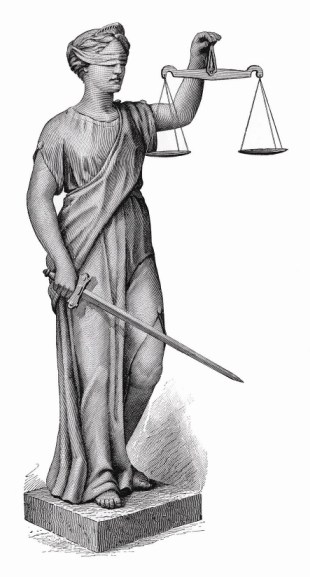 The twelve members of the jury walked back into the deliberation room, after we’d handed over our verdict and individually attested that we voted freely and according to the instructions from the court.
 The criminal justice system in the United States seems to be founded on constraints. Who can get selected to serve on a jury. When the defendant can speak. Who can ask questions, and how those questions must be worded to be allowed in the courtroom. There are also the presumptions—the defendant is innocent until proven guilty, the jurors are presumed to be impartial, the judge is also presumed to be a fair referee in the battle between the opposing sides. Above all it is expected that justice will prevail. But nobody in the average criminal trial defines “justice,” even as they go to pains to map out the boundaries of “reasonable doubt.”
 He gave us a look, tilted his head to one side, and then told us we would be breaking for lunch.
 It started with a perforated postcard in the mail, back in early April, saying I was on the docket for June 2013. Walla Walla’s Superior Court uses a system in which jurors need to be on call to make an appearance on any given date during the month. Opening up the sealed card, one will find a short questionnaire which is supposed to be mailed back to the court right away. It tells the court if there are dates one can’t serve (I said I’d be out of town after a certain date in June), if one is or is not a United States citizen (Susanne gets out of all her jury duty for being Canadian), a resident of the county, and older than 18. It asks if one can read, speak, and write in English (illiterates need not apply?), and asks things about whether one is currently employed, and if so, what kind of work it is. There were other things on there, but I’ve forgotten them.
  The older I get, the less I realize I know. Let’s face it, it would be challenging to find me more self sure than when I was 9 years old, during which age I’d insist it was not only possible to have all of the knowledge in the world in one human brain, but also that I would accomplish the feat. Such precociousness! Turns out that knowledge gathering is onerous, filled with all this foundational base stuff before anything really fascinating comes up. Want to master painting? Here’s a lesson on perspective. Love to know French? First you have to learn elementary vocabulary and grammar rules. Nobody jumps to particle physics without first hearing about that Sir Newton dude and the apple on his head.
 Nobody writes a sullen woman like Susan Jane Bigelow. Don’t get me wrong; they have their reasons for their moodiness. Stuck on something of a forced sabbatical with their repressive family in a repressive country, girlfriend unreachable, this corner of the galaxy about to get into an interplanetary war—there are a lot of stresses on young women like Marta Grayline. Bigelow settles us into the tension almost immediately with two quick flashes of prologue, and then we’re immersed in Marta’s world, a familiar story for some of us, even in this far-future science fiction setup: can I hide my queerness while I’m spending time with my relatives?


 Trans/plant/portation