Archive | visiting RSS feed for this archive

The 2010 Tour of Babies

Leaving or entering Walla Walla from anywhere more than 350 miles away entails, as previously documented on this blog, a minimum of 14 hours and multiple modes/legs of transportation. Our longest trip was our original relocation, which took seven days, and our shortest one occurred a few days ago, when we left for the airport at 9:15AM Eastern Standard Time and rolled into our garage at 8PM Pacific. Most of our commutes have run somewhere around 17 hours, which I suppose was mind-alteringly fast at some point in history. Lewis and Clark, for example, took 3+ years to reach the West Coast after leaving Philadelphia. And they didn’t even have Delta’s complimentary biscotti cookies, noted by me as the only high point of traveling on their airline.

Taking our three flights to Michigan, then spending 10 days at the inlaws, during which it snowed 7 times, and then gritting our teeth for what we hoped wouldn’t be an awful Detroit airport experience—seeing as the “underwear bomber” had been Motor City-bound—we made it to BWI Airport, found our luggage, took the shuttle to the car rental building, drove to have lunch with some friends, drove for an hour to our first host family’s house, and walked in the door. We were met, three inches past the threshold, by our 3-year-old friend.

“Would you like to play Candy Land with me? Would you like to play Candy Land with me? Would you like to play Candy Land with me,” she asked, sounding like Cameron Diaz after sucking down a couple of helium balloons.

I presumed she really wanted to get her inquiry across to us.

Her mother attempted to wave her away, saying that good hosts don’t accost their guests the nanosecond they arrive, but she would not be daunted.

“Come play Candy Land with me,” she said, switching to the declarative. I sensed we weren’t getting out of a game, and I grinned. One had to admire her panache.

We sat on the floor and played, and luckily, I remembered the rules from when last I played, in 1974. There seem to be some additional characters on the board, mostly in the form of princesses, that I don’t specifically recall, but I stumbled through with the whole card picking thing. If our friend selected any of the “princess cards,” the ones that send players to the gingerbread man, candy cane, ice cream cone, and so forth, she would begin a dance, which I quickly learned must be part of the new 21st Century version of Candy Land. I wasn’t sure I’d be able to recreate the exact dance moves, so I crossed my fingers that I’d only get the one or two gumdrop cards, slowly creeping forward through the Land that Candy Made.

And then we were done.

“Let’s play Candy Land,” she chirped, as if this were a new idea.

Occasionally she would start telling a story about people whom nobody in the room knew, including her parents. Were these people real or imagined? It didn’t help that in every retelling names and details would change, like watching Fox News discuss numbers of people attending a DC rally. She literally was a whirlwind of energy, doing impromptu impressions of the Tazmanian devil. We adored it.

A few nights later we visited some other friends who had a baby in September. This baby was cute and mellow, looking around the room, slowly twiddling his fingers and feet, enjoying his bouncy chair with a love he won’t see ever again, not that he’s focused on any element of nihilism at the moment. But he of course didn’t talk, was just past figuring out how to hold his head up. And it was in the showing off all the things he can’t do yet that we had our first taste on this trip of the plethora of baby-related products that one could buy if one was:

1. besmitten with copious amounts of spare time

2. an impulse buyer

3. a hoarder

4. disturbed enough to think that they needed even a quarter of these things

For they plopped the little guy into this irregularly shaped piece of plastic called a Bumbo, and there he was, sitting up. Their baby looked much like the one in the link—totally uninterested in this angle. But he really had no say in the matter.

The parents, for their part, wouldn’t put him in anything that he wasn’t enjoying, and he did seem pleased to be in the molded chair. Of course, he was so laid back he also enjoyed his bouncy seat, his parents’ arms, heck, it’s only a matter of time before he starts riding the German shepherd like a horse. I just couldn’t help wondering if I’m going to plunk down $40 for a Bumbo when I have a 3-month-old. Will I give my baby head hold up lessons so we can advance to the Bumbo faster? Will it be seen someday as an indicator for which day care kids can attend?

The next day we moved our temporary housing location to a new set of friends and their 21-month-old son. He is in the midst of his language explosion, so he has a lot more room to grow to get to our Candy Land aficionado’s vocabulary level, but these things come in time, or so I’m told. I arrived to his home and he was quiet, trying to remember me from somewhere, not sure if speaking would give anything away to me. Give this kid a job with the NSA.

Or maybe not. After only about 15 minutes, he was interacting with me. I won him over with blocks, apparently, in that I would make towers and he would knock them down, a blue-eyed version of Godzilla, and their IKEA table downtown Tokyo. Boom, went the blocks. Giggling, went the baby. At one point he picked up a bright red shovel and used that as an extension of his terrible power.

“Shuffle,” he squealed. “Fun!”

His words, more limited, sometimes bordered on incoherent, and we would all do our best to interpret them. This then made me understand that parents everywhere sometimes don’t have a clue what their kids are saying.

“Me go MILK fishy chol-nuff,” he said at one point.

“Ohhhh,” I said, not comprehending. Perhaps context would help me out, like when I was a high school sophomore in French 2. “And then what happened,” I asked.

“Fishy chol-NUFF!”

Clearly I wasn’t getting any closer. Although “nuff” was obviously important to the concept.

On Saturday we met up with yet another couple who have two children, a 4-year-old (well, really 4 and a half, she tells me) and a 6-month-old, who is a spitting image of the fat Buddha, with some wispy curly hair on top. If this child doesn’t grow up to be a Sumo wrestler, we will all be a little worse off. His father, it should be noted, is something like a 6-foot-5 rugby player. That he told me to come practice sometime with his team, when I still lived in DC, I can see in retrospect is truly laughable. By “come to practice,” he must have meant, “I’d like to bench press you.” And somehow I suppose I would be honored, though I bet I’m lighter than what what he can press, even with my 32 BMI.

Rugby player, 4 and a half year old and I wandered through Eastern Market, one of my favorite places on the entire East Coast, if I were asked to hierarchize it. The little girl is stunning to look at, clever, and is more than a little bit aware of both. One older woman recognized the two of them, and told him to watch out for her as she gets older, because she is going to bring the boys home. He declared that he wasn’t in the slightest bit concerned. And he shouldn’t be, for this kid has a wicked smart brain in her head, already.

We stopped in a children’s clothing and goods store, which he told me he calls “Bougie Baby.” The name is appropriate. They sell personalized crib covers for $90 and pacifier holders for $10. They had stocked strollers that had more options than my Honda CR-V. That the DC sidewalks are often made of very uneven bricks, well, that’s why they make strollers with shocks and struts. And in a full line of earth-friendly colors.

All week everyone wanted to know how our own baby making plans were coming along. I wondered idly if it wasn’t because they are more than ready to hand off all of the crap they’ve picked up since bringing their children into the world. Hopefully the shipping rates to Walla Walla will be cost-prohibitive, though secretly, I wonder if I can’t find a use for a dozen Boppies, or at least use one as a pillow on my next 15-hour journey out of town.
White people’s wants

During the last mayoral election cycle in Washington, DC, I couldn’t walk ten feet before some campaigner would come up and accost me. Shopping at Eastern Market. Walking down H Street in Northeast to catch a bus. Drinking coffee at the tax-thieving, now-defunct Murky Coffee on 7th Street SE. It was at this last location that one of the candidates herself, Linda Cropp, came up to me to stump, one-on-one.

“I’m here today because I want to tell people that this is everyone’s city,” she said, a bright red baseball cap sporting her name perched lightly on her head, presumably so as not to mess her hair too much.

I wasn’t sure what she meant by everyone’s city. Back in 2006, home prices were skyrocketing and “everyone” was getting priced out of living in the expensive District.

“It’s a great time to live in DC,” she went on, explaining that city residents have a median income of $82,000.

“Actually,” I said, “that’s the median income for the DC metropolitan area, including Montgomery County in Maryland and Fairfax County in Virginia. The DC-only median income is under $30,000. And I disagree with your vote on the ballpark last year—that thing is going to cost us taxpayers way more than  $800 million.” I smiled, like tacking on a gold star to the end of a painful root canal.

She smiled thinly, thanked me for my time, and moved on. But I wondered about the catering I’d just had. Cropp, an African-American woman from Georgia, many years in DC politics, and she was reading me as another white gentrifier of a historically black city. And how could I argue with that? Wasn’t I white (as per the US Census), and wasn’t I making my home in a refurbished (well, kind of) 1930’s-era apartment building? Why shouldn’t she stump to my perceived interests?

Except they weren’t my interests, even as I called 13th Street NE my home. And I’d overheard plenty of entitled conversations from new DCists who thought that their mere presence was bettering the city around them in something like a 5-block radius. “I just got a raise, I’m so glad DC will have a quarter of it in taxes,” “This is my city now,” and other comments not worthy of the time it takes to type them.

Watching the racial demographics of the city shift, other conflicts began to rise up in the late Williams-era/early Fenty years. Let’s put microphones in “residential” areas so police can pinpoint where gun shots have been fired. Let’s crack down on kids lighting fireworks on the 4th of July—hoodlums! Let’s crack down on prostitutes, because Giulliani had the right idea. Let’s reassess homes, because a lot of people seem to own their houses outright and they shouldn’t get to skirt their contributions to the city.

Fifteen years ago the city was 70 percent African-American. Today it is barely above 50 percent. Twenty thousand people of color left the city last year, and approximately 40,000 white people moved in. With them have come the Harris Teeter groceries, a Target store, loads more coffee houses (still no Pacific Northwest-style drive through espressos, though), and plenty more overpriced little bistros and eateries. During our vacation last week we shared one salad and each had a tea and a small dessert. $45, no kidding. I’d plunked money down like that before, but my salary was strong, so I didn’t flinch too much at it, even as a nagging doubt that I was getting ripped off could be heard in the recesses of my retail-addled brain.

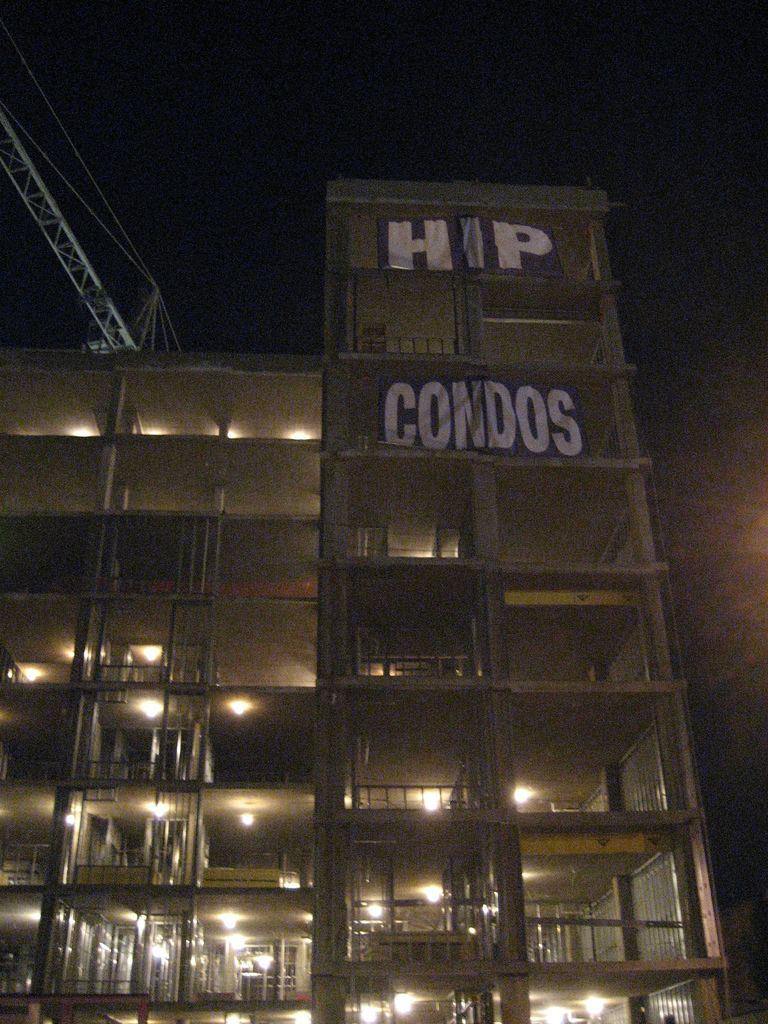
Is this the city for everyone? Is this anyone’s vision? The gay strip bars of Southeast are gone, having been displaced for the brand-new, immediately awful Washington Nationals baseball team. Loads of condo building are still in some state of erection, all around the stadium. Where they’ve knocked down historic row houses they’re now putting up old-looking, new townhomes, a Rockwell version of DC. The people who staff services in the city—the hotel housekeepers, the baristas, the employees at that gleaming Harris Teeter—can’t afford to live in the city anymore, so they find 60s-era apartments in neighboring counties and ride into town, where they used to live. Crosstown buses aren’t as crowded anymore, with the white folk driving in carpools or biking. Whatever it takes to feel Grrrreat! about taking up city space.

If there were ever a bill that expressed the dire financial condition of a DC and the revised alignment of its politic, it’s got to be the nickel surcharge for all plastic and paper bags that went into effect this year. Doesn’t everyone have three or four Whole Foods canvas bags for their groceries? They’re only $10 each! Don’t we all love our planet enough to get rid of plastic bags? As for paper, well, you’re too far gone if you like those, or you’re trying to hide your 40-ounce malt. Those people should have to pay more, anyway.

Hey, DC’s H Street commission banned buying one 40-ounce a few years ago, even as they didn’t ban buying a six-pack of microbrew hefeweisen. I could see where things were going even then. Interest-only mortgages were the hot item, and the new owners didn’t like seeing drunk guys in Carhart jackets standing around on the sidewalks. It ruined their views of the other new apartment buildings. I’d moved into the neighborhood myself, a bit north of Lincoln Park, a couple blocks south of the H Street corridor.

“It’s up and coming,” one lady on the sidewalk told me as I was moving in. She was standing next to a woodpile. I found this odd because it was early September.

“Is it? That’s nice,” I said, sweating. September in DC is akin to the fourth circle of Hell, for those of you who have never experienced either. I can’t really recommend it.

I asked her why she had so much hardwood on her front lawn. Her brown brick house looked tiny compared to the apartment building that abetted it.

She explained that she’d thought she was paying for it to be stacked next to her house, but that the deliverymen had just dumped it and left. So I stacked the cord for her, and split several—okay many—of the bigger logs for her. Unbeknown to me, all the little old ladies of the street watched me, probably with one eyebrow raised in question as to my integrity. I passed the test, and I noticed that they—I was told to refer to them as old-timers for their age and longevity on the block—would always give me a head nod or hello when I saw them. I wasn’t sure I was very different from any other neighborhood newbie, but I tried to be respectful and appreciative of the history they had here. I was probably going to be just a blip in the time span of this place, and as it turned out, 5 years does equate to blip status. When I needed help a few months later getting a new mattress into my 3rd floor walkup, one of the old timers sent her grandson out to help me. He did look a little perturbed at first, especially upon seeing the narrow stairwells, but he and I got the mattress to the top and I gave him 10 bucks for his trouble. And two brownies, one of which I told him to give to his grandmother.

I miss having a neighborhood. I’m certain parts of Walla Walla have them, with their little give-and-take agreements: your kid can play on my lawn, do you mind if I park my car here this week, how about going into building a fence with me. But living right next to the campus recycling center, and a student building, we are not primed for friendly neighbors. So I wonder what has happened to 12th and 13th Streets NE, where I lived by myself and then with Susanne. I wonder who lives in my old apartments, and if they’re as tentative about the space they occupy as I was. I wonder when it will be when I have real neighbors again. And I wonder what is happening to DC, and if it is losing itself as it loses the people who have held its history for so long.

Potholes never move

On Tuesday I met an old friend for lunch. She’s also a life coach, and extremely new age, if one can say that spirituality comes in degrees. She’s said more than once that there’s a reason I found myself in a little town as isolated as Walla Walla, since my writing wasn’t really happening in the busy bustle of DC. Well, I have oodles of time to write now.

She’s from Nebraska, which I can only imagine, having never set foot in the state. In my mind it’s somewhere between the musicality of Oklahoma and whirling dervishes of Kansas, a state for whom I can only name three places: Omaha, Lincoln, and Platte, because my grandmother had relatives there. All the people I know from Nebraska, who also happen to number three, know farm life well, remember it fondly, and are the kind of folks who proudly announce, when they first meet someone, “I’m from Nebraska,” as if we’ll all have the same reference point. I’m quite sure none of us do. For easterners who only seldom cross the Mississippi, Nebraska is part of the “other” United States. We figure they’re flying the same Stars & Stripes, as us, but beyond that, it may as well be the surface of Mercury. Now that I live westward of ole Miss, I know this isn’t true. They’re just like easterners except quieter, often working with fewer resources, and ruggedly independent. They don’t need the east like we think they do.

What I’ve gathered from my friend is that she is a 21st Century person born nearer to the start of the 20th. She’s never more than nine inches from her PDA, and she handles it with an ease that I, a Generation Xer, never seem to manage, always cursing at a typo on my texting screen and feeling the urgent need to press BACK sixteen times to fix my mistake. She just hammers through on her iPod or whatever new device has just hit the market. She’ll have an Android sometime in the next hour, I’m sure. And for her it’s more than simple, or even amazing technology;  it’s the universe helping us feel more connected to each other, because there’s a positive force that comes with being proximate to our fellow life travelers.

She’s helped me beyond measure, as she helps everyone around her with her warm smiles, booming laughter, and occasional quick frowns that pop up when she wishes you’d behave differently. She tells me that I have one of the loudest interior critics she’s ever met, and that the next time it hovers over me I should just tell it to go away and retire. Such silliness, I have thought, at these kinds of declarations from her. And then the next time I think about writing and I castigate myself for thinking I have the right to waste my time like this, I hear her:

Oh, you again? You know, I am really so sick of you. It’s time for you to retire.

Could it really be that simple?

I look around. Nobody but me is in earshot. I speak her words into the air.

And then I start a new short piece. One that’s been kicking around for eight years or so, and that I’m positive I started writing a long time back. I can find no evidence of it, but I have sharp visions in my brain, scenes and characters and a plot surprise at the end of 3,500 words. I hate starting something all over when I know there’s even a piece out there, my wounded Marine on the battlefield that I’ve promised to retrieve.

I give up the ghost and start over, figuring that at least this way I won’t be burdened by past efforts.

I thank my friend for helping me with a sageless exorcism.

This trip has been good for pieces of me I’ve neglected since moving out west—the ones with unbridled optimism, the sanctuary for my bones by the old and familiar, the joy that comes with knowing how to avoid every pothole on a certain road you haven’t traveled in a long while. It shows me what I’m missing from Walla Walla, even though there are many things I enjoy and even love about that place. I’m missing the fullness of a boisterous life. I don’t know as many opinionated, brash people, have as many options, or have to tune out much noise. Even the frequent wailing of firetruck sirens has heartened me since we returned to the nation’s capitol, the only time Susanne has been here since President Obama took office. Walla Walla doesn’t have enough noise for me, although its springs come close to meeting my requirements for color, with the bright green, baby wheat, bold blue skies, and rainbow-infused balloons during the annual hot air stampede. I can relish Walla Walla for the quiet and agree with my Nebraskan friend that it’s given me—forced me, even, into—writing time, pushing me to reconsider what success means and who I am capable of being in this lifetime.

But while I’m here in DC, I can at least try to unite these selves—past and present—a little, and enjoy all of the good things in my life, which starting with Susanne, are plentiful.

The beltway is no cause for alarm

My life working for the Federal Government as an IT person wasn’t far removed from your average Dilbert comic strip.

Web Developer: Hey Ev, please take a look at this one screenshot and tell us what we should change with this very complex information system.

Me: Uhhhhh, just from one screenshot?

WD: It’s all we could do on the color printer.

Me: Why?

WD: Our office manager is making budget cutbacks.

Me: Ah. (Stares at printout close to face) Well, it looks like you’re calling the system three different things.

WD: Just pretend they’re all the same.

Me: Okaaaaay. Which is the actual name?

WD: EKS.

Me: Can we spell out the name for new users?

WD: Just new users?

Me: No, spell out the name at the top here, so that even new users will know what system they’re working in.

WD: Oh, I don’t think we can do that.

Me: Why not?

WD: Because it’s an image.

Me: You could just put text there.

WD: Oh, but then it might look a little different on people’s screens.

Me: Well, not very different.

WD: The communications director wants it to look the same on everyone’s computers.

Me: That’s not actually possible, you know.

WD: Don’t tell her that.

Me: Okay, okay. How about we just change the color of this black font?

WD: Okay, why?

Me: Because against this dark blue background, it’s a little hard to read, is all.

WD: Well, but it matches a paper brochure.

Me: I’ve never seen a paper brochure for this.

WD: It came out in 1987.

Me: Uh. So we need to match it why?

(Pause)

WD and Me in unison: Communications Director.

Me: I don’t think I have any recommendations, then.

WD: Okay, great! Thanks!

Coming back to visit DC has been unexpectedly revealing; I almost instantly reverted back to my aggressive-is-defensive driving skill set, weaving and bobbling a tiny Hyundai Accent on the BW Parkway on the drive in from the airport. I feel like I’m getting out of a clown car every time I park, and like I’m entering a parallel Universe of Small Things each time I climb inside, folding into myself like an origami swan. Or maybe it’s like a beam of light being crushed into nothingness, since the interior is small enough to be black hole-sized.

I cavorted through the streets of the city, not stopping to take in the things I’ve seen many times, like the Washington Monument, Union Station, the semi-empty used car lot on Bladensburg Road. But I could feel the energy from them, remembering who I’ve been before, and enjoying their proximity once again. I certainly have a fondness for the Colville Street Patisserie in Walla Walla, as I’ve remarked before, but I don’t feel any sense of being when I’m walking down Main Street like I do on the grimy marble curbs of the District, and I’m not sure yet why that is.

I lunched with some of my old Social Security coworkers in a tavern yesterday that was all Baltimore: framed posters of Ravens glory, hard-looking women with over-styled hair, “limited” drink refills, and a certain filmy substance on all of the wood surfaces that gave you the impression they cared as much about you here as if you were a guest in their homes. I was back. We chatted about things, and although I wanted to hear how they were doing, they kept asking me about Walla Walla, so I coughed up all the funny stories I could recall. It helped that I was in a company of people who presumed, first and foremost, that I have competence; sitting around on my ass at home has almost erased my sense that I am good at some things other than sitting on my ass and memorizing lines from NCIS, just in case I have the opportunity to throw them into conversation. I was hoping for but didn’t get pictures of new spouses or children, but we caught up nonetheless. With them having to get back to work, a concept with which I was suddenly reminded, I hopped back on the freeway and battled the self-important traffic of the Baltimore-Washington corridor, feeling a little sleepy from my chicken salad and kaiser roll. My “limited” drink refill apparently equated to no refill at all, and I needed a nap. I could have taken in the cityscape, the Potomac, the Pentagon, as I sped back to my host’s house in Arlington, spitting distance from where I used to live, but instead I got a song from Ladytron stuck in my head that used to play during my long commutes home. Apparently my brain saw it fit to replay for me.

Licensed to serve

We are vacationing this holiday season-come-semester break at Susanne’s parents house in the “southern thumb” of Michigan. Yes, when you ask a Michigander (it just keeps getting better, doesn’t it) where they’re from, they’ll hold up their hand and point. It’s actually pretty handy [sic]. Every state should look like a limb one could hold up and point to. “I live in the adrenal gland portion of the kidney,” say. Okay, maybe that’s not the best idea ever, especially given Manhattan’s geography.

Anyway, if they’re from somewhere in the vicinity of Detroit, the state’s most populous city, they may say something like “11 Mile,” referring to the regular spate of roads that run parallel to the north boundary, further and further to the top of the hand. Eminem made his 8 Mile movie, everyone already knows, about the area where the suburbs take over—but as far as I know, there are no plans for a “40 Mile” sequel, all about the drama of car parts factories on the outskirts of the dying automobile center. No wait, that was Roger and Me.

After a few days of meals at home, we descended on a local eatery, the Raiders Coney Island. By “we,” I mean me, Susanne, her mom, two brothers, sister-in-law, and their four kids, ranging in age from 2 to 17. It was a little Jon and Kate Plus 8 meets a Top Chef challenge—the elimination kind, not the simple quickfires, either. Taking up three booths in the small eatery, the waitress was a little overwhelmed.
Upon seeing customers who needed her service, she probably would have drawn a sharp intake of breath on a good day, but on this day she had no backup help, either, it being two days after Christmas and the other staff not having the same level of commitment to the family establishment that she did, since it was clearly her family’s establishment. But my immediate concern wasn’t for her ability to take our drink order, it was for the obvious extreme edema she had in her ankles. It was so bad I wasn’t sure how she’d managed to get her feet into her sneakers. My next worry was if her apparently chronic swelling had anything to do with the food in this place. Perhaps I could suck on a gratis lollypop and call that supper.

She slowly made her way to each table, starting with the ones who were already seated before we’d gotten there. Well, slowly isn’t really the right word. She was hurrying in a way that did little to increase her speed in any measurable fashion. Perhaps in an alternate universe we’d eaten already.

Finally she plunked down our menus, and the “raider” concept hit me. They had a knight on a horse, holding a spear, with a weiner at the end. This was the graphical fusion, I supposed, of the raider and Coney Island. Someone should tell the restaurant owners that Coney Island is about to be bulldozed into a suburban-like subdevelopment a la the Goonies. Only instead of pirate treasure maps we have the near-total collapse of the global economy. That’ll slow ’em down. The raider, however, was smiling, so excited about the opportunity for a hot dog that he was obliquely unaware of the doom awaiting the old amusement park.

“Hey, isn’t that the mascot for your old high school,” I asked Susanne. She nodded. “Well, kind of. The real mascot looked more serious.” She paused.

“And there’s no hot dog in the real logo,” she added, just in case I leave this experience wondering why the superintendent of schools thinks it’s okay for the local high school to model such poor food choices to its impressionable students.

I appreciated that they hadn’t stolen the licensed image from the high school, even as they were clearly looking to it as their reference point. I later learned that they regularly give money to the high school, so I suppose they should go ahead an name themselves after the mascot—they’ve earned it.

“So was your school color orange,” I asked, looking at the menu cover. I went to Syracuse University for college, so I’m familiar with the futility of trying to work school-licensed clothes into one’s general wardrobe.

“Orange and black,” she said, knowing full well I’d be shocked. They were always ready for Halloween, I guess.

“My high school was brown and gold,” I said, “so I never thought I’d hear of worse colors than that.” I made famous a short story from my graduation, when one of the girls asked me why the women wore white graduation caps and gowns instead of gold, since the men were wearing chocolate brown, to which I’d remarked, “because they don’t want it to look like a lot of shit and piss out there.”

There is no restaurant, nice or not, in Hamilton, New Jersey, that has my old high school logo on it. Just saying.

The menu was a strange blend of Greek culinary tradition, pub fare, and Johnny Rockets diner food. I still don’t see my beloved pizzaburger outside New Jersey, but I won’t hold it against them. I tried to order the chicken kabobs.

“We don’t have those made up yet,” the salt-retaining waitress told me, as if any minute now, chicken kabobs would be good to go. “But this other chicken meal is the same thing, just not cut up.”

Wondering why cutting the chicken into smaller pieces would mean it would somehow take longer to cook, I saw that this other dinner also came smothered in green peppers, mushrooms, and provolone cheese, most of which are not to be found on Greek-style kabobs. So okay, I went with that, with a little hesitation about when any of this was going to take to arrive at our tables. Every so often she would call out to her mother for help, and I started to wonder if she wasn’t talking to a ghost or an imaginary friend. But finally, Mom showed up, agreeing to help make the four smoothies and milkshakes the kids had ordered. One look at the mother and I was certain their was some family illness with water retention going on here. Why had no one told them to seek medical help for their obvious swelling problems?

The cooks in the back were doing their best impressions of Wilson from Home Improvement, so I couldn’t analyze whether the male members of the family were afflicted with the same disease, but they put the food up on the counter when it was ready and voila, cheese and fungus-covered chicken was at my table. Susanne and I had finished an impromptu game of dots, with her finding the one and two box spots and me mis-selecting a long chain of 16 boxes for her to label. Damn dots game—you always make me pay for slow diner service by showing me what an awful player I am. Maybe I shouldn’t carry a pen with me wherever I go.

Half our orders were wrong—the mother made milkshakes instead of slurpies, which, 50 minutes after walking in, we were happy to drink anyway. Yes, they needed more serving staff. The food was fine though, and cheap, and finally we were back in the car, heading through the Christmas Week night and jazzed up to play some head-to-head solitaire. Maybe, I thought, we should just cook at home.

Holiday trains, planes, and automobiles

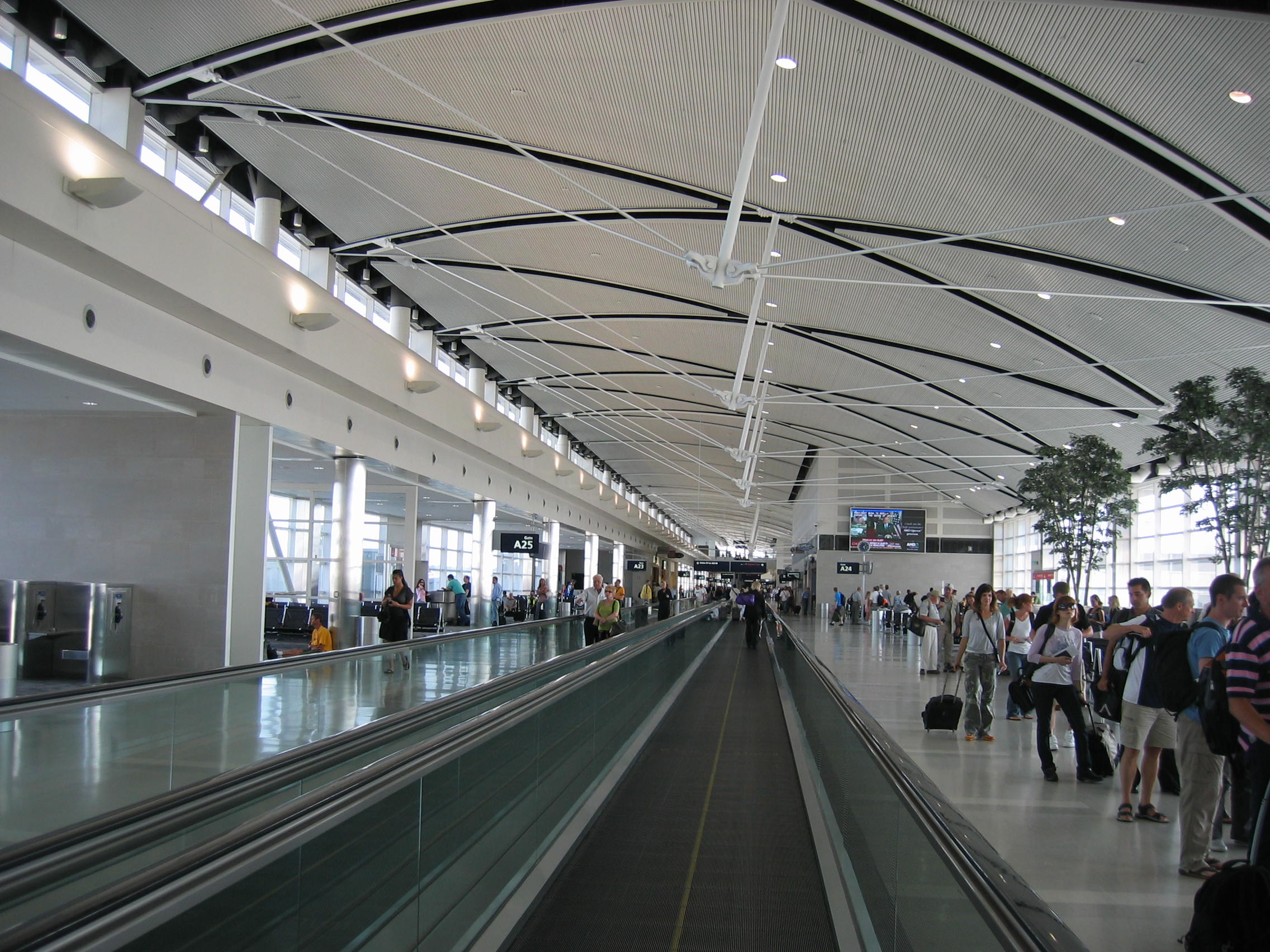
Detroit Metro AirportThe lack of proximity between purchasing airline tickets and actually getting onto an airplane has not served us well this year. Susanne, in early October, had her face buried in her laptop screen. “What do you think about this flight,” she asked, her eyes mere inches from the glowing pixels, “it’s a really good price.”

“How good,” I asked, leaning over. “Oh, that is good.”

“But it’s a red eye,” she said.

“But the price,” I said.

Abstractly, I understood that it was a middle-of-the-night flight. I do, after all, have a very successful track record with surviving the middle of the night, even if I’m usually asleep for it.

“It’s three legs,” she said, sounding less confident.

I responded by ignoring her fears. “It’s always at least two, hon,” I said, a little too cheerfully. She should have understood right then that I was just blinded by my thriftiness and rethought our approach. But perhaps Susanne was seeing little stars of savings, too.

We sent our credit card numbers through the information superhighway and were rewarded with an email confirming we had just purchased our way to visiting friends and family for the holidays. And then went about our daily routine, forgetting all about it.

And then we were driving, in late December, to the airport. We had an 8 o’clock fight to Seattle, a multi-hour layover, and then a midnight flight to Minneapolis, followed by another couple of hours in that airport, and then a morning flight to Detroit.

What a horrible itinerary! Who had done this to us?

We had. We had done this to ourselves.

We drove by the bad broccoli plant, which for its part sent us an intense putrid odor as a parting shot for departing Walla Walla. Every time we’ve left before, the city has done some kind of stick-its-tendrils-into-us to slow us down. What would it be this time, I wondered, trying not to breathe as I drove past the paper mill. It just loved us so much it wanted to stay in our nostrils.

On the first plane, the flight attendant told us happily that we’d be making a stop in Yakima on our way to Seattle. This meant we were splitting the trip into two 25-minute segments. Never going about 15,000 feet, we stopped like a bus at the Yakima airport and five people joined our flight. About ten minutes away from Seattle, the worst stench of gastrointestinal distress invaded my olfactory nerves. I looked at Susanne and mouthed, “was that you?”

She shook her head no emphatically. We tried to breathe as little as we could, having just practiced this outside the paper mill. The flight attendant empathized with us, as she was also stuck at the very back of the plane with us and the killer fart. As we rolled into the gate, they put two staircases up to the fuselage, and the flight attendant, knowing our plight, told us we could just take the one in the back, two feet behind our seats. We walked the length of the terminal toward our next gate. Having cleared our heads, our stomachs started rumbling, and we decided to get dinner.

The waiter asked what we wanted. As we were in a tap house and pub, we each ordered a wheat beer. He plunked them down on the table, announcing last call.

“When do you close,” I asked.

“In 30 minutes,” he said.

We drank our beers and ate our greasy food quickly, rushing off to the shuttle train to our next terminal and departure gate. I could feel the reuben sloshing around in my tipsy stomach, but we had some time to relax before the red eye. The Seattle airport has free wifi, which seems nice until one notices that it has next to no power outlets. What teases. We wandered around looking for a free outlet, to no avail. And the people who had already juiced up weren’t offering to unplug, even for a little while. This made me wonder if:

1. everyone had terrible laptop batteries that wouldn’t hold a charge

2. they hated Christmas and were hogging the electricity just to be nasty

3. they were inattentive, oblivious Northwesterners

So we booted up my laptop, sharing it between us and hoping to model good behavior for all of the manners-impaired strangers in the terminal. Somehow I think it didn’t make any difference.

We piled on to the red eye, hoping for a smooth enough, unoffensively smelling enough flight that we could catch some sleep before getting into the Twin Cities. Susanne conked out on my shoulder quickly, but I have trouble staying asleep while sitting up, so I watched the people around me slumber instead, some snoring, some with their jaws hanging open while doing so. And I realized that it’s no wonder why people eat a good number of bugs over the years.

Landing after the red eye, we were somewhat dismayed to discover we still weren’t there yet.

Our next gate was a little ways down from a Caribou Coffee. A family of three each had a drink from there, and they looked so happy, like a live advertisement for the wonderful things coffee can do for you, too. Have an impressive blonde son and snappily dressed trophy wife! Enjoy endless energy and increase your income potential with our frozen vanilla frappuccinos!

“I’m going to get some coffee,” said Susanne, standing up. “Would you like anything?”

I stared at the happy people. Happy people. I wanted to go to there. I nodded at her.

“Okay, what would you like?”

My voice, exhausted, came out in a whisper.

“A frosty mcfrosterson,” I said.

“A what?”

I pointed at the 4-year-old toe head. “Mocha,” I squeaked.

“Is there anything else you want, like some caramel flavor or hazelnut?”

Why was she making this so difficult? I said frosty mcfrosterson! Just understand what I want! I’m perfectly clear!

That was what I thought. But what I said was:

“Mocha!”

“Okay,” she said, now talking to me as if I were only 4. “Do you want anything to eat?”

I shook my head no.

She came back a really long time later that equaled something like 7 minutes, and I sucked back my frozen mocha in a few gulps. The caffeine hit me like a Boxing Day tsunami. Maybe that’s exaggerating and trivializing. Okay, it hit me like really bad flatulence, except it was so good. And not odiferous in any way. I was suddenly, powerfully awake.

I typed things, I texted people. I was online and sending status updates to anyone who cared. In the very narrow band of things that could be remotely productive while sitting in an airport waiting to catch one’s third flight in 12 hours, I was a king of getting shit done.

Susanne seemed to be buzzing, too. She asked if she should get us a bagel and cream cheese. That sounded like a terrific idea! Sure! Get us 14 bagels!

She found some organic-pretends-to-be-French bakery and got us a hemp bagel. I had no idea people ate hemp. Wasn’t it reserved for scratchy rope and reusable shopping bags? Would we get high from eating this?

We did not get high, which was good, given that we were already loopy. But I did discover that hemp seeds can get caught pretty easily between one’s teeth. Good life experience to note, I guess.

Finally, at long last, we were on our last flight. Only two hours and forty-eight minutes to Detroit. The flight was uneventful.

Our bags were not on the belt. I lined up in a long queue for lost luggage, not confident that I could explain what had happened with any degree of clarity, or words, even. Probably I would just wave my arms a lot and point to my claim tag bar codes, and hope that would suffice for them. I was a raving mad man, a very tired raving mad man. So maybe I wasn’t raving. I was a raved, farted on, ear-drum deafened, sleep-deprived, over-caffeinated, hemp-eating mad man.

Three people before I reached the front of the line Susanne tapped me on the shoulder and told me she’d found her bag on one random luggage belt and mine on another. I trudged out to the car, brought thankfully by her cousin and husband, who came with the car as part of a package driving deal, and didn’t ask how our bags wound up on the opposite end of the baggage claim area. I didn’t care anymore.

We rode 90 minutes to Susanne’s parents’ house, had a cup of tea, and took a 3-hour nap. We had crossed 17 hours, three flights, four airports, one train, two commutes, one really bad cheese cutting incident, two bad meals, one hurried pint of hefeweisen, and three increasingly inarticulate conversations. We woke up at 5:30pm Eastern time, which felt like 2:30 to us, kind of, since I think I never actually saw the sun the whole day, and really, I didn’t even know what day it was anymore.

But hell, it only cost us $525 a ticket.

Eugenology

artichokesEvery 6 weeks or so, it seems, we take a weekend or trip outside the confines of Walla Walla—this time it was to Eugene, Oregon, where one of Susanne’s oldest friends lives. We were ready for fun, good conversation, and even the potential of hunting in the woods for chanterelles.

I’ve never mentioned it before, but there’s a part of I-84 that weirds me out a little. A miles-long tree farm. It’s not that I don’t support the tree growth—I definitely do. It’s not that it take 10 minutes, at 70 miles an hour, to get past all of the trees, since I’ve driven by thousand acre woods many times before. It’s the regularity of the planting, the perfect squared distance between each tree, so that they’re plotted out on a grid, should you have the opportunity to see them from above. They look like alien-planted trees. As a person who grew up near several wooded areas, it seems weird to me that to ride my bike through these woods, I’d have to go in a straight line. That’s just . . . somehow harrowing. Driving past, the trees all start to drag on my peripheral vision. Row after row after row after row, they all point at the sky in brown-gray lines that start to resemble actual aliens. And then my head turns, just a little, because now I’m half-sucked into my deciduous voyeurism, and I notice that every so often, the space between rows is marred by one or a few fallen trees. Imperfection in the grid! Whew! And then I can get back to driving.

It’s possible I’ve lost my mind.

Anyway, we made it past the mindtrap of I-84 and continued on into first Portland, turning left to pass the state capitol, and then tucked into Eugene about an hour after dusk. It was difficult, in the dark, to get a sense of Eugene, especially from the highway, but it seemed to be the same splayed out street and residential design of Portland. Heck, it has a Trader Joe’s. Any city with a Trader Joe’s is A-OK in my book.

Susanne’s friend and her husband were happy to see us, but this moment of welcome was quickly supplanted by the greeting from their kitten, Ruby, who cantered over to us and began thoroughly sniffing our feet, ankles, and baggage. I half-wondered if she wasn’t one of the new covert drug-sniffing cats of the National Security Agency. Okay, okay, there are no such drug-sniffing cats. But heck, there could be. So she rubbed herself on us as we sat down to relax, which made me wonder: after 6.5 hours of sitting down driving, why am I sitting down to relax?

It was great to catch up; we discussed dining options and agreed to venture to Ratatouille for dinner. I kept waiting for a cute animated mouse to bring me soup, but it never happened. The all-vegetarian fare was enjoyed by all of us, 3 of whom are ex-vegetarians. I was annoyed at their idea of hummus, however. Just because chick peas are pureed and in a bowl doesn’t mean you can call it hummus—while these were supposed to be takes on the traditional preparation, they were a bit too far gone for me to hold them in the same category as hummus anymore. Or perhaps merging cilantro and garbanzo beans is good in its own right, but when I think hummus, I don’t think, “let’s have some cilantro!”

Dinner was tasty, and I appreciated that anyone would focus on creative vegetable dishes without a ton of accompanying pretense. What I was going to find out shortly, in fact, was that Eugene really doesn’t have much pretension, if it has any at all. We went next to Off the Waffle, a fairly new establishment that was just voted Eugene’s Best New Restaurant. Once again, category names don’t mean much, as Off the Waffle is a restaurant like one’s neighborhood chocolate shop is a restaurant, but I recognized I need to adopt more of the west coast laid back attitude. And I’m certainly not saying they weren’t the most ridiculously tasty waffles I’ve ever eaten. It was a quirky little storefront on the ground floor of a house, with a variety of savory and sweet versions of the Belgian liege waffle, a yeasted batter that they make with pearl sugar so they come out of the press puffy and caramelized. We sat on an old leather sectional sofa and ate out of our 100% recycled paper containers like jackals over a fresh kill. On all sides of us were the brown bags the owners use for the plain waffles—people walk in and out all day, ordering plain waffles to take home or to work, clutching the warm waffles and crinkling the bags in joy. But the bags on the wall are for decoration, each with the scribblings of some customer who was pleased enough to leave a happy, if not idiosynratic, note on the wall. It was like sitting in a room of non sequitors.

At that point, we were stuffed, so we trundled back to Susanne’s friends’ home, where the kitten was extremely pleased to see the return of her four scratching posts. And then there was Saturday.

Just add water

After we picked up my sister and her girls and successfully motored back to Wallyworld, running on plenty of gasoline, we settled in for a few days’ respite before heading out again to the western part of Washington State. Our plan was to go white water rafting on the Wenatchee River in Leavenworth. Newly familiar with white water rafting since we’d done it exactly one time previously, Susanne and I were confident. My nieces had never done this before, but my sister Kathy is a pro, having rafted in West Virginia many, many times.

All we needed to do was make a 3-hour car trip to the rafting site. We’d meet up with the guides at 1 in the afternoon.

We pulled in to Leavenworth a bit early and instead of hanging out for an hour at the rafting departure site (read, bunch of old school buses by the side of Hwy. 2), we ventured into the town proper. And then we were amazed at what we saw.

It was Bavaria. Better, it was Pretend Bavaria. Everything in the town was Germanic—from the chatel-inspired McDonald’s to the lettering on the gas price signage at the Texaco. They didn’t miss a single building. This was not some half-ass attempt at reinventing the Alps the way they’ve never existed, no sir. This was a complete overhaul of what had been, 40 years ago, a desolate mining town a bit too far from Seattle to be interesting. Well, now it’s interesting, if not extremely strange in its—dare I say fascist—adherence to the Bavarian aesthetic. It was so comprehensive we had trouble finding things we wanted to find, like the pharmacy. Or the Mexican restaurant we were told to try for dinner. Just take a minute to wrap your mind around a Germanic Mexican restaurant. Yeah. Now you know what Vicodin is like.

Squandering our time on a putt-putt golf course, it was even more surreal to see the miniature version of Fake Germany. And here the height of the nieces came into wonderful relief.

Emily and Jamie are giants

Emily and Jamie are giants

Other than the really cute buildings, I am sad to say that this mini golf course is not really worth the cost of admission. But hey, we had time on our hands.

Then it was off to the river, where we put on our lifejackets (always stinky, but they’re kind of a part of the gestalt of it all) and got a quick course in river safety. We’d been informed of safety considerations the last time we’d been rafting, too, but this time, well, there wasn’t much of a need. In August, on the Wenatchee, after a summer of heat and blue skies, we were lucky the water was up to our knees. This was not so much white water rafting as lazy river floating. I’ve seen higher waves getting into my tub. We got stuck a lot, mostly under my fat ass, as it happened. It was a pretty course, though, and stands to be a lot more active if one travels there in say, late spring.

Our guides informed us that in two days they were expecting 75 Microsoft developers, which they would spread out over 15 rafts or so. I could only imagine. Talk about a team-building exercise. They could lose half their staff on some of those thick rocks. It’s one thing to get stuck at a management retreat trying to figure out how to survive on the surface of the moon with 18 inches of twine, 27 bottle caps, and two pounds of Limburger cheese, but it’s another to actually need to paddle together. I kind of wanted to tag along to see how it would go.

But we had other adventures to conquer—taking the ferry to Victoria, the wonderful and colorful Butchart Gardens, and the idiosyncratic fish-throwing mongers of the Seattle market. Low-water rafting was just our gateway vacation event.

Catch it if you can

We spent our time on the Pacific hopping around to every function that the ship had to offer. Salsa dance class. A Wii bowling tournament. Big band concerts, large-screen showings of Star Trek and some Jennifer Aniston flick that looks like all the rest she’s made. Lots of time staring at the water, looking for whales. Many, many mohitos served on the Sun Deck. At some point our lower limbs acclimated to the water movement and we didn’t look like drunken sailors during fleet week anymore.

Getting off the ship and into port, however, was exciting for us. So it was with much anticipating that we drew into our berth at Skagway, a once-was gold mining town further up the Alaskan coast from Juneau. Skagway has a winter population of 700 and this doubles in size during the summer months, when the cruise lines bring their business. It was here that I first started noticing the signs, hung over a small portion of the shop entrances, that read “locally owned and operated.” What does that mean, I wondered. Why wouldn’t it be locally owned? Starbucks, maybe, would want to cart all of their supplies up here, but I was sure I wasn’t going to run into a Bloomingdale’s or Red Robin. As it turns out, the cruise lines have bought up most of the storefronts, which is why we saw so many jewelry outfits along the way. I don’t suppose they do much for the local communities, which in Alaska, don’t have a lot of sales or property tax income, most of the state revenue coming from the oil industry. So some of our native shopkeepers had a little chip on their shoulder, and if I were them, I might, too.

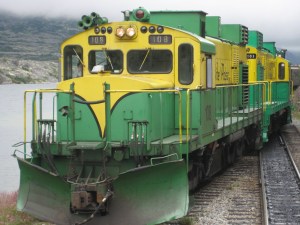
restored White Pass train

restored White Pass train

We had signed up earlier to take the White Pass train up from Skagway to the summit of the mountains, just over the border into Canada. This was the route that the gold miners had blasted out to make exploration easier. As we chugged our way up the 18 miles of rocky landscape, I took note of the near-vertical terrain. And then it hit me. These guys were crazy. I can’t imagine the desperation they must have felt to put up with what must have been absolutely horrendous conditions—white out blizzards, frostbite, inaccessible or absent supplies, inaccurate or nonexistent maps, hyper-competitive people. That surviving through years of this place seemed like a good idea was almost beyond my comprehension. I can’t even think of a metaphor for who these people are today, other than daredevils who jump off of city buildings or people who decide living in a broken down bus in the middle of nowhere is the life for them, but they’re not trying to make money out of those endeavors, it seems.

After we drew haltingly toward the summit, we passed the US Customs building, which was 6 miles away from the border. The border itself is barren of everything except rocks, the obelisk marking the actual crossover point, and the few green weeds that can handle the climate here. The Mounties are no more hardy; their customs office is 7 miles north of the marker. I suppose we’re two trusting nations. One person on the train with us remarked that we probably would put up with the elements if the neighboring country were Mexico. Wow, so much for the glory of the Yukon—we travelers today are jaded and cynical.

our train heading up to white pass

our train heading up to white pass

Up at the summit, we saw a quiet and pristine wilderness. It had taken two and a quarter hours to traverse 18 miles. A small creek snuck by the rails on the right, giving way to yellow and purple wildflowers. Maybe this site was a brute in winter, but it was a gentle lamb today. I wished we could have stayed a while, but as we were in Canada, nobody who wasn’t an employee was allowed off the train.

We could, however, go stand on the caboose. We’d climbed into the first car when we set out, but the engineers removed the engine and drove it down to the rear of the train for our return down the mountain. So now we could stand at the end and watch the world go by us, which we did. Wow, was that worth the $200 for our tickets. We gasped the first third of the trip back down.

The next day, we were in Ketchikan, known as the salmon capitol of the world. Come on, I thought. Everyone says they’re the capitol of something, but what does that really mean? Lots more tourist traps, I thought, and I might have gagged if Ketchikan were a place that sold 3,200 versions of jade jewlerly carved into whale tails. I had really seen enough of those.

Ketchikan harbor

Ketchikan harbor

They weren’t kidding, though. Ketchikan had every salmon in the world, fighting through its ocean inlet and streams. More gawking ensued. It was hard to appreciate the natural resource with 9,000 other ship passengers attempting to do the same, but we found some quiet corners that morning. Seeing these tiny pieces of Alaska only made me want to return. Maybe the gold rush is over, but it really had a lot of other riches that a person could get into.

Into the clouds of Juneau

Looking at Juneau from the top of the tram

Looking at Juneau from the top of the tram

After a full day at sea we made it to our first port, the capitol of Alaska, Juneau. The city has a population of about 30,000, making it just a hair smaller than Walla Walla. We ate a quick breakfast and then made our way down the gangway to the dock. At the end of the dock two unfortunate Princess employees were dressed up in animal costumes, one a bald eagle, and the other a very starved-looking polar bear. They seriously couldn’t find a bigger employee for this costume? This was like the polar bear who gets stuck on the ice flow and can’t eat for three months. This was a polar bear costume in the “vintage” fit of straight up and down torsos. I ducked the photographers who were clicking pictures of people leaving the ship with the animals, because hello, I’m not getting in a photo where I’m bigger than the bear. Polar bears are supposed to outweigh me by several hundred pounds!

Our first event of the day was to head up the tramway to the top of Mt. Roberts, overlooking the inlet and the city. It was a pretty 4-minute ride, and at the top there was a nature center and several hiking trails. We picked a half-mile loop, and got to see many different vantage points of the mountains, glacial waters below, and treescape.

At the nature center the local native population has been rehabilitating an eagle named Lady Baltimore who’d been shot a few years ago. A bullet through her beak and face, she’d landed hard and detached her left retina and broken her right wrist. I asked if this was accidental, and the guide told me that shooting an eagle just can’t happen any way but intentionally. It was good to see that she’s doing better, and being taken care of, but I did have to question, privately to Susanne, if she’d gone hunting with Dick Cheney. Shooting or killing a bald eagle, by the way, will get you jail time and a $50,000 fine. As well it should.

We descended back down on the tram and took a look around town, which near the port is filled with tourist traps and 60 gazillion jewelry stores. As an east coaster, I’m used to kitchy boardwalk souvenir shops filled with tacky t-shirts that say nasty things, cheap bathing suits, and bins upon bins of flip-flops. Other than the Alaska T-Shirt Company, the stores are hawking loose diamonds, jade jewelry, and precious stones I’ve never heard of before but that seem to cost a fortune anyway.

We walked to the state capitol building, and it occurred to me that when McCain’s people flew in to meet Sarah Palin, they must have realized immediately what a culture gap there would be. The 4-story building in the tiny coastal village is not what D.C. insiders think of when they think state capitol. I’ll bet they told John he was out of his mind. But the capitol is friendly; a sign exclaimed that they held daily “complementary” tours of the building. Complementary to what, we wondered. Oops, they said, at some point in the past, because by the time our feet stood on the capitol steps, someone had plastered an “i” over the original “e,” correcting the usage error. And they say government doesn’t care about quality.

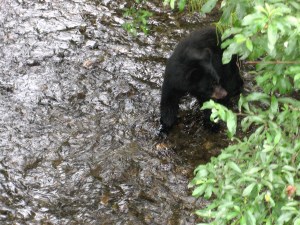
Grabbing a bus to the Mendenhall Glacier later that afternoon, we descended upon our first of many national parks. This refuge had a raised walkway with high, tight railings, the purpose of which quickly became clear to us. Splashing around in the stream were hundreds of pink salmon, otherwise known as “dinner” to the local bear population. Lo and behold, about 15 feet from us, otherwise known as “close,” a young black bear did his best to catch a leaping fish. He clearly needed some more practice at this and settled on tearing apart a recently dead salmon. High above in a tree right behind him, perched a bald eagle, the second eagle we’d seen that day. This one presumably had not had a run in with anyone trying to shoot it.

Young bear looks for lunch

Young bear looks for lunch

We watched the bear for a while, amazed and mesmerized, and then walked over to the glacier. Parts of it were the color of Windex, a shade of blue I never thought I’d see in nature. Icebergs littered the turquoise, still water like crumpled pieces of paper on the floor of a writer’s studio. We dipped our hands into the lake, feeling the frigidity of it. I picked up a rough pebble. These were not like the polished stones on the western side of Glacier National Park. They were probably rocks deposited much more recently, as this section of land has been left behind by the receding glacier only in the last 50 years. I could see where new calves had broken free from the 200 foot high ice shelf, presumably in the last few days.

Our tour only allotted one hour for people to gape at Mendenhall, so we scurried back to the bus and rode back into town. There were so many people on the bus from our cruise ship we badgered the driver into taking us back to our berth, although he didn’t exactly care. Alaskans seem to be fairly laid back, having realized already that a lot of life is beyond one’s control. If only I had learned this lesson earlier, I might not have been struggling against the limitations of Walla Walla all year….