Archive | transplanted RSS feed for this archive

First day at PNWA

I showed up at the Pacific Northwest Writer’s Association annual conference having taken the 560 bus from my friend’s house in West Seattle, raring to get there early so I could grab a latte before an all-day writing workshop. It was workshop in the conference sense, not the creative writing circle sense. Which was fine. But I waited a while for the hotel shuttle to show up at the airport, so I wound up waiting until the first break, some hours later, before having anything other than water for breakfast. Poor planning on my part constituted a high level of frustration on the part of my stomach.

I found a seat in the large ballroom—which is another funny word, since I’m fairly sure nobody has ever danced in this room of the conference center—and turned on my iPad. Realization dawned on me when it redirected to a pay-only/give password access page. Only cheap hotels have free WiFi. They need it as a selling point. The Hilton, even the SeaTac Hilton, does not need such leverage over its guests. I saw two women at the back of the room on laptops. Being the extrovert I am, I walked up to them and asked if they knew the password.

“Oh, there’s no network for this conference,” one of them told me, fiddling with her cell phone. “The conference didn’t arrange it.”

I relayed my shock and dismay in her general direction. She responded by walking up to the tech guy in the corner of the room and asking if he could help her get her Bluetooth to work. And wonderfully for us, he used her device to set up a network. What a guy!

She came over to my chair and gave me the password, and I thanked her with great enthusiasm. Now I was online with my iPad and could live-Tweet the workshop. So here’s the transcript, more or less, of what I wrote and sent out today:

PNWA! – Just starting the first workshop…writing the novel. Kind of a big subject!

New writers have a 90 percent failure rate. We’re just like restaurants.

BTW Thanks to Johanna Harness for getting me online today.

You should be able to say what your book is in one sentence.

This is all from Bob Mayer, who has 40 books in print.

The original idea is usually the heart of your pitch.|| sure, but they happen a long time apart from each other.

Write what you want to know. Elizabeth George isn’t British. She’s a damn good researcher.

Write what you read, what you’re interested in. Don’t worry about what’s hot. || he just gave me permission to write about transfolk!

Don’t write from a place of fear. People will know something about you from what you write.

Get each sentence right. Think about every word you put down. || well, I get to this place, but not usually in my first draft.

What makes you shiver, and how can you communicate that shiver?

We’re watching Joachaim Phoenix as Johnny Cash replacing all the instances of “song” with “book.”

It’s an example of listening to agents and getting over fear.

Give readers a good payoff at the end. You want them to get something new out of successive readings.

I already think about narrative structure and character, so whew on that.

How is your idea different? It isn’t. But we create new characters, plot, setting, intent to make it fresher.

Writers need to have strategic goals. Book goals, career goals, writing goals. Perswrvere.

Or, perservere.

Protagonist: must want something, be in trouble, unique voice, be different, be someone readers can identify with

Antagonist: must be someone audience respects/fears, drives the plot initially, should be a single person.

I’m not personally a believer of the single trigger leading to main motivation, but I’m not arguing with Bob here.

Conflict can arise from people having the same goal, conflicting goals, different goals. Be clear about what’s happening.

You must know, before you start writing, what your climactic scene is going to be. We’re not all Stephen King.

Use the POV that will work best for your story. Be willing to dissect your own books.

Look at the narrative flow of a movie by looking at the scene selection on the DVD. Think about what gets introduced first, char or prob.

Details drive your story. Flake on the details, bad news.

Outlining: get it out of your head. You’re a writer, write it down.

Back story should fill half your outline. And it’s all before the initial scene. You need to know all of it, your readers don’t.

Backstory: you can’t use your opening to set up your book.

Make clear to readers what is flashback and what is memory. || I don’t always do this. Intentionally.

The initiating event must introduce the protagonist, the problem, or both. Whew! Bumbling into Body Hair gets both.

Introduce your protagonist before they’re aware of the problem. It helps set their motivation.

The opening scene often mirrors the climactic scene, just at a lower level.

The bigger the story, the smaller the opening. And vice versa.

Think about your first shot. It sets your tone, your story.

Remember that suspense comes from caring about the characters. So make characters believable.

Fate works because it is layered on top of the existing base conflict. Coincidence merely is the conflict.

Break coming up. I’ll be back!

Only have one last scene after your climax. Otherwise you haven’t closed out your subplots well enough.

Show how the protagonist has changed by the end of the story.

Setting is time and place. And mood. And a character.

The when is part of your setting.

Get all five senses involved in putting together your setting.

You have to do intense research on your setting before you write it. Your readers don’t need to know it, you do.

Think about how time affects your narrative structure, conflict, suspense. Time can wreck it or enhance it.

Know the purpose of every scene. Make sure it has its own protagonist and antagonist.

Once you hook, the reader, trust them to stay connected. Don’t jar them and take them out of the story.

I like that we’re watching a lot of Paul Newman scenes in this presentAtion.

Dialogue: establishes character, advances the plot, shows off conflict, controls pace, gives expository info. But beware the last one.

Don’t use dialogue tags. Readers notice when writers say shrieked, exclaimed, sighed.

My takeaway about dialogue is that it’s very easy to get wrong. I speak mine out loud to make sure it’s sayable.

Stuff on writer’s block. Nobody cares about that, right?

Don’t over edit. You leave subconscious seeds that should stay in. It might not make sense to you yet, but it may someday.

3 ways to write: following the outline, followed subconscious seeds, rewrote and added.

You have to be your own best editor.

Have beta readers for your work. They must be good readers, not writers.

Readers point out problems. You’re the writer, you find the solutions. All the problems have to be erased. You can’t explain, you must fix.

Story editing: answer why now, what’s the mood, setting, who are the actors? Do the turning points aid motivation? Conflict escalating?

More editing: can your book be better?

Stick your characters into Maslow’s hierarchy to see where they are. They’re never self actualized at the start of the book.

Your characters all have blind spots. As an author, you need to know yours.

List your characters, their main traits, and their flaws. Flaws can be just needs in the extreme.

Your character has to have motivation and back story, but you don’t have to explain to the reader. At least, not at first.

Time for lunch. Catch you all later!

Checkov: don’t have a gun in act I unless you’re going to shoot it by act III.

Show, don’t tell.|| I know! I guess we all keep doing that if they keep saying it.

Character description: keep it brief, distinctive. Use placeholders of people you know so you have a visual image while writing.

Don’t have your char stand in front of a mirror. || Unless they’re a vampire! Kidding.

Try not to make ridiculous names for your character. Users shld be able to pronounce. || Unless that’s the point. I’ve done it on purpose.

Writers interested in getting published should join the romance writers of America, bc they’ve got the most professionals.

Profile yourself for a week, then see how much time you waste that you could have been writing.

Writers should take the Myers-Briggs. One of the 16 types is author. It’s opposite? Promoter.

Writer’s groups should make sure they’re moving forward. Goals, goals, goals!

Top character trait of writers is the ability to change. || I had a sex change, does that count?

#bookmarket I’m at PNWA, listening to a talk on the book market. Follow me for my live twitter feed.

Only 5 percent of people can change themselves at the rate we writers need.

When characters make decisions, they either dismiss it, feel stuck by it, or stick with it.

Nothing in your writing should be by chance. You’re the architect. Architect it.

Decisions leads to sustained action, leads to change. This is how characters develop.

Moments of enlightenment leads to decisions, which start the process.

The stages of death: denial, anger, bargaining, depression, acceptance. It’s just like publishing!

To show your character has changed, they must act differently.

During lunch break, lit judge agreed with me: tell agents I’m willing to do whatever it takes to get pub interest.

Everything you put in a book, use two ways. Back story, plot grease, character develop.

Don’t be afraid to refer to other points and arcs in the story.

Bob Mayer: I hate it, but know what genre you’re in. You must know exactly what you’re in. 56 percent of sales is romance, FYI.

There is no reality. So think hard about what POV you will use. POV is the number 1 problem writers have that keeps them from selling.

In communication, the receiver is more Important than the sender. So know your readers.

Don’t be afraid to let your books grow. If pub wants more out of one narrative, write more books!

If the reader doesn’t need it, don’t tell them. The more you put In it, the more you may introduce something they don’t like.

Beware the subconscious negative: to be honest, or else, mocked…

Don’t have too many POV angles.

First person is good for a lot, but not for building suspense. || unless readers think the narrator is dead!

Try not to start too many sentences with “the” unless you’re writing omniscient.

A change POV if it makes sense. Read thru to make sure you know when/why it shifts.

Start writing your next book before you start querying your first. Let the first one sit for a while. Get some distance.

Remember it’s voice that sells. Must be distinctive. In third POV, voices must sound different.

The voice that is your best voice is the one you want least to write in. Because it’s so close to you.

You will tend to write in the voice you most enjoy reading.

Ex. Of Courage Under Fire as a way of using POV as a narrative/plot device.

Selling Your Book. When yr story becomes product. Figure out what you want to achieve.

You may be asked to cut, add, simplify, restructure. Do you want to sell it or not?

The writer is working in conflict with their own environment and the publishing world. Have clear goals and plans.

It’s not supposed to be a war with writers and agents.

Don’t spend your time reacting, get to acting. Successful writers get beyond reacting.

Every writer who thinks they have it made fails. Perserverence makes you successful.

Fixed minset vs. a growth mindset. Writers must be prepared to reinvent themselves.

Have measurable goals. External, visible outcomes. Time lock for achieving goals. Keep it positive.

Face your freaking fears. Often the fear is what you have to do.

Ask yourself: what was my original goal as a writer? Should you return to it? Change it? Make it happen.

If you don’t state that you want to be a NY Times bestselling author, you won’t be. Tell others, too, If this is your goal.

Have specific tactical goals: read PUblishers Weekly, go to specific confs, write 5 pages a day,etc. Write down your goals.

Prioritize your goals, but make sure you keep writing.

Keep your options open. Look for direct and indirect approaches. It’s never a good time to be a writer, so get over that.

Study other books like yours. It’s part of your work. It’s your job. Network and ask for help.

Read blogs by agents, authors and editors, but understand they all have a POV.

If you’re type A, publishing will break you of that. You must have persistence and patience.

Have a three year mindset. Publishing’s processes take time.

Traditional publishing is planning for books in 2012, 2013.

You need to figure out what your platform is. Your anger, your idea, your background. Understand the market you’re trying to reach.

If you’ve written a funny story, your query letter should be funny. Match tone.

The aggressive person wrote a good book, the obnoxious person wrote a bad one.

Find the right publisher by knowing imprints, genres, market, small presses, ebook possibilities.

Copyright symbols on queries and ms copies are turn-offs for agents.

Don’t pay attention to slush pile statistics. The slush pile is supposed to be worse than your writing.

Cover letter: 2 para on idea, 2 para on you, one page total. Don’t say anything valenced–no praise or negative comments about your work.

Don’t hold back the ending to your book in the query letter! Give the entire story arc. Be terse with your synopsis, though.

Only mention the pro tag, antagonist, main supporting character. Don’t use bullets in your query. If it’s a genre, say what it is.

Don’t put subplots in your query letter. Just show the main storyline. In a query, less is more.

Think about using snail mail queries. Email lets agents track you, may serves walls to getting representation.

I really don’t like the predictive keyboard on this iPad. It keeps introducing typos!

Go to writer’s conferences and retreats.

Do multiple submissions, don’t tell them it’s a multiple; that’s a subconscious negative.

Agents and editors don’t read like readers. They scan.

They also don’t read in their offices. They cram it in when they can.

If you want to get published in New York, you MUST have an agent. They actually support writers’ careers.

Small pubs with no advances, regional presses, if those are your goals, you don’t need an agent.

Ask agents: recent sales in your genre, how long in the biz, submission timelines, contract types, how do they like to communicate.

Nasty rejections are mostly myth. But if you get one, stop reading and delete it. Just move on.

It’s simple. Just don’t quit. Be wiling to market yourself.

Thinking your agent will market your book is like thinking your OB-GYN will raise your child.

When you get your first book published, market the hell out of it. You have to work hard to succeed.

We want to love indie bookstores, but it’s the big stores that stock all genres. || eh, I still like ’em.

Go ahead and self-promote, even if you’re worried about being self-promoting.

Balance your promotion with supporting others. Keep yourself honest.

Don’t make your Twitter avatar your book jacket. You’re going to write more than one book, right?

Writers, it’s likely you will have to get out of your comfort zone to promote yourself.

Average sell through on a book is 50 percent. That is why publishing is struggling.

Booksignings are not cost-effective. But they’re good for networking and fan base. Get creative with venues.

Publicists are more important for non fiction. Jon Stewart sells more books than anyone else on TV.

Write a book on your blog. You’re going to write 100,000 words anyway.

Think about viral marketing for your book on You Tube. Do everything you can to find your audience.

If you’re a new writer, get traditionally published. 950,000 books last year (out of 1.2M) sold 99 copies or fewer.

If there were a formula for success, everyone would be doing it. Be open to possibility and find what works for you.

Generate good will. It will go far to your success. For more info, follow @bob_Mayer and go to bobmayer.org.

Don’t self publish fiction. Your work will get buried.

Publishers control distribution. That is why ebooks are confounding to the industry.

That’s it for today. I’ll see what I can Tweet out tomorrow, folks. So far so good!
Interview with Graze

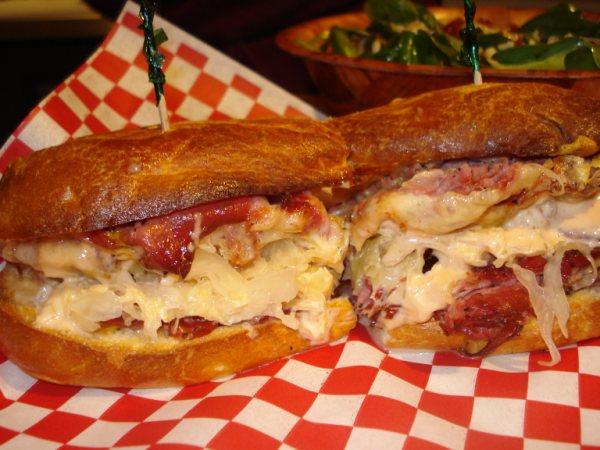
I’ve been curious about the people behind the newer eateries in downtown, so I decided to ask a few of them to give interviews about their lives as business owners, gourmands, and as part of a revitalized, local food community here. Last month, I sat down with the owners of the Colville St. Patisserie; this time around, I talked with the owners of Graze, a sandwich shop overlooking Mill Creek, and a catering business. Becca and John Lastoskie came to Walla Walla in a very food-model way: by sampling towns across the Pacific Northwest for a few days each. After some thought, they realized this was the town for them.

EM: Tell me what drew you each into cooking.

BL: Well. . .

JL: You first.

BL: I was putting myself through school and working at the Olive Garden, and the kinds of friends that I had were really cool, and they were talking about how they were going to go to Paragary’s in Sacramento, and how great it was, and I had no idea what it was. So I went in and applied for a job, and it was this whole, brand new world. I started hostessing and did that to try to get to waiting tables and I bartended for a while. I did that for a long time.

JL: You did that for ten years.

BL: I did that for a long, long time.

JL: Yeah, and I knew nothing about good food. I started working as a dishwasher at an Italian restaurant. Went to college, got a degree, and as I was just finishing up college I got a job making French fries, chicken strips, and another cook there said, “my brother works at the best restaurant in Sacramento.” I really liked to cook, but I didn’t know anything about what the food was, or what, but I thought if his brother could get a job, I could get a job, so I met the chef and he asked, “what can you make?” And I said “I can make ranch dressing.” He asked, “how do you make ranch dressing,” and I gave him the recipe for it, half-part buttermilk, half-part mayonnaise, packet. And he was impressed, so he hired me. And I met Becca the first day working there.

EM: Wow. And that’s when you knew this new world of stuff was really interesting?

JL: Yeah, it was like the second week of work at Paragary’s and I had a sandwich with rosemary, pumpernickel, artichoke hearts and other things and I thought this is the best thing I’ve ever had in my life—what did you do? Is there magic dust in it? And from there I just turned to learning.

EM: Okay, so fast forward now to Graze and what’s your vision for your restaurant?

JL: You go first.

BL: Um, boy. Graze is . . .

JL: It’s like counseling, we’ve never done this before.

BL: The sandwich shop is kind of what we always thought it would be. I think the menu could be a little bit bigger, I think there are a few things I would change a little bit, but we’re just starting out having never done this before, but we’re on track with what we envisioned: simple, for people who don’t know much about food, and when they come in, might keep trying something different.

JL: They’ll start with the turkey bacon panini, and then they’ll see something with Béchemel, and say, oh wow, let me try that. Not to try to teach people but to have good, nice, honest food, we should be able to fit all people, have them walk in, want to eat something that’s really good, and I think we’ve kind of hit that whole demographic. When you look around the room, oh, there’s a couple kids who really know what they’re doing, all the way to someone who probably eats Chef Boyardee Stroganoff every night. And they’re equally comfortable ordering off our menu, so I think it’s the one great thing, we can serve all. We get them all. Not enough kids. We see two-year-olds, and then we don’t see them until their teens.

EM: You have some complicated flavor profiles in some of these sandwiches. How did you develop the menu?

JL: How would you know, Everett, you always get the turkey sandwich!

BL: He always gets the turkey sandwich?

EM: No, no, I get other things there.

JL: Turkey sandwich, no tomato. [Ed. note: this is patently untrue.]

BL: I don’t know why people put tomatoes on everything anyway. Even when they’re not in season, when they’re not good.

EM: So tell me, how did you come up with the menu?

BL: Well, we knew we had to have some standard things.

JL: You have to include things that make people feel comfortable.

BL: And then, we love chimchurri sauce, so we put that on. And that’s based on seasons, too; you can always get parsley and cilantro.

JL: Yeah, and the menu actually revolves around the space, because it’s based on a Subway. There’s no stove, there’s no oven, so we looked at the space and said, okay, how do we make this work for fast service, good price, and we developed a menu. A few years ago when we were catering, we thought a good promotional thing would be to go serve something at the farmer’s market. The first week at the farmer’s market, we made Belgian waffles.

BL: Oh my God, it was just bad.

JL: Belgian waffles with raspberries and fresh whipped cream, it’s just heaven when you make them yourself. So, we thought we’d also make panini. Waffle for breakfast, then as the day goes on, panini. Well, I burned one out of three waffles, and I was so angry about it. For every waffle that I gave somebody that they paid for, I was basically giving it to them for free, because I’d burned the previous one and undercooked the second one, and they’re standing there for 15 minutes watching me fumble around with the waffle iron, but the paninis we sold out of those right away. Then I said, okay, we’re going to do paninis, and we sold out again, and so we started serving the turkey bacon panini that we serve here, and five weeks later, we’re selling 120 paninis. So we realized we were on to something. So that’s how the sandwich shop came about. Since we have a catering business there’s no way we’re opening a real restaurant. We’re cautious—you can lose a ton of money opening a restaurant. But that’s the evolution of it.

EM: Why Walla Walla? What is it you think about Walla Walla that’s interesting or a good place to set up shop?

BL: That’s a really good question. (laughs)

JL: It’s a good story. We were living in downtown Sacramento, on the verge of a [bad] neighborhood. In one direction, it was pretty nice, but 180 degrees in the other direction, it just got incredibly bad. Two blocks away were two murders. We decided to move to Portland, and then we started reading this book, called The Next Great Place, about smaller towns with a great quality of life.

EM: Was Walla Walla in that?

BL: No, no. Not at all.

JL: No. Although Walla Walla would probably be in that book if they rewrote it now.

BL: I’d always thought about living in a small town, I’d thought I’d enjoy small town life. Coming from California, it sounded kind of cool. So we thought, okay, we’ll sell our house and we’re gonna move to Portland, so we packed up with our kid who was 17 months old.

JL: We decided, after reading this book—

BL: You didn’t read the book.

JL: Yeah, I did. I read the book. So, we packed up our son, our stray dog, we tried to live in each of the towns on our list for three or four days. It sounds incredible, but we didn’t have a great plan.

BL: And in my mind, we went the wrong direction. We went northeast, to the desert side of the mountains, instead of going up the coast. We went the wrong way. So we made it up to Coeur d’Alene.

JL: So on our list were all the like, small cities and towns—

BL: Bend, Missoula, Boise. . .

JL: And then, when we were in Bend, someone actually said, a young couple with a couple of kids, said, what you’re describing sounds like Walla Walla, you should go there. Okay, so we stopped here on our way to Coeur d’Alene, and after just a couple of days, I was saying to Becca, it’s great, this is the place to come to. She agreed with me. So then we came here, and fought, madly.

BL: And we’d never fought before.

EM: But at that point?

BL: Yeah. Well, not so much a fight, but a discussion about what to do. We wound up going to Portland after our trip, and had a really good coffee. We went to a bookstore, heard some great music, talked about it.

JL: We decided [to] drive back to Walla Walla, spend a couple nights there, and see. We came back, and we stayed. It was completely the right move. If we were going to do anything with food, there were talented people here, didn’t have to spend a lot of money, or need a lot of experience. I was a school teacher in Sacramento, and to move out to Portland or Seattle to set up a shop and get in there was not as appealing.

EM: Are you saying there is something less pressured about Walla Walla?

JL: I looked around and decided, a catering business would work here. It’s way less risky than opening a restaurant. It’s more precision-oriented. At a restaurant, you’re gonna buy a bunch of food and you hope people walk in the door. If people don’t walk in the door, you throw a bunch of food away. So, at the time, nobody in Walla Walla was doing that kind of food in a catering business.

EM: It can be hard to break into a catering market.

JL: It was difficult, yeah. But a lot of interesting things happened and in a couple of years, the catering business—we have turned into a very large caterer, with lots and lots of events, with fairly high quality [food].

EM: Where do you see yourselves with regard to local or organic producers and the market here?

JL: The food costs for the catering business—my costs for the catering business are higher than any other catering business in town. I spend plenty on goods from local farmers. Number one we do everything from scratch. This summer we’ll probably buy 80 percent of our stuff from local farmers. As for the sandwich shop now, pretty much all of our stock is coming from a couple of local farmers. And I’ve told them, you walk in the door with it, we’ll buy it. So, they show up with salad greens, whatever. For summer weddings, I’ll show up at the farmer’s market at 7:30 in the morning and buy five giant boxes of things, fill up the back of the truck, take it to the catering kitchen, prep it, and then we’ll go to the wedding. So we try to have a good relationship with everybody who goes to the farmer’s market. It’s good to be tied to a community. We were asked [to do a May 15 wedding] so we got meat from Thundering Hooves, asparagus from Bonnie, we got milk and cream that we turned into butter from Pure Eire, we got garlic scapes and lettuces, the whole meal was 98 percent local.

BL: So how can you go wrong?

JL: Even being that local, you can get caught forgetting some of the things that are available, so on a menu that you arrange with somebody two months in advance, I show up at the farmer’s market and buy my stuff, and then I see something that would be awesome for today, but I can’t not give them what I promised, so it’s hard. We may show up with a different menu than we drew up! So that’s our relationship with food providers here. The only thing that stinks is that we only have a growing season of 8 months.

EM: Do you have anything you want to share about your next plans? New menu items?

JL: We’re opening three restaurants simultaneously.

BL: John maybe is, his vision is he’d like to open more Graze sandwich shops. Maybe one in Tri-Cities. I’d like to expand Graze here.

JL: The idea was to provide the high quality of food at a lower price with the fast service of a Subway. I want to have one central kitchen that serves a few stores. If we’re talking big picture, we still don’t know what’s really going on, but if [the sandwich shop] does what I think it can do, then the idea of putting up a number of them all in a similar geographic area, servicing from one central kitchen, isn’t crazy. It’s reproducing a whole nother business model. At the heart is the food. And really, I just want to eat nice stuff. I wouldn’t want to sell food if I felt like people weren’t getting a value. If you don’t walk away saying, I’m really glad I had lunch there—I never want anyone to walk away saying I don’t like what they did, because if they did that they wouldn’t want to come back.

EM: Now that summer is upon you, what ingredients are you excited to work with?

JL: I went to see this lady; we have a blog, and we went to Portland, and saw padrone peppers, and we got an email from a woman who said she had a whole back yard full of padrone peppers. I never met her, I don’t know who she is, but I really want someone here to grow padrone peppers. Put the word out, Everett.

EM: Okay!

BL: I’d love to see just basil and tomatoes. They’re just summer to me. I know it’s the same answer anyone would give, but to me, that’s what summer tastes like.

EM: Anything else you want to add?

BL: I’m really glad we’re doing what we’re doing.

Graze’s hours are posted at http://www.grazeevents.com/

Notes of a nice woman’s son

For the past couple of months I’ve been wondering just how to communicate about the Liar House to the next people who move in here, without alerting the maintenance staff. Sitting atop the downstairs medicine cabinet? Might not ever be found, period. Inside the chimney flue? Would just go up in flames, or fall out if (and this is a big IF) the college attempts to clean the chimney before the next occupants are here. Kitchen drawers will of course be opened, leaving it in the freezer might result in it being unreadable or overly brittle with frost, and of course pinning it to a wall somewhere does not count as subtle. So for the purposes of telling the universe what anyone needs to know should they attempt to occupy these premises for any significant amount of time, I’ll just lay it out here in the nicest way I can imagine.

Welcome, Tenants!

If you are reading this, you have been granted a visiting or tenure-track professorship at the college. Tenure-track professors, congratulations! Enjoy the next six years toward tenure as you acclimate to campus and try to find a modicum of time to work on your research, because remember the school has an open-door policy and our students are very involved! Visiting professors, know that the administration appreciates your hard work and they expect you to be dedicated for the one or two years they’re willing to employ you. Enjoy your time here!

Now then, about this house. This lovely Cape Cod structure was originally built on 2×3 hardwood, and isn’t it great that they’ve kept it intact for the most part? Don’t worry about that bulging wall on the stairwell to the second floor—if you don’t bother it, we’re sure it won’t bother you! On your first walkthrough of the property, be sure to check out the small hand print in concrete next to the garage; little Helen is now 82 years old and still likes to stop by from time to time, so don’t be surprised if you receive a visit from her! But Helen doesn’t have the only lasting touch around the house. Up in the back bedroom you’ll notice the ceiling plaster is well, plastered with doodles from another young girl named Paula! Paula clearly had an affection for California, and the Olympics! Paula also left several lovely games of Tic Tac Toe on the ceiling for visitors to ponder. That Paula!

Yes, this house has a lot of history. You can see some of it in the upstairs hallway where not one, not two, not three, but four layers of wallpaper are revealed in the corner, under the peeling oil paint! Washingtonians sure do like to gaze upon their ancestry since Lewis & Clark passed through a little more than 100 years ago. One hundred years! That’s almost mind-boggling!

There are a few things you should know about residing in this house, because homes with this much character have a few special needs. Anything worth doing in life requires effort, right? Right!

  1. The refrigerator emits a thin stream of water down the back, behind the shelves, which slowly pools under the crisper drawers. The college maintenance staff assure all tenants that this is the intended design of the appliance; that’s why it comes with its own flat Gladware container. Be sure to dump out the water on a regular basis, unless you want the refrigerator to self-clean the two feet of floor in front of it. It will do this by overflowing the bottom of the unit and spilling out through the seal of the door. Also note that as the rear of the unit is much colder than the front, your Gladware Capture SystemTM may freeze over. Simply bang the Gladware Capture SystemTM against the sink and release the ice, then return it to its place against the refrigerator wall.
  2. When bathing, be sure to keep the water level lower than the overflow hole near the drain, as there may or may not be a seal to keep the water inside the plumbing system. Water that bypasses a seal will fall directly onto the subfloor, and from there, into your kitchen, anywhere from the electric stove top clear over to the refrigerator and kitchen entrance. Baths with up to 8 inches of water are safe to enjoy. So enjoy your own personal hygiene!
  3. Your unit comes equipped with a fully functioning fireplace and chimney. Do note that during the time you want to relax with a fire, you should shut the heating ducts on either side of the fireplace. Otherwise these ducts will disturb the air flow near the fireplace and you may be subject to clouds of smoke and ash. We have not asked college maintenance about this but we are sure they would respond that this is an intended design feature of the fireplace unit and not anything requiring their attention. They would however prefer you observe a four-foot distance from the fireplace at all times, including placing your furniture outside this boundary, as well as your toddlers and pets. Better safe than burned!
  4. Speaking of the heating ducts, do note that you should only have a maximum of three open at any time in order to heat small spaces optimally. Should your feet get cold, know that you may stand next to the vent in the kitchen, as this is a mere three feet from the top of the boiler in the basement below and always emits pleasant heat.
  5. The garage in your backyard comes equipped with a locking door and garage door that you should feel free to open and close manually. It also has a cat door so that any random rodent can make its home in or near your garage when the summer heat kicks in or when it is very cold in winter. You may also notice several hornet’s nests in the garage eaves; these are normal, but the college will supply you with hornet spray if you request it.
  6. Remember that today’s appliances use more power than in years past, so operating too many items at once, like the microwave and the toaster, may cause a circuit breaker to switch off. This may become quite inconvenient, as there is no apparent circuit box anywhere on the property, and trust us, we have looked high and low for it. Fortunately the house does seem to reset blown fuses automatically. Like about the bubbly wall, we don’t ask too many questions, and you shouldn’t, either!
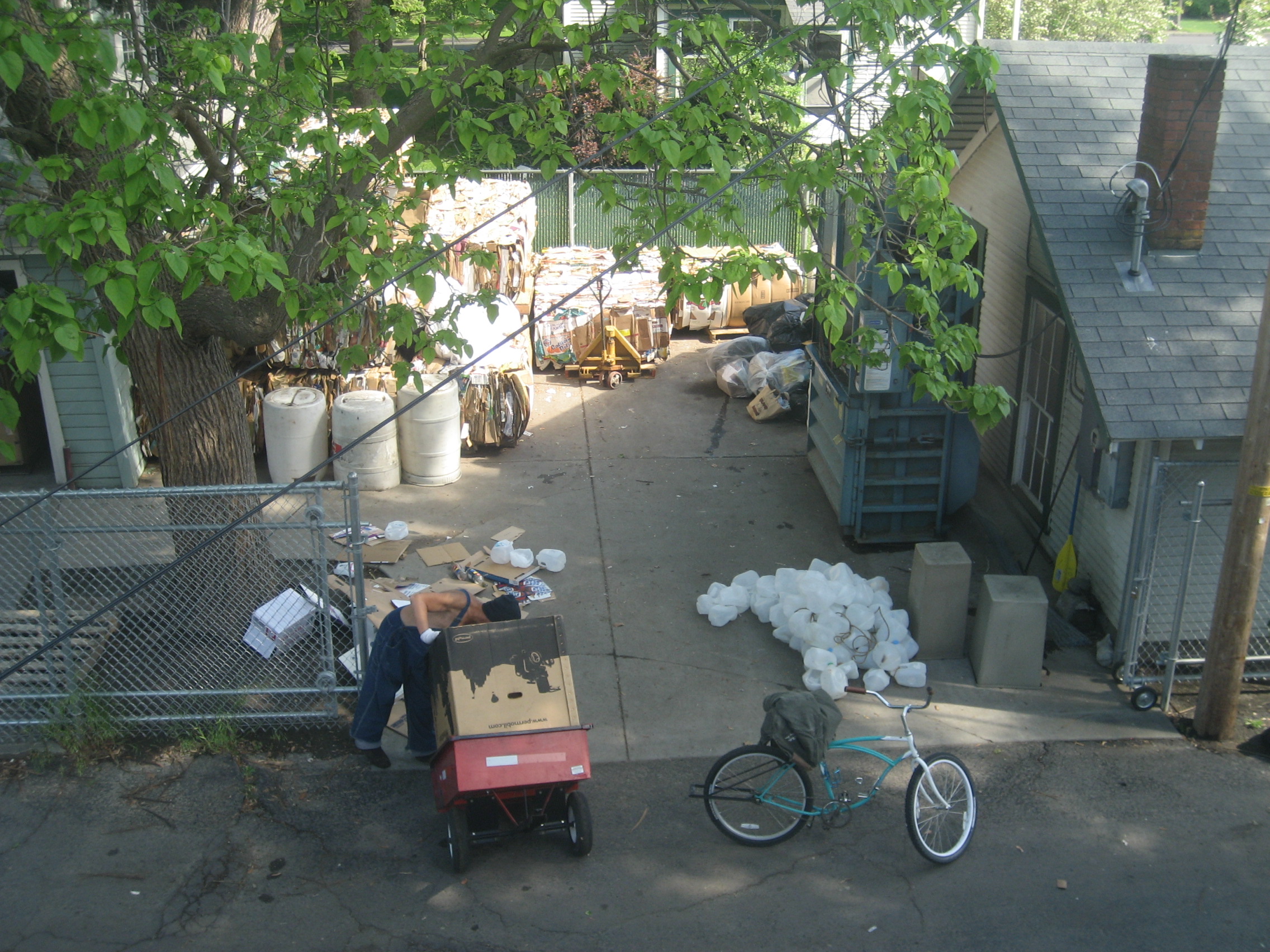
  7. Conveniently located right outside your kitchen window is the college recycling center. A project of several seniors who graduated many years ago now, it was originally intended to serve the entire Walla Walla community, but they may have bitten off a little too much to chew! Such idealists, those seniors! Now the college aims to serve just the local college community, which it has communicated to the greater city population by writing an announcement on the college email list and via a small sign on the front of the building that when open, no one can see. Do take the time to get to know your local recyclers, who will stop by all day and night with their clattering bottles and plastic. It’s a great way to meet people! Also, when they leave the Union-Bulletin in stacks to blow all over your lawn, know that this is an intended design feature of the college recycling center. We all fare better when we read and support our local newspapers!

Have a great year!

No wine before its time

I’ve seen more wineries in the last week than in all of the previous weeks I’ve been in Walla Walla. It wasn’t a lack of interest in drinking wine, really, so much as a lack of interest in standing around feeling like a fraud who knows nothing about wine. And I’m pretty sure that I know more than nothing about it—I know some of the vintages out there, I know which are my favorites, like Malbec and Pinot Noir, and which I can’t even pretend to drink, like Riesling. I even know I like California styled Pinots better than French style ones, but my intermediate knowledge pretty much ends there. For living in a winery town, I’m betting I fall in the bottom third of the resident population, somewhere above Bud Light with Lime drinker, but well, well below somineler. I’m a second or third floor tenant in the wine-consuming office tower.

So it was with a jaundiced eye—get it, cirrhosis of the liver after drinking too much—that I traipsed out to a few wineries with our friend Jody, of the beer boot fame. When I say a “few,” I mean 12. One dozen wineries in one week. There was no, unfortunately for us, baker’s dozen “bonus” winery. I suppose we could have gone to more, but Jody’s wine shipper boxes had filled up and she became loathe to entertain the notion of buying a quarter of 100 bottles. Twenty-four bottles she was fine with, but twenty-five was just right out, apparently. I appreciate a woman with good boundaries.

The wine buying experience, for me at least, is a strange combination of luxury and annoyance, pleasure and pretension. I can’t think of anything else that comes close, except playing a round of golf after vying for a decent tee time. At least I think that experience is comparable, I’ve only done the latter once, when I was 15. My point is that while I like wine, I don’t necessarily like it standing next to strangers who are also there to taste wine and who are incontrovertibly better at getting the wine pourer’s attention than I am. So I wind up standing around with an empty glass, obviously not looking Seattleish enough to convince the staff that I’m ready to buy a case of their best red table wine. This leaves me wanting for something to distract me, like pretending to see the Winery Dogs of Walla Walla book for the first time ever, or clearing out my glass with the perfect tiny dab of water.

It reminds me a wee bit of high school in that jockeying for position to be cool enough way, that complete concern about one’s image that is really about insecurity and being frightened the wrong person will notice one’s lack of coolness. Because then it will be broadcast to all of one’s peers, and then one is simply Done For. I keep waiting for the moment when the Porsche-driving older guy with his rather young friends will turn to me and laugh in my face. It hasn’t happened yet, but I think I’ve dodged a bullet or two.

One winery on the Oregon side of the Walla Walla Valley line absolutely ignored Susanne and me several months ago, starting from one iota after they realized that we were locals. It was the snub at the dance; I could see the other patrons laughing it up, throwing their heads back, tiny tastes of wine rattling in their glasses, calling in orders for two and three cases, while I stood at the bar on the other side of the room, wondering how to make the quietest exit. As revenge, I tell people not to bother going to Zerba winery.

Walking through the wine industry with Jody, however, I had the best strategy. The girl can talk some wine. With her as the main distraction, we didn’t have any trouble making it through the flights of bottles. They could smell the money on her; it smoldered in her pocket and wafted to their wine-selling noses. Everywhere we went—L’Ecole and Cougar Crest, K, Spring Valley, Trust, I mean everywhere—she marched right in and started asking questions, started tasting, started exclaiming. There was no shrinking to this flower, and they ate it up.

I witnessed a number of excited exchanges and disagreements about wine. Whether there was a cherry on the finish, whether this beat the 2007 Dom. du Vieux Telegraphe Chateauneuf-du-Pape (note: it did not. Very little beats the 2007 Dom. du Vieux Telegraphe Chateauneuf-du-Pape, according to Jody). These were conversations 40 feet over my head. But who cared, I was getting pours! I tasted and spit, savoring when I could and moving on quickly when the wine didn’t suit me. Jody would become more and more excitable over the course of the day, until we all noted that we could use a nap.

I realized that walking into a winery with insecurity was like mounting a stallion cloaked in one’s own sense of fear. Neither experience would go well from that point. I didn’t need to worry about my class status in the winery, nor what I was projecting, I just needed to engage with the staff and enjoy the experience.

This is why having visitors from out of town is a good thing. Jody was just keeping it real.

Lost in a sea of packing tape

I watch Hoarders, even as I wonder what I’m watching or why I find someone else’s obsession viewable. One episode and I was interested; two and I was rather well past curious; three and the fascination had taken hold. One of the things that I ponder with regard to hoarding are the kinds of reasons and justifications the hoarders supply for their accumulation of things and/or animals. To a layperson like myself, these look like the following:

  • I’m going to do/make something with that
  • I’m going to give this to someone someday
  • If I just fix it it’ll be great/priceless/beautiful
  • I couldn’t let it go to waste/be unloved
  • I don’t want to forget the memory this reminds me of

It’s this last one that I personally understand the best. It’s resonant with me because I push myself through life so hard at times that I fear I’ll lose part of what made a previous moment important. More upsetting is thinking that I can lose memories of people who aren’t around anymore, so things they owned or pictures of them take on meaning they probably shouldn’t have. I’m fine, overall, not accumulating objects d’art or otherwise, and I go through regular periods of casting off, but there is a certain pain involved in packing up everything I own into cardboard boxes and seeing my material possessions disassembled and depersonalized.

My grandfather’s tin drinking cup is in there somewhere. My Joy of Cooking signed by my mother with the little happy face she always leaves at the ends of her notes. The oil painting my uncle gave my father, that hung in his office for 20 years. Wedding photos, taken a scant two years ago. I have an attachment to these things, and I can only scratch at the most immediate reasons why, suspecting my emotions go to places I can’t actually recall anymore.

This very minute Susanne is asking me what I plan to do with the 20 or so dead batteries that are in a marble container on a bookshelf in our living room. Fortunately for me I ran across our alkaline battery charger upstairs in my office. I jump suddenly to the hoarding justification #3. She nods her head, listening to me, her face expressing a wisdom I won’t have for another decade or so. I swear I got rid of a lot of stuff in DC, before we moved out here. I use my Walla Walla public library card faithfully and on a regular basis, so I have accumulated a minimum of new books.

To make myself feel better about storing dead batteries in my living room, I proudly announce that I will go through my mass market books and toss out the ones I don’t need to pack. In terms of volume, one mass market is the equivalent of those 20 batteries. In terms of weight, however, I’d need 50 or 60 of them. And in terms of guilt I’m betting I need to toss roughly 125. I am a large fount of guilt.

I hate moving. Spaces are meant to have things in them, not sit vacuous, echoing sounds as small as my breathing. Though I don’t want to sit in a space filled with clutter, I enjoy having objects around me that reflect my interests, my people, my past.

The old VHS tapes I made of Ferris Bueller’s Day Off, The Secret of My Succes$, and Ruthless People, well, I’m not sure what those say about me.

Laht-ing it up

Walla Walla countrysideThis second year here in Walla Walla has seen the visits of several friends and family, including Susanne’s parents, my Mom, my sister and her two daughters, my friend Michael, and now our friend Jody. They have tasted from the chalice of the town of many waters, and they have enjoyed it thoroughly. Especially Jody. Nobody we’ve brought here has been as excited about the wine sellers and vineyards as Jody.
Jody is also a fan of the German tradition of the glass beer boot. There really is nothing like repeating a favorite event from one’s college days to bring back the nostalgia for that time, so when Susanne and I stumbled across a boot for sale in Victoria, British Columbia, we of course purchased it, telling ourselves it would make a perfect graduation gift for our friend. The catch was that she would need to trek across the country to get it from us. We figured we would see her last summer, but then she was too embroiled in finishing her dissertation. And as I hear it, that needs to happen before this graduation thingamabob.

Jody walked with her fellow Ph.D. recipients in DC last week, and the ink scarcely had a chance to dry before she was on the prerequisite three flights to get here. We had the boot set up in the dining room, waiting patiently and lovingly for its new owner. She hugged it like a toddler loves a teddy bear. And we told her we’d venture out to the Laht Neppur brewery in Waitsburg, about 20 minutes away to the east. We hoped the Irish beer would be okay in the German boot, not that it bothered us personally, as we are not purists.

The next day we, with another professor from Susanne’s college, made the journey, and unlike other trips to this town, we did not see any anti-abortion protesters. Slackers. The weather gets a little nice and they all drop their political mischief. Well fine, I don’t need them anyhow.

I’d called ahead to see if the brewery would be okay filling up a two liter boot for us, and they actually sounded thrilled. As we walked in the door, boot in hand, a couple of people from behind the bar clapped excitedly, as if I’d just told a kindergarten class we were about to have birthday cake. At least that’s how I recall responding to such news when I was 5. We needed to taste a few of the dozen or so kinds of beer they make to see what should fill the boot. I mean, drinking this thing is a commitment, one wants to really like the beer inside. We opted for a fruity hefeweisen. So now we’re really out there: a German style, Irish made beer in a German boot. I asked them to play a little U2 to keep things balanced. Because a little Bono goes a long way.

Jody told us the rules: once the boot is picked up, it cannot be put back down until it is empty. You can drink as long as you want, but can not stop and start. You must thwack the boot with your finger before and after you drink, and you must pay if you’re the second to last drinker of the boot. So we ordered some pub food and started passing the boot.

The owners were enthralled with our level of interest in drinking their beer, so much so that the brewmaster came out from the back to take pictures of us. The customers were happy for us too; I don’t think there’s been that degree of excitement in a while, but then again, I don’t spend every night in the place, so perhaps I’ve missed the children’s birthday parties.

We drank and drank and scarfed down a pizza that at that moment, seemed like the best pizza in the world. It could have been rancid and freezer-frosted, but in actuality, I think it was rather tasty. Finally, we were getting near to the end of the boot. I looked at what was left in it, something close to a full pint, and took a breath. Jody, the veteran boot drinker of our bunch, was next after me, and I didn’t want her to show me up. I looked around the room and noticed that everyone was noticing me. All of the people at the table but me had doctorates, but I was the big man, and suddenly I felt like I was being measured in terms of masculinity. I didn’t want to weigh in on the Pee Wee Herman end of the scale, I wanted Lou Ferigno. And I hated that I didn’t want to be teased for not finishing this thing, so I tilted the boot back and finished it. Woo hoo! We cheered. Jody snapped a picture. And from the other table, an older man and his wife clapped, but then he totally deflated my ego by saying, almost under his breath but just loud enough for me to discern:

“A real man would have drunk a boot of porter.”

Bam. And then I wondered if this is why men walk around being macho and masculine—because they don’t want someone to say that they’re not. I didn’t see that guy drinking a boot. And why should I care what he thinks about my manliness? And who is a real man, anyway? I stuck in the back of my mind that I should set a different priority in those moments, not that this would have changed my behavior. For I would have killed the boot in any case, but I didn’t need to kill it because strangers might tease me if I didn’t.

We went ahead and ordered another boot, figuring that four of us could handle a liter of beer each. It was clearly the end of the semester for the two college professors, who could potentially have put their own students to shame with their capacity. And though I hadn’t drunk that much in a long time, I had a blast, and we enjoyed our indoor picnic table. For though this is wine country, there are definitely a few places for beer drinkers, and we deeply appreciate them.

Cast of characters

Wagon Man!

Walla Walla has been quite the setting for our little 2-person play on adaptation, struggle, ego, relationships, and personality. Living between a house of students who practiced the Save Ferris version of Come On Eileen for a whole academic year with nary any improvement in tempo or pitch was not something we’ll soon forget. Meeting the “wagon man” as he carefully jettisoned his recycling across the alley from our kitchen window will stick with us for a long time. And who doesn’t remember the bathtub water raining in our kitchen for a 3-month period, star of the film I directed, Holy Shit, It’s Raining in My Kitchen? Good times, all.

But our time in The Liar House is drawing to a close now. The nicked-up doors and baseboards, mushy plaster walls, cobweb-infested basement with illegal bedroom, we’re saying goodbye to them all. We’re only sorry we never found the electrical panel so we could meet properly.

But goodbye, hidden, invisible electrical panel! Goodbye, leaky main water valve! Goodbye, broken dryer the maintenance guy said wasn’t his responsibility! Goodbye, strange plots of bare dirt that the lawnmower guy insisted on spraying for weeds! Goodbye, ducks fornicating on our lawn! Goodbye, many, many students who walked across the same lawn, every day, multiple times a day, to and from class! Goodbye, strange cat who walked into our living room last spring! Goodbye, never shoveled street, even after 30 inches of snow came down from the sky and buried us inside! Goodbye, weirdly reappearing hornet’s nests that keep freaking me out! Goodbye to all of you!

Hello, road trip! And someday, HELLO dishwasher!

The temperature betting pool

Back in DC, the local NBC affiliate’s weatherman would take bets as to the first snowfall of the year; whoever came closest without going over (thank you, Price Is Right, for that little construct) would get a visit from the local celeb, who would shovel their walkway with a special golden shovel. To call it absurd would be a bit of an understatement.

Out here in Walla Walla, the betting is on when we’ll get our first 90-degree day. I don’t really see this as comparable to snow in DC, because 90 + days are a plenty in the um, desert, but snow days, last year’s winter notwithstanding, are actually fairly uncommon in DC. Looking for the 100 + point seems like the closer approximation to me. But fine, the Union-Bulletin is looking for 90-degrees as its benchmark. I’m not sure what the award is—maybe a free 10-minute lawn watering? A golden chalice with some ice cubes and lemonade? We don’t have a local television station, so there’s really no weather-forecasting person to bring anything to the winner. Like other things in WW, the glory is in just being right. That way there’s no real expenditure associated with the contest.

The heat and cold have been struggling over the last couple of weeks, and we even had a thunderstorm here a couple of nights ago, during the college’s “Naked Beer Mile” event. I don’t suppose it stopped anyone from trotting around the quad naked, but certainly, I was not going to head over there to witness their fortitude-slash-stupidity. We learned last year to keep our shades drawn that evening.

The tradition is this: the cross-country team, obviously a group of exhibitionists and nudists, sponsors a run around the quad on campus at midnight on the day after classes end in the spring. We hadn’t been forewarned about this last year until a few hours beforehand, and as we live on the edge of campus, heard shouts of “naked” from some students who, through the loudness and slurredness of their communication, seemed fairly intoxicated. Ah, college. I had friends who pushed a refrigerator out of a second story window, so I suppose this is par for the course, and less environmentally troublesome.

What is particularly amusing, once one gets past the communal birthday-suits-are-the-most-aerodynamic thing, is the email that went out in advance of the Mile this year, with some advice for participants:

In preparation for the big event, we would just like to take a second to play the grandma role and remind you of a few ground rules. First, if you are traveling from off campus, you should be wearing clothes when you arrive and when you leave. Your neighbors and especially the authorities do not appreciate public nudity. Second, do not enter any academic buildings, residence halls, or the library, no matter how tempted you are to do so. Finally, please do not set off any fireworks. Seriously. This quickly catches the attention of the police, and it’s in everyone’s best interest to keep their presence to a minimum.

This email amuses me to no end, because:

  1. I can’t see any grandma offering any of this advice to young adults who were preparing to run around in their skivvies.
  2. I can’t believe people need to be reminded to wear clothing in public.
  3. I might have reversed the sentiment of the phrase “your neighbors and especially the authorities.” In our house, it’s “the authorities and especially your neighbors” who don’t appreciate your naked bodies skirting across the lawn on the way to campus.
  4. (Really 3a) I can’t believe the email author had to give a reason why public nakedness is wrong.
  5. Students really are tempted to go to the library au naturelle? Seriously? Mightn’t you be seeing these librarians again? You want them to be able to recall that image of you as they’re checking out your books or arguing over fines you owe? Seriously?
  6. I just can’t imagine that fireworks and alcohol are a good combination, especially when there’s not even the barrier of cotton shorts or t-shirts, much less serving as an SOS flare for your activity.

Yes, I was once in college. And I poured orange paint on Penn State’s Nittany Lions as a prank. But darn it, I did it with my clothes on.


Failure to launch

I went to the 2009 Walla Walla Balloon Stampede, having never made first contact with the hot air behemoths, and I wasn’t disappointed. The evolved quickly, from reams of lifeless fabric spread on the ground to fat and bright living beings, puffing with hot air and then quietly lifting off into the air. One by one they drifted up, their engines roaring in short bursts until the humans with two feet on the ground can barely discern what color they are. And everyone watching seemed a little in awe of the balloon beings, but perhaps we were just still fuzzy from getting up so early.

This year I woke up pre-dawn to get ready for more balloon stampede viewingship, but was disheartened when my fellow watcher texted me to say it was sprinkling outside. Sprinking, I thought, so what? I pulled up the Web site for the event and saw that indeed, the launch would occur “weather permitting.”

What does weather permitting mean, I asked my friend. Baseball weather or football weather? As a sports enthusiast who has dabbled in both, I know that there is a big difference. Only Charlie Brown plays in a downpour, but I can recall football games in Alexandria in which we had to crunch through a crusted-over ice field in January, with the coach bellowing at us, “We came to play!” I’ll just note here that this coach had been a linebacker for the Detroit Lions in the mid-80s, so clearly, he knew all about hard work and winning.

We decided to forge ahead, crossing our fingers that some random precipitation wouldn’t mean disaster for our less dense friends of the parachute-fiber variety. At 6AM sharp, we drove to the fairgrounds.

Parking was too easy. If the launch were set for 6:30, more people should be here by now, I figured. We came across one older couple walking toward us, back to their car. They looked deflated [sic].

“They canceled because of the rain,” she told us, looking fairly dry. Perhaps she’d dodged every drizzle drop on her way across the field.

We turned around and saw four more senior citizens, who informed me that they’d followed us here, figuring we would lead them to the balloons. This is funny ha ha and funny strange for a few reasons, including:

  1. There’s nothing about us to signal to other drivers that we’re interested in this event, like a neon sign over the car reading “Balloon Freaks,” a bumper sticker saying, “I brake for balloons,” or a personalized license plate.
  2. The balloon launch was at the Walla Walla Fairgrounds, which are pretty large in a town that’s pretty small. There’s really no need to tail another car on the off chance that they’ll lead you to a very well marked place in the city.
  3. Someone was more clueless than we were.

Faced with having woken up especially early and wanting to make the best out of the morning, we headed over to the Elk’s Lodge. While this may at first seem completely arbitrary, let me just note that hey, I’ve mentioned it before in this blog, and I have a curiosity about it, but more importantly, the Elk’s Lodge has been hosting Ed’s Diner since Ed’s had a fire last winter. It’s nice of the Elks to give the staff the capacity to stay employed while the structure is being renovated, and Ed’s makes a helluva good greasy spoon breakfast. It’s just a shame that the life-size statue of Elvis didn’t survive the fire, because I’m sure the Elks wouldn’t mind having his presence in the middle of their ballroom.

And what a ballroom it was. We walked in needing a second wind and hoping to find it on the other side of made-to-order eggs. I looked around and wondered to myself just how many people had had their wedding receptions here. All of the tables were empty save one in the far corner that had something like a dozen older men I presumed were Lodge members. I have to imagine that all of these groups—the Elks, the Masons, the Rotaryians, or whatever they’re called—are having trouble finding new members because all of these people were eligible for AARP.

We may have been the second table of the morning, but apparently I underestimated how many other disgruntled balloon watchers were following us, because within five minutes, 50 other people arrived at the makeshift diner-in-an-old-man-lodge. Seriously, there was one waiter and 18 tables with hungry patrons. Some people looked like they were considering bum rushing the fake elk next to the front door, hoping to find French toast inside like one stores candy in a pinata. Fortuitous for us, we’d already placed our order with the cook in the back before the mob took over the space. I enjoyed my mushroom omelet but my friend walked across the room to get some ketchup, and I waved down a fellow customer who was helping himself to the fresh pot of coffee at the waiter’s station. Hey, we Walla Wallans have some initiative, especially when it comes to our caffeine consumption.

All in all, it was an adventure. We took turns with our individual elk photo ops, and I went back to bed. Maybe next year.

Lessons from Walla Walla

walla walla balloon stampedeNearing the end of our initial stint in Wallyworld, I feel it only appropriate to take stock of what lessons I’ve learned thus far, as part of what I’ve tried to do while living here—otherwise known as how to carry on when lots of things in one’s life have gone awry. Through a torn ACL and meniscus, the free-fall of the world’s strongest economy, 30-some-odd inches of snow, for which our passengers tires were completely insufficient, and the sudden adjustment that accompanied moving from a town in which 70 percent of the residents were registered Democrats to a town that went 57 percent for McCain in the last election, I’ve tried to keep up, somehow, with my new reality. And along the way I’ve picked up a few things that I promise to take with me as we start our road trip and half-year sabbatical. These are, in no particular order:

  1. There is nothing that being in a hurry makes better, except possibly catching a ferry. I spent a lot of time in DC rushing around, and now I wonder why.
  2. Listservs just aren’t as good for meting out advice as real people. Sure, I appreciate the community list, but asking my local pharmacist who they recommend for something, even when it’s unrelated to pharmacy, helps get me information they feel attached to, and thus, it becomes better information. This is how I found the second dry cleaners in Walla Walla. For the record, there are two dry cleaners in Walla Walla. The first was cheap but a bit brusque, if anyone cares to know such things.
  3. It’s not what you do, it’s who you are. This was a hard one for me. Career was very important to me before we moved; it was something I worked hard for, found accomplishment in, and that I could appeal to when I asked the question “why.” I also quite enjoyed the salary I eventually made, but again, I worked damn hard for that salary, including working at 3AM on a Saturday for a company vice president who was just about completely incompetent, and having a report thrown at me because the president didn’t like how much it had cost to produce. Fast forward to today and I’ve now been out of a job for 19 months. As long as I was focused on what I didn’t have, I tasted my own bile with the level of frustration I felt. But in the meantime, I’ve mentored people who really needed someone to listen to them and encourage them, I’ve helped out a mom with her newborn when she needed a sitter, I’ve tried to help people just this side of lonely make new connections to others, and I’m currently working on shining a spotlight on the emerging Walla Walla food culture/community, and I think those are all good things. None of them has made me a penny, and in a way, that’s very liberating. My sense of self has shifted from me inside an office to me beyond an office.
  4. Sometimes you just need a nice glass of wine at the end of the day. Or if wine isn’t your thing, iced tea. Or some other refreshment, so long as there’s a moment to decompress from the day’s activities. And if chocolate could accompany this moment, all the better. But remember, we have to breathe before we take the next step.
  5. When faced with an opportunity to do something unknown vs. already experienced, go for the unknown. I suppose this is another way to say nothing ventured, nothing gained, but damn, that phrase is old and worn out. We could have stayed in DC and not come to Walla Walla, sure. And Susanne would still be teaching as a part-time instructor and I would still be working for the government. And I would not have found the time yet to get to my writing. This would all have amounted to limbo as humans live it. So even if this writing thing is a pipe dream, I’m glad to be doing it, and not a week goes by that I don’t hear at least once that what I’ve written has meant something important for someone. All because I arranged pixels on a screen. That is really touching to me.
  6. The more you make your life about learning Important Things, the less you’ll really know. Another hard one for me, since I’ve been all about the learning and growing my whole life. But I see now that I’m not less of a person for not knowing rocket science. The beauty of this position is that I can learn constantly, just by being aware and being principled. This drives me to keep picking up other people’s stories, because I can’t live everyone else’s lives. So the next best thing is hearing them, asking questions and paying attention. I aim to walk a whole lot of miles in other people’s shoes and spend less time fretting about what I don’t know.
  7. Having a sit-down supper most nights is a great excuse for talking. I know, this means I need to close my laptop. I’m okay with that, because on any given night, it could be cheese grits with asparagus and seared pork chops, or curried chicken over rice, or smashed red potatoes with roast chicken and wilted garlic spinach. And I wouldn’t want any of those things to get in between the keys. I also like recapping the day and enjoying another person’s company while having tasty treats.

These weren’t the lessons I sought out when we moved here, but these are the ones I’ve run into. And I recognize that the edge of interesting and trite is razor-thin, so if anyone has puked on themselves reading this, my sincerest apologies. But at the end of the analysis, these have turned out to be important to me. It’s not that they weren’t important before August 20, 2008, but they were just hard to hear through the din. I would genuinely love hearing other folks’ life lessons, so feel free to add them in the comments to this post.