Spree Killer Contradictions
I refuse to write his name because he’s not the point, the is-he-or-isn’t-he faking psychosis mass murderer who destroyed dozens of families last weekend in his quest for selfishness. As much as we want to aim our fingers at him in judgment, this act of violence isn’t about him, just as it wouldn’t be about the lone terrorist who stuffed a bomb into his underwear, or the two disgruntled men who took out the Federal building in Oklahoma City all those Aprils ago. I don’t absolve any of these men of their acts, certainly not, but I can’t abide providing them the public attention they crave and that they receive from so many media outlets.
One wonders where people even get the idea (CSI) to gun down (Call of Duty) large groups of people (The Closer, NCIS) in a twisted sense of justice (Breaking Bad, Dexter) or superhuman power (The X-Men, The Dark Knight). And we could ponder why we see these events as solely the actions of a broken brain (Criminal Minds, Numb3rs, The Silence of the Lambs) are at their core individual episodes and not related in any way to larger systems that have a perverse need to produce violence.
I just don’t know how we get here, where a stream of life-ending bullets descends onto a crowd gathered for a movie, and it takes everyone too long to realize they’re actually under attack. Susanne called this aspect of Friday night’s tragedy particularly sad, and she’s got a good point there. Who are we as a culture that extreme violence is so much of our contemporary entertainment narratives?
Also weird to me is the utter silence around potentially productive conversations we could be having right now but aren’t. The National Rifle Association balked when people were upset about a tweet they posted after the shooting:


 The first time I came to the PNWA Conference I was by myself, staying as a guest in the man cave of a friend’s house and commuting to the conference hotel by bus. I got to the event early and stayed all day, rumbled home on uneven roads, and zonked out until it was time to repeat the process in the morning. The next year I came with my sweetheart in tow, who was 9 months pregnant at the time, so I ducked out often to grab a meal with her or check in. This year I’ve got a family with me, meaning that I’m attempting to cram baby watching time in with networking, going to panels, and pitching stories to industry folks. Now that exhaustion from two years ago seems tame in comparison.
 I had a great blog post almost ready to launch earlier today, really I did. It was about moving my office from one location to another clear across town, and who thinks what about it, what went wrong during the move, ending with why all of this is funny.
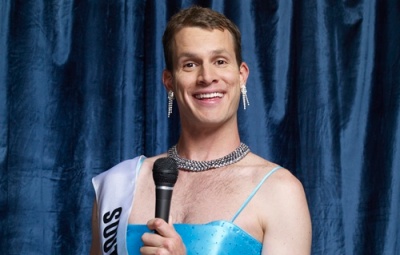 Last week, a brouhaha erupted on the Internet after Daniel Tosh, a lackluster comic and host of Tosh.0 on Comedy Central made a joke about rape. Or rather, he attempted such a joke, knowing full well that somebody out there in the world, if not his audience, would find it unfunny and offensive.
  I don’t pretend that this is news, for I first learned about false dichotomies in 1991, as the prequel war began in Iraq. Actually the rhetoric around that conflict gives good context for this discussion, because it was presented by the media to all of us as a fight between good and evil, the granddaddy of all dichotomies. George Bush the Elder seemed not quite the thousandth point of light to we idealistic college students, and although Saddam Hussein clearly wasn’t a benevolent leader for his country, many of us questioned the purity of malignancy that our government suggested he represented.
 We adult-type people recognize that life is hectic, tilted toward entropy, and full of aggravation. Big moments, unexpected problems, and the aforementioned garden variety pressures get us stressed out, and I know that is an understatement. But the writing (and the dinner making, diaper changing, phone call returning, toothbrushing) must go on. Of course nothing resolves stress like actual problem solving, but let’s presume that some stress is ongoing or can’t be eliminated before one needs to spend quality time with their project. Just what is in my particular box of tricks? For writers like me, having a toolkit of tactics to deal with chronic stress so the creative whatnot can flow is critical stuff. Check out the following:
 From time to time I’ve posted excerpts from my works-in-progress. I did several for Parallax, now called The Unintentional Time Traveler. Here’s one from my very latest project, about a world in which teenagers reach adulthood via a fantastic metamorphosis. Don’t look for perfect writing, as I’m still in first draft mode. But to see where I’m going with this project, here is a brief scene from early on:
 It is an understatement to say I’ve spent quality time around horses. I hung out at Tara Stables in New Jersey as long after a riding lesson as I could; I’d go for 1- and 2-hour rides with friends in the forests around the Delaware River Valley, and twice I went to horse camp. Because once necessitated a sequel, I suppose. I learned how to ride horses in the Western and English styles, and I took a horse riding class in college as my one and only “fun” class in 120 credits of my undergraduate career. As a tween I drew horses for hours and collected small statues of the animals in the way that kids are strangely encouraged to identify hobbies.


 Trans/plant/portation