I’ve heard from a few people recently—in the last few months, for sure—that they’re “against” adverbs. As if adverbs occupy a political position which one could oppose.
The point that each of them made was that adverbs get used way too often by lazy writers. Take the following example that I composed off the top of my head for illustrative purposes:
“Stop it,” said Lucinda angrily. “You know I hate popsicles.”
Do we really need the “angrily” here? No. We can tell Lucinda is angry. Or rather, we ought to be able to tell Lucinda is angry.
In yesterday’s Friday Flash fiction that I posted, I think I wrote “He was livid.” No adverbs present. It was a tell, for sure, but I had other reasons for putting it in the story. Letting an adverb expound on the action in the sentence, however, can take away from the rest of the line. Or, title, as in (already noted by Stephen King) Harry Potter and the Deathly Hallows.
So Stephen King is not behind adverbial use, either. As a long-time King reader, I have to say I’m not surprised to learn this, given his writing style. That’s like saying Ernest Hemingway didn’t much care for compound sentences or long predicates.
Of course adverbs can be used poorly, but so too, do other parts of speech make themselves rather unbecoming. Superlative, excessive, overburdening adjectives can destroy the simple peacefulness of a noun. Nouns themselves become pretentious when authors reach for “practicable” over “practical,” or “sublime” instead of the more accessible “awe-inspiring.” There may be reasons for their usage, certainly, or they could just be a writer pushing too hard or too dedicated to her thesaurus.
Conjunctions and articles, to their credit, are too utilitarian as to be go-to tools for the lazy writer. And verbs, well, verbs can get writers into trouble in one of two ways—the eternal passive voice problem, or its evil twin, the over-active verb. Again, let’s go to fake dialogue to emphasize the point:
“Katrina,” he screamed, “Why did you rub mud all over the sofa?”
“Because you love the sofa more than you love me,” she hissed menacingly.
I couldn’t resist the adverb there, sorry. There is no reason in the world, the whole entire, land mass and oceanic experience of Planet Earth, why we can’t just use “said.” Said is not pretty, not lyrical, not powerful, but whatever. It’s a great worker for what it does—letting the reader cognate that there is speech happening, and by whom, and then getting them to move on to the next bit. What’s important are the words around the verb. Sometimes the verb is important, sure. I would never tell writers to go for the most banal verb possible—”said” being a special exception, in a class of its own—but writers don’t need to hit every verb out of the park. Readers get stopped by highfalutin verbs. Yet, if the verb is right for the sentence, there’s little need for lots of adverbs to shore it up.
For me, as a writer, I don’t want to single out any part of speech and write its death certificate. Language isn’t about trends, and writers who attempt to write only for fashion are writers who will always be behind the times. Adverbs are great, all on their own. There’s no way to answer the question, “How are you” without an adverb. To focus just on adverbs is to frame the subject of poor writing incorrectly. Poor writing leaves a lot of hot mess in its wake beyond just adverbs. There are usually, in my experience, a whole host of similes and other metaphors floating in the water of bad writing. Nay, the cesspool.
Good writing lets us know it’s good writing because we don’t remember most of the pieces, save the exquisite sentences that we mull over long after we’ve closed the book. It’s not the adverb which is the problem.
It’s August, as we all know, so there are still a lot of sunny days here in Seattle; I’ve heard but not experienced the loss of direct sunlight that arrives in fall and sticks around until the next summer. That’s how it worked in Syracuse, New York, so I can steady myself for the little bits of insanity that pop up as human beings go through vitamin D withdrawal. It gets weird, that’s for sure.
But if I don’t have the lack of sun to remind me I’m in Seattle, there are other hints:
Nobody carries an umbrella in the rain, but everyone wears raincoats, even when the sun’s out
Black and brown are the top choices for clothing, unless one has opted to select a bit of hot pink
There is apparently some contest to see who can plaster the most bumper stickers on their car
People wear jeans to business meetings
No glasses frames are “too retro” to wear out in public
Instead of just garbage and recycling bins, there are bins marked Garbage, Recycling, Compost, and Hopeless
It is its own little city. I enjoy seeing skyscrapers once again, not for the earth-destroying resources they consume, of course, but for the fact that it signifies there are a lot of people here. In New York City, they seem to touch the clouds but never make it; in Seattle the clouds like to dive in from time to time, I suppose to take in a show or slam poetry event. Even the volcanoes hide behind gray blobs of cloud. It’s almost as if Mt. St. Helens is embarrassed that it threw up all over eastern Washington in 1980. Girl, 30 years later, you can be okay with it. We all see you blew your stack, and it’s okay.
Some folks warned me that Seattlites are passive-aggressive, and so far, this has held up to be fairly accurate. Back when Susanne and I first moved to Walla Walla, I was shocked at how indirect people were. For example, if I am staring at cans of beans in the grocery store, assessing which I should procure, and someone from the Northeast comes up behind me, they’ll either say, “excuse me” and reach in around me, reach in around me without saying anything, or push me aside to get their damn beans. But in the Northwest they’ll just stand behind me, waiting, quiet as a door mouse, until I finish thinking about whatever it was that brought me to this corner of the store in the first place. I find this unnerving, because I need and expect directness. But what I didn’t understand until this last week of living here, is that they’re really just fuming behind me, wishing they could say something, wholly unable to break their social contract.
Another story: I used to commute into DC on the Metro, taking a bus to the Pentagon station and traveling by the subway up to Foggy Bottom near the George Washington University campus. When I was on my morning schedule I saw the same people, also heading to work, which included one nice lady who was aided by a seeing eye dog. We got to know each other a little, in that way that repeat commuters do. Because she got off at the same station as me, she’d often take hold of my elbow as we walked to the escalator. It wasn’t anything I said she could do, but it didn’t bother me, either. One day, heading up the escalator, a businessman in a hurry mashed her dog’s foot into the step, severely injuring the animal. I was shocked that he didn’t lose one step on his mighty important commute to Satan Company, Ltd., and I rushed over to him and yanked him aside before he hit the turnstiles, yelling at him to see what he’d done. It was clear he didn’t want to deal with the aftermath—the woman trying to figure out how badly her dog had been maimed, the dog doing its best to be calm but crying and whimpering all the same—but me and the other commuters got his card out of him. I later found out that he’d ponied up the money for the veterinarian, as well as the re-training the dog needed to get back on moving stairs. Cornered, he had no option but to admit his liability, even as he’d tried to just sneak away.
Fast forward to Monday night, here in Seattle, and while we were at the trivia game in a local bar, a woman stepped on a service dog’s foot while meeting up with her friends. Her initial response was, “oh, there’s a dog there?” A few words were exchanged with the dog’s owner, but then she walked over to her group of pals, muttering, “I don’t know why someone brings a dog in here, anyway.” Lady, it’s a service dog. It’s wearing a bright orange back harness that reads: Service Dog.
That was a primo passive aggressive response as far as I am concerned. Damn that dog for being under my feet!
Lest I sound like I don’t like Seattle, let me list a few wonderful aspects:
Great, self-contained neighborhoods that nestle lovely little eateries, like Moka Coffee, the Baguette Box, and Sushi Whore
Water, water, everywhere one looks
People aren’t afraid to play wonderful music—everything from old Sonic Youth to Average White Band, to contemporary indie rock
Few places can support many people wearing socks and Birkenstock sandals
Even the cops have tribal tattoos
I went ahead and subscribed to the Sunday newspaper because I still believe, even in this anti-paper world, that a subscription to the local rag provides great insight into a place’s culture, people, and environment. And yes, I’ll note that I’ve been quite unwilling to purchase the Walla Walla Union-Bulletin. I don’t find that it actually contains news or much else of interest.
So Seattle, I want to get to know you. We’ve had a few dates here and there, but it’s time to take our relationship to the next level. Where will we go together, oh city of wet weather and shades of green?
It was in the parking log at Costco where a woman, looking wholly bereft of home and afflicted of something came right up to me as if I were an old friend and asked if I could help her out by giving her money. I had been completely focused on how to get twenty pounds of flour into a space the size of one small Pomeranian, which assuredly is no easy task. So I nearly jumped from hearing her inquiry, and it took me longer than it should have to explain that I didn’t actually have any cash on me, sorry. She shuffled off, not unlike a zombie, and I realized she could have been a posterchild for the anti-meth campaigns of the Pacific Northwest. My heart went out to her, and even so, I was a bit unnerved.
It occurred to me after this incident that different places have different expectations for interacting with strangers. In DC it’s either tourists who are chronically clueless about their surroundings, laden with a map of the city or not, or it’s someone panhandling. The lobbyists, lawyers, government workers, hotel staff, cab drivers, administrative assistants, Metro drivers, and other commuters all keep to themselves, wanting no part of any conversation with anyone else. I rode the Metro for years, and very infrequently did I ever hear two people conversing who hadn’t boarded together. MP3 players were the best thing to happen to the silent travelers of DC—suddenly everyone had an easy means for ignoring the world around them.
So people looking for money from the hands of strangers kept, for the most part, personal distance, and requests were limited to the actual sidewalk or on public transportation. I think that’s why I was startled here in Seattle. I actually had to spend the better part of a second realizing that this wasn’t an old friend or acquaintance of mine, because she walked right up to me, and I in turn was right up against my open vehicle. It was her lack of recognition for whatever vulnerability I had at that moment that started my first sense of anxiety.
But for my part, I was just as destabilizing to her, because as soon as I recognized that all she wanted was money, which I was actually out of, having just left Costco, I went immediately into my DC-generated response when I don’t have cash to donate, which is, “I don’t have any money on me, sorry.” In DC this ends the exchange, 7 times out of 10 the requester will then ask God to bless me or tell me to have a nice day, and then I’ll wonder how much of their request was tinged with a need for human interaction and a measure of dignity that someone will talk to them. This woman, on the other hand, seemed shocked that I’d make eye contact with her, much less have a quick answer.
It occurs to me that people are less straightforward in Seattle than in DC, so people looking for handouts need to be more in their face. But the other big adjustment seems to be about sobriety: I can’t remember even a single instance of a non-sober person asking me for money in DC. Not a one. But everyone in Seattle who has asked for money has seemed to have an affect for one reason or another. And there seem to be many more homeless folks here than back out east, and I have no idea why that is. I’m sure there are experts out there who analyze such things, who advocate for this solution or that, but I don’t know who they are or what their positions amount to. But I’ve never thought about how different cultural expectations for civility play into how people on the margins express themselves. And clearly, there’s some kind of effect or panhandling would look the same no matter the geography.
For our part, I’m very glad to once again have a home. We might have been without a fixed location for two months by choice, but I don’t for a minute want to lose sight of the millions of people who have lost their houses or who are without their own home but who desperately need their own place. We are very lucky people.
Three days driving for half the day or more seems to be my personal limit on time I can spend driving and still call it a positive experience. This I now know because we did just that in our little Honda CR-V (that’s Can’t Resist Vehicle for the non-Honda laypeople), going from Detroit to Minneapolis in one day, to Miles City, Montana, the next, and finally to Walla Walla. Except not finally, really, since our end destination was Seattle. But we needed to make a stop at Wallyworld to get some of our things out of storage, put them into a moving van, and haul the detritus, I mean, erm, our belongings, to the city with the Space Needle.
Just as an aside, the Space Needle only looks good from a distance, and especially good as a line drawing, as in the opening credits of Frazier. I suppose it helps that we’ve got Grammer’s singing to distract us from even this abstraction of the building. But up close, it just looks meh, like a toy I played with in 1978 that had a lot of white plastic and faded to some ever-dingy urine-y yellow. Okay, it’s not as bad as that, but it’s not much further up, either. And I am a little incredulous that we still had a World’s Fair in 1964 or whenever this thing was built.
We rolled into Walla Walla on Friday night with the wheat almost as grown as it gets before the farmers chop it down and burn the fields. Everything in town had a bit of a golden hue from the light of the crop, or maybe it was just the lighting from the maximum security prison, I’m not sure which. We had plans to get the moving truck in the morning at 11:30—this was our pick up time. And as friends of mine know, I am fastidiously punctual. So we checked the address to Budget truck rentals online, went to bed, and ventured out in the morning.
This is where we had a quintessential Walla Walla experience. Let me explain. While the Web site gave a street address on East Isaacs Avenue for the truck rental agency, all we found was an empty lot with one rather damaged rental truck—the rear view mirror was broken, and the left side had a long, arching dent. We could see the key drop-off box, so we had some reassurance that this was the right place, but in every other regard we intimated that this was the very most definitely wrong place to do our paperwork. For other than a few McDonald’s wrappers slowly blowing in the desert wind, there was no paper.
I found two phone numbers attached to the drop-off box, so I called the first and waited. Two rings, five, seven, and then I clicked in to some other part of the Budget Rental Universe. Headquarters was less than helpful, only giving me the address to which I’d already wandered. Maybe there was a parallel dimension to the office that I was just missing, or a secret word, or perhaps I needed to pull on my ears or tape up an X on a window. They suggested I try the airport. But it was an offhand gesture, not a solid directive. Small town living at its finest.
With some degree of trepidation—for maybe someone pulls up in a truck the second after we’re gone—we left for the airport, which, because it’s Walla Walla, and as regular readers of this blog know, is only a 5-minute drive away. That’s because everything in Walla Walla is only 5 minutes from any other thing. I hopped on the highway and by 11:37 we were at the counter, a just-beyond-teenager there who knew all about our rental. The kicker: this was in fact where we were supposed to do our paperwork for the truck, but then we had to drive back to where we’d just been to get the actual truck. Fortunately our truck wasn’t the beat-up one in the parking lot. Unfortunately, when we met up with the manager back on East Isaacs, we found our truck had no gas cap. We tried taking the gas cap off the damaged truck, but lo and behold, it was stuck onto the tank. What the hell did those people drive through? I agreed to drive the truck across the street to the auto parts store and voila, the manager presented me with a new cap.
Then it was just the matter of nearly falling over from heat exhaustion as we cleared out what we needed from our storage unit, which in the summer heat, wavered somewhere around 108-112 degrees. It was like slow-cooking our brains, and eventually, we got a little discombobulated, pointing at boxes we wanted but not knowing anymore how to get them from where they sat to where we wanted them—for example, in the truck. I was reminded of Weeble Wobbles, another toy from my youth in the 70s, because we did start teetering around as we carried things, and after an hour or so, we were done. We did what any intelligent person would do at that point; we headed to the Colville Street Patisserie, and if any place could serve as muse, this place does. I don’t know what Tiffany and Dave put in the confections, but it makes my fingers get to typing.
The next morning we got ourselves some mochas and yogurt and headed out in our mini-caravan, over the Snoqualmie Pass through the Cascade Mountains, which is the range responsible for keeping the westernmost third of Washington and Oregon wet and the eastern two-thirds nearly bone dry. I kept the truck at a steady 65, and this was an improvement over the U-Haul I’d rented in 1997, which threatened to come apart at the seams at one tick higher than 52mph. I found some amazing country station on the way to Yakima and bojangled myself all the way to Seattle.
We promised ourselves on Sunday that we’d unpack right away, and as of this post, we’ve mostly held true to that goal. I’ve got one still-sealed Space Bag with my clothes in it, and we have a bathroom shelf to assemble, but otherwise, that’s it. Note to people thinking about buying Space Bags: two of ours opened up spontaneously in the back of the car, which wasn’t good, and when you vacuum seal them up, they become heavier than the particle of matter responsible for the Big Bang. But other than that, they’re great.
Susanne’s younger brother met us at our new place to help us move in, and more to the point, to collect the box of pottery he’d asked us to bring with us from Michigan. Nobody is more cleverly frugal than this fellow. But we made short order of the moving in process, and now I have the next 5.5 months to take in everything Seattle has to give. Already I see that our neighborhood is unusually populated with seafood restaurants, unhelpful to us as a couple since one of us can’t eat fish or seafood of any kind. But it is Seattle, and we can partake of the many, many coffeehouses here. Six are scattered in the streets around us—there’s also a German tavern, three pizza-making establishments, one used book store, and a business to help one improve one’s golf swing.
Call me Captain Obvious, but after reading a lot—and I mean a LOT—of advice about face-to-face pitching story ideas to agents, I wasn’t quite sure how to go about it when the time really came due. So much of it was contradictory, or impossible to do at once, or over the top, or not applicable. So here is my list, after taking myself to my first writer’s conference, of what not to do, as obvious as some of these items may seem. I’m not saying I did these things, but I or someone I noticed did each of the things in this list.
Don’t use your pitch time or session for anything other than your finished work. They want to think you’re really into the thing you’ve written, and hello, you need to show you’re a closer and can finish a project.
Don’t get so into memorizing your pitch that you’re a nervous wreck when you sit down to pitch. I’m going to put on my usability evaluator’s hat and remind folks that we humans hear differently than we read. A few interesting words are fine, but agents aren’t going to dissect your perfect language by ear. I like the notecard approach, personally. You know your project, be confident you’ll advocate for it well, and leave the memorization to the . . . memorizers.
Don’t leave at the last minute to go to your pitch session. I don’t see how huffing and puffing and wiping sweat off one’s brow emits a glow of success. As I’m a classic overthinker, I also need to not give too much ramp-up time to myself, or I’ll work myself into a different kind of stress aura. Ten minutes beforehand to leave the workshop session, etc., is perfect.
Don’t waste your pitch time blowing smoke up the agent’s ass. They have to endure this so often some may have mounted smoke detectors inside their underwear. Which I guess would make it hard to sit, but that’s not the point. I think there’s a middle range agents like to see—where the writer knows a bit about their client list and book selections, and can compare their work with each. But there’s no point to looking like a stalker-in-waiting. That’s just freaky.
Don’t be an island unto yourself. Agents and editors and everyone in the book publishing business expects that writers are good readers—that we have knowledge of the other books in our genre of interest, that we know how to avoid duplicating other well known (or even somewhat known) plots and characters, that we want to contribute to the literature generally. Acting like we’ve been so well holed up in our literary caves that we don’t know what’s going on in the field won’t play well once the agent asks herself how we’ll market ourselves, because the answer will come back that we’ll look like asses.
For email queries, don’t rush querying. I know, I finished my memoir and went straight to the “How to Query an Agent” blogs and books. It was like a hot potato in my pocket, that manuscript. Hey, I have big pockets, okay? Go back and make it tighter. Hack out sections that really don’t need to be there. Let it sit in the drawer for a while and in the meantime, go fishing, catch a movie or *gasp* read a book. When you finally sit down, after all of that, to write your query letter, spend some quality time with it. What was the point in writing the best book ever if you’re just going to send out a half-baked query? The query is the singer of the band—the bassist may be great, but very few people will get past poor singing to notice the bass.
If an agent says no, leave them be and don’t hound them. One agent at the conference I attended says she receives the same query every day, starting more than a year ago. She’s never going to say yes to this person’s project. While that may be an extreme example, it’s a good reminder to respect an agent’s no. Keep refining your pitch and researching which other agents might be better advocates for your work.
I say all this in the midst of getting turned down for representation after the same agent asked for my partial manuscript, book proposal, and then full manuscript. That’s a long way to go in the process just to be rejected. It’s not easy, for sure, but I tell myself that if my project didn’t have any merit, I wouldn’t have heard back from anyone, much less the half dozen who’ve shown interest. And at least I know now that I should cut it down to about 80,000 words. It may be my baby, but heck, I’m trying to sell my baby, so who am I to complain about cutting it a little?
Okay, bad metaphor there. I do not encourage traumatizing babies, let me just point that out.
Writers, put yourselves out there. Keep pushing to be better. One of these agents, one of these days, is going to say yes.
To say I’m sick of driving would be to trivialize everything I’ve seen on my journey across the continent and back, would be to make too much light of the 8,600 miles of the trip, in which I’ve encountered everything from:
tiny baby bunnies
crystal blue boiling pools of adulterated water that are fueled by the unseen middle of the earth
exasperated parents who look like they’re questioning the entirety of their lives
all manner of coffeehouses and espresso shacks that dot the West like freckles
at least 50 species of birds—sparrows, swallows, hawks, eagles, kingfishers, vultures, quail, turkeys, hummingbirds, and more
barns and rural structures in all stages of their life cycles
blue-collar men who all looked dazed and stressed, no matter where I encountered them
lightning bugs outside a greasy spoon diner in Pennsylvania
long moments of coasting down from mountains just after fighting to get to the peaks
many, many anti-abortion and anti-Obama billboards
tired front desk hotel staff
All of these people, animals, and situations were notable enough that they left their impressions on me. I don’t know their stories, except in some rare instances in which we had time to converse. Like an unfinished painting, I’m left wondering about all of the open canvas and what could be drawn on to fill it in. Perhaps some of these things will get worked into a story or other over time, or my memory will do that thing I hate and blur different events together in its quest to find patterns and meaning. But that tendency is why I write things down—then I retain the edges of each experience.
That said, I am loathe to sit behind the wheel of the car right now, even to go set up Internet in our apartment or buy bread. I’m sure that this hatred will fade, but hopefully I’ll remember that I don’t particularly enjoy driving 3 days in a row for 12 hours a day.
We rolled into Walla Walla on Friday evening, having come through the evergreen forests along the waistline of Idaho. Sister cities Lewiston and Clarkston, watching each other from across a river and state boundary line, seemed small and a bit bedraggled, the road infrastructure not seeming to lead to any important point in either place. We opted to get some drive thru food, knowing how close we were and not wanting to take any more time at a pit stop. Finally, at long last, the wheat fields, close to harvest, signaling that we were almost back. I’d gotten so used to driving into the sun that I didn’t need to put on my sunglasses anymore. Around this turn and that, we swirled around the low mountains, revealing the last inkling of daylight and then burrowing into dark indigo again, weaving through what must have been a tapestry of bold colors, if only we’d had a bird’s eye view.
A bird’s eye view, I realize, is precisely what I’ve been interested in finding this summer. Something to help me understand my time in Walla Walla and how to get through the next portion of it when it inevitably sneaks up on me this winter. I’ve asked a lot of questions about who, what, how I am and I’ve enjoyed the funny moments, for sure (the leaky tub dripping into the kitchen below, not so much), but I do still feel the need for some larger perspective.
Maybe it’s all a big joke, a set on Laugh In that I haven’t realized is still being performed on a sound stage in southern California. Maybe I just need more time to elapse before I’ll come to the punchline, or the Big Reveal. In the meantime, we’ve reached Seattle, and wow, is this town a hoot. All this bluster about saving the planet but everyone chain smokes. Aren’t our lungs part of the planet, people?
I think this is going to be interesting, this fall.
I’m excited to say that I have a collection of flash fiction stories out on Amazon for the Kindle, at the bargain basement price of only $2.99! That’s not even bargain basement—that’s the basement’s downstairs level. There is even one bonus, never-before-scene story to round out the collection.
A husband making frantic choices to escape a collapsing planet. A boy, lost, too young to find his own way home. A vampire, longing for a decent bottle of wine, bored with having experienced too much. A woman on the edge, waiting for her spouse to return from war. A friend burdened with regret after committing murder. A mummy who pushes through pain and decades, anxious for revenge. Two robbers, carrying out a heist. These and other tales of desperation and emotions on a razor’s edge explore reality and the space just behind. Purchase your copy of Spinning Around a Sun: Stories today!
First, a brief round up of my first writer’s conference:
One request for a partial and one request for my book proposal, both for the memoir
One request for a partial of my science fiction satire
Several new writer contacts—mostly sci fi and fantasy folks, who duh, are the best
One silly picture of myself shown on a screen in front of everyone
Many, many fantastic conversations about writing and creating
At least half a dozen drinks at the bar—they had good hefeweisen, for which I am always a sucker
Two great dinners in Seattle—Ethiopian and sushi whore in West Seattle
Two ridiculous airline experiences
I’d grumbled and snarked about the demise of airline service here and over on I Fry Mine in Butter, and apparently the universe or something took notice, because wow, getting back to Detroit from Seattle was a fiasco.
The initial flight out of Seattle, a red-eye at 1AM was bad enough—taking a red-eye, I knew, would throw off my internal clock, because it has every time before—but I also had a connecting flight out of Memphis. I’d been okay with this at booking because I had a nonstop to Seattle for my outbound flight, and I’m not choosy in this brave new world of airline service. Choosy is something I reserve for potato chip flavors at the Target Superstore.
Memphis’ airport has seen better, happier, less stinky days. I had to really eyeball which chair I sat in as some had lost a considerable percentage of their stuffing to some other quadrant of the facility. I figure there’s a room in the basement somewhere with bags of chair fluff. I just need to sort out why. I made my way to a Starbucks and procured a mocha and a cheese danish because I was pretending it was breakfast time. It was, in fact, 7:20AM local time, but my stomach didn’t know that, so I gave it some cues. Here, stomach, coffee. Here, stomach, danish!
Busying myself in my ebook—Patricia Cornwell’s latest, and she sounds like a cranky old lady writer these days—I did not initially notice that the monitor displaying my departure time had changed. 9:45 quietly became 10:20. At some point I lifted my head, probably because I saw movement on my horizon, triggering the lizard portion of my brain to make sure there weren’t any predators on the savanna. Fortunately, there weren’t, but I did see the slippage in my takeoff time. I called my in-law’s house and left a message alerting them to the delay, and went back to my book. I wasn’t too concerned about a small delay, but I really needed to figure out who was after Kay Scarpetta.
At the next gate, a flight to Minneapolis, people starting piling up. I could tell it was a big and full plane. Then the steward made a strange announcement:
“So folks, we’re going to have a delay here as we have a mechanical issue with this flight. We need a really big, strong spring for the tail rudder. I’m sure you remember that flight that crashed a few years ago because of the tail. So we take these things seriously. Unfortunately the part needs to be flown into Memphis here. We’ll get you all moving as soon as we can. You can scan your boarding passes over here to receive a $6 breakfast voucher from Delta for any food vendor here in the airport.”
Did someone just say flight and crash in the same sentence? Did someone from an airline just say flight and crash? That’s like yelling “bomb!” in the security line!
I looked at the monitor for the flight. Originally scheduled: 8AM. Now expected: 4PM. I noticed as a wave of uneasy crashed over me and my ebook.
Well, something was off with my flight, too. We still weren’t boarding, even though I heard one employee tell another customer that we’d leave by 10:10. My phone buzzed with a text from Susanne: Delta Web site says you’re not due to depart until 11.
Those lying bastards. Now I was annoyed, and I had a good amount of caffeine from my mocha to fuel my anger. I asked the woman at the counter how we were leaving at 10:20 if it was 10AM and we had no plane at the gate? She gave me an uneven frown, as if both halves of her brain were in conflict: this guy is pissing me off, must be nice to customers. I felt badly for causing her distress. I blamed my Starbucks mocha.
Around 11 we actually got on the plane, and then the story takes a downturn. I was seated next to the most talkative, no boundaries, yammery guy I’ve ever had the fortune to sit next to. He just wanted to know my whole life story, this guy. It was one of those times when I considered revealing The Trans just to see if it could shut down any more conversation, but I feared he would just explode with 20,000 questions I didn’t feel like answering. For those of the non-trans status, questions no transgender person wants to answer include the following:
What was your name before?
What’s it like to see things from the other side?
Did you get surgery?
How did your family deal with it?
Quick, let’s go to the rest room so I can see your winky!
Okay, that last one isn’t a question, though it is a kind of request, I suppose. And yes, that last one has been asked of me. See, this is why my memoir needs to find an agent and a publisher, because the world needs to know that people make these crazy remarks! Notice how I went from memoir to publisher to world? That was nice, right?
Mr. Never Stop Talking rattled on for so long that I hardly noticed we’d been on the tarmac for a while, but sure enough, they hadn’t closed the boarding door and it was 11:30. Still on plane, at gate, I texted Susanne, because her drive to the airport and this flight took about the same time. I didn’t want her hanging out at the airport if I was delayed. Which, okay, I was already significantly delayed. I’d originally been scheduled to land at 12:15.
Delta Web site says you’re not departing until 12:30, she texted back. And here the pilot had just announced we’d be delayed another 5 minutes. Five minutes my ass. Five minutes in sea tortoise time. The stewards came down the aisle with glasses of water for us. Thanks, Delta.
Twelve-thirty came and went. We were having some kind of issue with the fuel line to the plane. Terrific. One rudderless crashing wonder to Minneapolis, and one exploding bombshell to Detroit. How’s that merger working out for you, Northwest?
They asked us to open up our air vents and close our windows to keep it cool inside. Mr. Talky Talk went on about people getting stranded on the tarmac for four hours just the day before. Sheesh, Mr. Never Shuts Up was just one happy story after another.
At some time after 1, way way way later that 9:45AM, we took off with the fuel line attached. Just kidding. We took of all fixed up, and I was confident that Susanne knew exactly when to leave for Detroit.
In the air they did the usual beverage service, only this time they gave us the can of soda and not just the plastic cup. I asked for the accompanying cookies.
“Oh, we’re out of cookies.” Three hours at the gate and nobody could stock the cookies?
“Of course you are.”
“Just for that,” he said, “I’m going to find you some cookies.”
“Great,” I said. I presumed this meant he’d find some crumbly bits ground into the carpet from the last 3-year-old’s temper tantrum and press them into my palm with a smile. But 20 minutes later, he handed me a package of the now-infamous Biscoff.
“Lucky you,” said the woman across the aisle from me, who’d been reading at a copy of Laura Bush’s memoir for the last hour.
“I can share,” I said, breaking one cookie in half. I handed her one piece and Motormouth to My Left the other half.
“Wow, it’s kind of cinnamony,” he said, still chewing. “You think that’s cinnamon in there?”
“Yup,” I said.
“That is a damn good cookie.”
“It’s the best thing about Delta,” I said, and I heard the steward sniff, displeased. “After their amazing staff, of course.”
“Of course,” said the steward.
I slept for four hours as soon as I got back home. My stomach is still not sure what the hell time it is.
One of the presentations at PNWA this past weekend focused on writing non fiction book proposals, those business-side documents that outline what the market is for a non fiction title and the pitch on why this new idea will sell, sell, sell. Rita Rosenkranz, one of the agents at this year’s conference, presented. I missed the first 15 minutes at an editor’s session, but here are my notes for the rest of her talk. While I’d learned much of this by making mistakes over the past year, I also found a lot of new information that I think will be really helpful for future projects.
What to put in your non fiction book proposal:
On the cover page:
Title
Book Proposal at top
Subtitle
Author info lower right or left hand corner—don’t bury the contact info.
Follow the file format the agent asks for.
Table of Contents (TOC) page—all the sections of the proposal with page numbers
The Overview—should make a case for the book and author showing how it meets a need on the publishing market. Create context for the book. What is the argument for the book. Why does this book need to be? It should not feel generic. It should be about a page, maybe a page and a half. Make sure that you’re not overwriting. Outline your social context that makes the book attractive to a market. Identi the market as well as you can, but don’t overreach or the agent won’t trust you. Talk about what’s practical and what you can control. Know how long it will take you to complete the work, and say it.
Qualifications—personal experience, professional expier., history as a public speaker.
Competition—would the editor agree with your opinion? How will the receiver review your work? What other books are in this market? Look at Amazon to see if your book has merit. You may see all the other books and worry your market is saturated. You have to make an honest case for your book and the reasons you’re particularly suited to write this book. List competing titles by title, publisher, year, and price. Include a description of the strengths and weaknesses of it. What is your twist? How will your book sell differently? Give about a page and half. The summaries should be concise, not long-winded. Different categories will require different time spans you’ll have to go back. Some books are old but still very ore sent in the marketplace.
Audience—be clear about your intended audience, even if it includes cross over. Is it a niche readership, and can you lifer demographics?
Marketing—will you have special sales? Will you buy quantities up front? That won’t clinch the deal, but it’s good to note. Many folks assume back room sales. What Web sites will mention your work? Are there natural tie Ins on the call dar to your work? Are there hooks to your work that could pique media interest? Are you a member of associations that could help with marketing? Could ppl you interviewed for the book help you market it? Read book marketing books. Not all marketing costs a lot of money. Put in your solid platform plan. Red hot internet publicity. Get known before the book deal.
Blurbs—get advanced blurbs for a submission if you can. Not necessary, but helpful. Quotes help attract attention to the work, requires advance planning, you must send the best version of your book to your blurb writers. Avoid using your relatives.
Include the book’s actual introduction, so you can show the voice. It should run no longer than three pages.
Book’s TOC. This sets up the body of work. It prompts a customer’s purchase. Should be comprehensive with a logical layout.
Sample chapters. Must see the first one, to show me how you frame the work and how it will welcome me. Also a key chapter that is a signature of the work, even ifi it’s chapter 20. If you have more chapters ready, let me know, so I can look at them if I want to see more. They will help me determine If I will bond with the author and will want to invest my time. You can put in a handful of graphs or illustrations if you think they’ll help make the book clear to me.
Book content—this should come at the end, since everything has been leading up to it. But don’t stress about the order of the other things.
It’s the single most important thing to sell the nonfiction book. It shows the editor what will be coming. No editor would consider an oral presentation an adequate substitution. The actual writing of the proposal is useful to yourself to work through what you’re writing, to make it the best book possible. It will help you reevaluate the work and that you’re presenting it the best way you can.
Cover letters are very important. The cover letter will show that you can communicate what the book is about, why it’s exciting. You must be adept at articulating what it is. It is your most effective advantage to getting your foot in the door. As a rule, a summary of the work. Just be clear, not lyrical. Second paragraph, about you. How are you aligned with your subject? No disconnects. Avoid saying the work is hard to describe. Don’t say you have 25 unpublished works. Manage a tone that jibes with the book. Limit yourself to one page. Include full contact Info. Don’t go on vacation the next day.
Rejections: we are all rejected, agents too. Rejections are part of our environment. What is in this letter that will help me get better? Don’t let rejection crush you. Be smart and savvy and know that rejection that tells you something is a gift. You’ll be able to get on to the job of selling your work.
Look at Amazon sales. Does the category consistently do well? Some of the numbers on amazon are misleading. Agents have bookscan, though. Just get a rough guess. Obviously bestsellers are doing well.
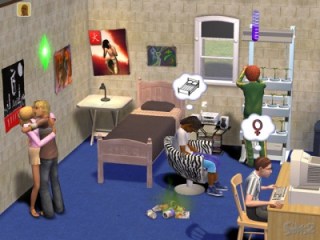
It was Saturday morning, and I kept thinking about the Sims, that role-playing video game in which the people in the town all have little diamond-shaped crystals hovering over their heads, indicating their energy and mood levels. When a Sim is content, the crystal is emerald and shiny, a bright beacon of happiness. When the crystal is faded, looking mostly transparent, the Sim is no longer a happy camper. During the course of any activity, the crystal will slowly fade, ticking down, as it were, into misery and joylessness. Fortunately for the game player, something as simple as going to the bathroom with make the Sim happier. But just given the tendency of time and entropy, according to the game’s designers, all Sims will end up in Funked Out Town. And I have made Sims die by leaving them in a room by themselves with no toilet, food, drink, or human companionship. It is awful to see what goes through their minds as they slowly fade into death. I swear I didn’t do this intentionally. I just forgot I’d left the game running and was in the next room watching reality television.
I took the 560 bus again, getting a salutation from the driver who now recognized me. He may be confused on Monday, but I’m betting he won’t care. This time I wasn’t going to wait for the courtesy vehicle. I decided to walk to the light rail station, remembering that I’d seen the conference center from the train on my first day in town last week. Sure enough, a 10-minute walk later, I walked right into where they were serving coffee and continental breakfast. I should have done that all along instead of waiting around for some hotel van.
No sooner had I put a few things on my plate that I noticed that a lot of people in the room had faded crystals over their heads. Everyone was as wiped out as me. We were all toughing it out but damn, we looked a lot more rumpled around the edges and worn out than we had just the day before. I know we all wanted to be there, but I began wondering if it wouldn’t have been helpful to have had a nap room, like in my old day care. Maybe minus the story time with teacher.
After a few gulps of hotel coffee, however, I had brightened my indicator by several shades of green, and I said hello to the folks I’d previously met. It was definitely nice to hear a stream of congratulations through the day from people who spotted my finalist ribbon. And in the back of my head, when so greeted, I would wonder anew if I would win one of the top three spots for memoir. I told myself not to get my hopes up.
I figured out which workshop to attend, found my chair and started typing away on my iPad to take notes. I’m the only one at the conference with this thing, and I hadn’t thought ahead as to whether any rabid anti-ebooks people would eschew me for carrying the device. I really do love paper books and find them easier to read, but the screen really is pretty good and when I’m really reading, I can eat through novels, so I appreciate having several in one place. Already this trip I’ve read through The Help, The Scarpetta Factor, and Confessions of an Ugly Stepsister. What can I say, I have eclectic reading tastes. I do miss my days as a book buyer because I loved getting uncorrected proofs and reading things before anyone else. But that was back in the era before Amazon reviews and online spoilers. Advance readers had smaller effects on others.
In the hallway I ran into one of the agents who handles science fiction and fantasy, and told her about my SuperQueers story, and she really liked it, handing me her card and asking for the first 10 pages. That made my morning! At that point, anyway.
It was time to go to the editor pitch session, in which a group of writers sits at a table with an editor and gets their take on our ideas and manuscripts. We writers have only a couple of minutes to give the idea and get feedback. While this may sound a bit insane—and it is—it at least mirrors the amount of time editors generally have to consider projects. I liken it to this:
I don’t think they get a lot of time to get the wrapping on at most publishing houses.
I gave the editor my pitch for my superheros novel, SuperQueers, that I started writing back in 2004 for National Novel Writing Month. It was a total turd by the end of that November, but I really liked my idea and so hey, I kept working on it for the next four years. I refused to watch Heroes because I didn’t want the narrative to disturb my project. I pitched the project to the editor, and she really liked it. I told her I often see the story as a graphic novel, and she thought about that for roughly 2 seconds, before smiling and leaning in toward where I was sitting.
“Actually, I think it’s a movie,” she said. I believe my mood indicator turned as green as the rolling hills of Ireland. I needed to get on this project next, take another look at the manuscript, since it has sat around for a while now, and see what needed freshening up before sending it to the agent, with whom I’d spoken earlier. The editor wanted me to make a few changes to the story so that it would be more marketable to a mainstream audience, unless I’d think that those changes would be paramount to selling out. I actually liked her suggestions. But I’d need to tell the agent, maybe, that it would be a couple of months before I’d be ready to send the manuscript out to her.
More workshops, another lunch eaten standing up while networking. My stomach was really starting to get pissed at me for eating so strangely these past few days. At least there was an awards dinner coming up in a few hours. But oh, I’d probably be nerve-wracked for that. I reminded myself again that I wasn’t going to win anything, so I should just settle down. I thought, nobody is going to give top prize to a sex change memoir, Everett. Get over it.
A writer I’d talked with the previous day came up and asked me if I’d like her speed pitching time slot. For memoir these had closed out two people ahead of me in line, when I’d tried to get assigned one, and she knew that. I asked why she didn’t want it for herself. She’d signed up, after all. Well, she explained, her longer-session pitches to the agent and the editor gave her enough information that she knew she needed to go back and spend more time reworking the story, so a speed pitch session would be a waste of time. I said sure, and we worked it out with the coordinators.
When the time rolled around for the speed pitch, I found the conference room and waited. Four of us were to meet with four agents. We got two minutes at each station, and had to listen out for the volunteers to call time, at which moment we’d move on to the next agent for two minutes. I walked into the room, and considered leaving, because taking one look at the group, I knew none of them would be interested in my project. They were:
A woman from a small agency in California who had thrown memoir in almost as an afterthought when she’d introduced herself two days earlier
A female agent from NYC who seemed really sharp but would be more inclined to take the next Eat, Pray, Love than Bumbling into Body Hair
A young female agent who rejected my email query five or six months ago
An older mam who probably didn’t know a transsexual from a puffin
The agent from NYC was my first pitch. She nodded, listened, as I talked a mile a minute. I hoped she could hear my “voice” with the Doppler effect from my almost stream of consciousness prose I’d memorized. She wasn’t the right agent, she liked the idea though. Fair enough.
Next was the young rejector. I told her, “you rejected this query a few months ago, but here it is again.” She honestly looked at me like a deer in headlights. This was a graduate from Northwestern? She seemed taken aback. That’s when I realized I like querying GLBT stuff through the Internet. I don’t like seeing distress on a human being’s face. Not the right agent, I get it. Thanks.
Older guy, taking notes as I talked. I gave him the title first, before my “hook” sentence. He nodded, and looked straight at my chest once he put two and two together. Memoir + story about a transgender person = this guy used to be a chick.
“I like that,” he said, scribbling on his pad, “good phrase, ‘gender reassignment.'”
I didn’t have the heart to tell him that wasn’t a creative phrase, it was just medical terminology. Oh those medical terminologists. Such poets, they are.
“Did you have your surgery in Sweden,” he asked.
“I had it at a strip mall,” I said. This is the God’s honest truth. And nobody gets their surgery in Sweden anymore. He was 50 years behind the times.
I sat down at the fourth table.
“This pitching is really not going well,” I said. This was my opening sentence to the agent. “I think I’ll just be wasting your time. We could talk about something else.” Seriously, I felt almost tortured. Little crystal over my head was ready to instruct me to begin a temper tantrum.
“Well, tell me what it is anyway,” she said. She didn’t smile, didn’t give me any false affect.
“The title is Bumbling into Body Hair: Tales of a Klutz’s Sex Change,” I said.
“Ooookay,” she said, and told me to go on. I gave her the briefest of synopses.
“But it’s funny,” she asked.
“It’s really, really funny,” I said. “Pinky swear.”
She asked for the first three chapters.
I learned that this writing thing is just a roller coaster and I need to get used to it. There is an advantage to having a thick protective coating around one’s nerves.
We finally, finally, at last, made it to the award dinner hour. I’d gone down to the bar during the break for a tall pint of beer, and some email checking time, and I felt refreshed and ready to finish out the conference. Finalists were treated to a glass of wine and a networking party, then were led into the dinner room ahead of everyone else. For some reason everyone else at my table was a screenwriter, but the volunteers assured me we’d been seated randomly with other finalists. The awards themselves were poorly coordinated, and rife with technical glitches, but we managed to get through them, after hearing a Shakespeare-checkered keynote speech by C.C. Humphreys, who was charming, but too fake British for the wife of one of the screenwriters. She tsk tsked through his speech, which I heard because we were sitting next to each other.
“That is not a proper London accent,” she told me. “He’s not really English.” I myself would never have noticed, being that I’m from New Jersey.
They called up the memoir and nonfiction finalists. I took my certificate and smiled as everyone applauded us. That was nice. The woman reading the nominee names and titles seemed confused and slightly repulsed by the first part of my title. The subtitle wasn’t on the screen. I’m sure she wondered if I were just an extremely hairy man, and why anyone would write a memoir about that.
I did not win a prize, but with three agents expressing interest from the conference, one agent corresponding with me from before the conference, and one set of really good feedback on my fiction project from an editor, I think I’ve won more than I imagined I would. And I’ve made some terrific connections with other writers, with whom I keep in contact.
I left the dining room to head back to the main lobby, catch a cab, and go to sleep. On the way out, I ran into the science fiction agent. I told her the editor had suggested I make a few changes to the manuscript. She smiled at me as we walked.
“Oh sure,” she said, “she really knows the business. Just put that PNWA in the subject line, take the time you need.”
I thanked her, and we talked a little about the craziness of this business, but how we love it anyway. In my head I started drawing up rewrite plans and schedules.
"Everett's work is luminous, brilliant, thoughtful and brave. I am so proud to be on this earth with him. He is who we all fight for, and he is the future of our community."
—Margaret Cho, comedian and author of I Have Chosen to Stay and Fight
"Everett Maroon has written a book that is brave, funny, smart, and true. I admire his courage, his wit, his unflinching eye, and most of all, his persistance and determination to be himself. This book is a gift from a very generous writer. The story of Everett's journey will stay with me for a very long time."
—Lesléa Newman, author of October Mourning: A Song for Matthew Shepard and Heather Has Two Mommies
"Reading Bumbling into Body Hair by Everett Maroon—LOVE IT! Great message for trans folk on being our whole selves—AND it's funny."
—Kate Bornstein, author of My New Gender Workbook and A Queer and Pleasant Danger
 I’ve heard from a few people recently—in the last few months, for sure—that they’re “against” adverbs. As if adverbs occupy a political position which one could oppose.
 Another story: I used to commute into DC on the Metro, taking a bus to the Pentagon station and traveling by the subway up to Foggy Bottom near the George Washington University campus. When I was on my morning schedule I saw the same people, also heading to work, which included one nice lady who was aided by a seeing eye dog. We got to know each other a little, in that way that repeat commuters do. Because she got off at the same station as me, she’d often take hold of my elbow as we walked to the escalator. It wasn’t anything I said she could do, but it didn’t bother me, either. One day, heading up the escalator, a businessman in a hurry mashed her dog’s foot into the step, severely injuring the animal. I was shocked that he didn’t lose one step on his mighty important commute to Satan Company, Ltd., and I rushed over to him and yanked him aside before he hit the turnstiles, yelling at him to see what he’d done. It was clear he didn’t want to deal with the aftermath—the woman trying to figure out how badly her dog had been maimed, the dog doing its best to be calm but crying and whimpering all the same—but me and the other commuters got his card out of him. I later found out that he’d ponied up the money for the veterinarian, as well as the re-training the dog needed to get back on moving stairs. Cornered, he had no option but to admit his liability, even as he’d tried to just sneak away.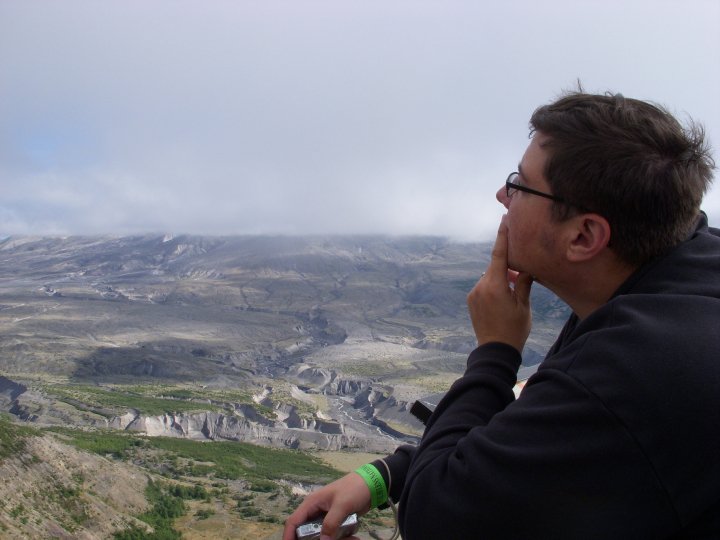
 Just as an aside, the Space Needle only looks good from a distance, and especially good as a line drawing, as in the opening credits of Frazier. I suppose it helps that we’ve got Grammer’s singing to distract us from even this abstraction of the building. But up close, it just looks meh, like a toy I played with in 1978 that had a lot of white plastic and faded to some ever-dingy urine-y yellow. Okay, it’s not as bad as that, but it’s not much further up, either. And I am a little incredulous that we still had a World’s Fair in 1964 or whenever this thing was built.
 Call me Captain Obvious, but after reading a lot—and I mean a LOT—of advice about face-to-face pitching story ideas to agents, I wasn’t quite sure how to go about it when the time really came due. So much of it was contradictory, or impossible to do at once, or over the top, or not applicable. So here is my list, after taking myself to my first writer’s conference, of what not to do, as obvious as some of these items may seem. I’m not saying I did these things, but I or someone I noticed did each of the things in this list.
 I’m excited to say that I have a collection of flash fiction stories out on Amazon for the Kindle, at the bargain basement price of only $2.99! That’s not even bargain basement—that’s the basement’s downstairs level. There is even one bonus, never-before-scene story to round out the collection.
 Delta Web site says you’re not departing until 12:30, she texted back. And here the pilot had just announced we’d be delayed another 5 minutes. Five minutes my ass. Five minutes in sea tortoise time. The stewards came down the aisle with glasses of water for us. Thanks, Delta.
 It was Saturday morning, and I kept thinking about the Sims, that role-playing video game in which the people in the town all have little diamond-shaped crystals hovering over their heads, indicating their energy and mood levels. When a Sim is content, the crystal is emerald and shiny, a bright beacon of happiness. When the crystal is faded, looking mostly transparent, the Sim is no longer a happy camper. During the course of any activity, the crystal will slowly fade, ticking down, as it were, into misery and joylessness. Fortunately for the game player, something as simple as going to the bathroom with make the Sim happier. But just given the tendency of time and entropy, according to the game’s designers, all Sims will end up in Funked Out Town. And I have made Sims die by leaving them in a room by themselves with no toilet, food, drink, or human companionship. It is awful to see what goes through their minds as they slowly fade into death. I swear I didn’t do this intentionally. I just forgot I’d left the game running and was in the next room watching reality television.
 We finally, finally, at last, made it to the award dinner hour. I’d gone down to the bar during the break for a tall pint of beer, and some email checking time, and I felt refreshed and ready to finish out the conference. Finalists were treated to a glass of wine and a networking party, then were led into the dinner room ahead of everyone else. For some reason everyone else at my table was a screenwriter, but the volunteers assured me we’d been seated randomly with other finalists. The awards themselves were poorly coordinated, and rife with technical glitches, but we managed to get through them, after hearing a Shakespeare-checkered keynote speech by C.C. Humphreys, who was charming, but too fake British for the wife of one of the screenwriters. She tsk tsked through his speech, which I heard because we were sitting next to each other.


 Trans/plant/portation