Excerpt from Superqueers
Here’s a little bit from my work-in-progress, SuperQueers, which I swear I’ll finish by this fall, even though I keep changing things up plot- and character-wise. I’m hoping to have it sit a little on the shorter end, somewhere around 70,000-75,000 words, so it’s a quick read. Without giving much away about the plot, let’s just say that an offhand wish this protagonist had has come true when she wakes up the next day. It’s not actually something she’s happy to have afflict her. Feel free to offer feedback on the writing, or not, but genuinely mean people’s comments won’t be admitted into the conversation (you know who you are).
Jess typically woke up four to six minutes before her alarm went off each morning. She was proud that her body was a regular, coordinated event, that it followed her wishes and bent to her will, even causing her to rise before the safety net of electronics kicked in.
Today, however, she slept through the alarm. She opened her eyes and saw that it had been buzzing for 20 minutes.
I’m so tired, she thought. She rolled over, groaning, wanting to go back to sleep. Ah, but it was Sunday, and she had a whole host of things to accomplish: clean the kitchen, dye her hair, reorganize the linen closet, and finish the literature review she’d begun last week. Maybe she could even get up the nerve to go to the office next week.
She sat up, slowly, because the room was tilted off to the left. Possibilities of why this was occurring flashed through her mind—she’d had an aneurism, a small stroke, or she was developing some kind of inner ear infection. If it didn’t go away in the next few minutes, she would have to call Dr. Rogers’ office, and he was convinced she was always coming up with psychosomatic illnesses. Jess knew she needed to find a new doctor who didn’t think she was crazy.
It was passing. Everything straightened out a bit. She moved her legs over to the floor and stood up carefully. Still fine. She should be okay for her shower.
She didn’t notice it at first—she was soapy with Antibacterial Dial liquid soap, which was the first phase of her showering routine—but as she was rinsing off, she couldn’t miss it. There were little bits of some sludge-like substance on her fingertips, the print side. She stared at her hands, the water running down her back. It couldn’t be dirt, not after washing as she did. What was it? She looked more closely at her left index finger. It was a viscous substance, shiny but sticky at the same time, and it seemed to be extruding out from between the ridges of her fingerprint. Jess didn’t want to, but she sniffed it. Almost instantly, she screamed and pushed her hand as far away as possible because launching it off her body like a missile wasn’t possible.
It smelled like shit. Actual shit. Bacteria-laden, disgusting, repulsive, stinky, canine excrement. And as she tried to wrap her brain around how such a thing would wind up on all of her fingertips, she was also wondering what it would take to clean herself of this, short of cutting of her own skin.
She scrubbed her hands with more antibacterial liquid, until her skin was absolutely raw. But each time she cleaned off, more oozed out of her skin like blood from an open scrape. It started slowly and almost imperceptibly gathered form. She couldn’t wash anymore. She sat down in the tub as the water gradually got cooler, sobbing over her predicament. And then she noticed that the substance stopped flowing, or whatever it had been doing. She let the water run over her hands and then she dared to look at herself one last time. Her fingers were bare of it.
And then the strangest thought entered her mind, seemingly from nowhere: I could control this, too.
* * *
Jess walked to and from her front door exactly 17 times. Prime numbers were strong, with few fissures that could be exploited to break them down. Seventeen was a good number. Seventeen was the number of the apartment she lived in, and it helped make her feel like the very door could withstand an assault, which of course, was necessary for someone who saw it as the boundary between her level of care and the disaster of the rest of the world.
This grand hope of hers had the unseen effect of creating animosity between the door, which had been fashioned in the mid-1930s along with the others for this building, and which was thus no more or less strong than any of the others, and the small brass numbers 1 and 7, which over the years of housing Jess, had come to believe in their own imperviousness. The door was embarrassed by their bravado, and knew that all of the other doors considered it ridiculous and more than a little pathetic for getting stuck with two obviously stupid brass numbers. But door 18 noted bitterly that it was the only one who actually was placed in view of door number 17, so it was the only one who had to put up with their incessant posturing.
But now things were different for Jess, although she wasn’t sure how or why. The very air smelled strange, as if the dog crap had infected the local atmosphere. It was cloying, as was the scent of the anti-bacterial soap. How had she used the stuff so constantly without noticing that it had infused itself everywhere, on everything? It seemed to her, this morning and not yesterday nor any of the other before it, that she had settled for a false cleanliness.
She looked at the door for she wasn’t sure how long. She reached out with one hand, which held an anti-bacterial tissue. The knob was cool, slippery under the cotton-paper fibers. She grabbed a strong hold of it, and turned. It didn’t pull forward because in her intense focus on opening the door, she’d forgotten to unbolt all of the locks, and there were several. One by one she twisted, pulled, unlatched, and slid the devices open, breathing deeply before taking hold of the doorknob again.
It was open to the hallway. There was no reason for this sudden turn of events—no deliveryman, no emergency, and no masculine policewoman inquiring about a strange break-in. She put one foot onto the obviously unclean hallway carpet, then the other. She turned and closed the door behind her, and slid her key into the lock, her hands shaking a little. Jess stared at the door from this other side, a side to which she hadn’t given much prior consideration. The counting started, an automatic reflex, but she stopped at six.
“You’re just a number,” she said to the brass markers, who immediately became overwhelmed with grief, and then, shame at having taken her at her word all these years that they had a secret strength.
Jess turned and walked slowly down the hall to the stairs, deaf to the sounds of the other doors, laughing as only doors can.
 There is nothing that fazes the Seattle barista. She is self-assured, extremely well trained, and fearless. Every possible additive, custom request, and black market good has probably been mixed into brewed coffee in this city. I bet I could even find a barista to take my order in Klingon. (Not that I know Klingon.)
 The Hat-Wearer—Also mostly of the male persuasion. We’re not talking baseball caps, either, since those are so omnipresent as to be unremarkable in every way. We’re talking either the old man’s wool cap like the one here, or the plaid Fedora hat, like the kind popularized by Jason Mraz. They’re definite statement-makers. Nobody puts on either of these head toppers without giving a good stare at themselves in the mirror before leaving home. Should it be cocked a little to one side? Tilted back? Pulled down low? Hmm, so many options to consider for one item. They’re clearly just accessories, as neither does anything to say, keep one’s ears warm in the winter.
 The Holders of the Blackberries—At first, they look like good friends. Old friends. People who are out in the world, enjoying each other’s company. But then, almost with no warning, the small electronic devices are drawn, like guns at high noon, and then there they are, cramping their thumb muscles, scanning for some tiny typed email that they’ll care about for the next 18 seconds, however long it takes to scroll through, whichever comes sooner. Unless whatever missive is of interest to both of them, they’ll fall silent, typing and scrolling, clicking and chewing on their lips, lost to all of us in their hyperspace environment. And just when one forgets about them, up they’ll pop, back in our shared universe, giggling and tittering, or guffawing about the stupid spam their friend just passed along to them. Oh, those LOLCats are funny!
 I’ve got a lot to do this Sunday, somehow, so until my next post tomorrow (and a podcast coming up), please see some other lovely things on the Web, and have a great end of weekend:
 Here’s the stereotype: the serious writer, a man of some undisclosed age, forehead pressed into wrinkles of determination, a bottle of almost good Scotch on the desk next to his trusty typewriter, pounds away on the keys creating the Next Great American Novel. Cigarette smoke hangs in the air from the three packs of unfiltered goodness that were previously consumed. He writes in isolation, lost in the characters, nuance, and craft.
 This is a great analogy, one that the mean, bitter, isolated writer would spare no effect to mock, but it shows the importance of community: a reminder that we face the same struggles as unpublished (and even published) writers, and we all sting when we get another rejection or have another challenging writing day. Community is vital because we can put our few data points together and see patterns—everyone starts somewhere, everyone pours energy into writing well, everyone comes up against what looks like impossible resistance. And everyone thinks of giving up. It’s only when we see that others have been in these positions before that we figure out this is the topography, this is the process. We need to get backed into corners because then we fight for our work. We need to look at our writing and stay humble, willing to revise, always, but not let the bottom fall out and crumple it into the trash or, for 21st Century folks, delete the file and light the laptop on fire. So knowing other writers we have a built-in stop gap to keep us from our most desperate acts when we’re in the throes of self-loathing. Part of the process, part of the process, that frustration.
 Over on Twitter last Monday, folks were conversing about the concept of confession—in 140 characters or less, which is more demanding that it might seem at first glance. It got me thinking, as good conversations do, about confession. According to Merriam-Webster, confession means:
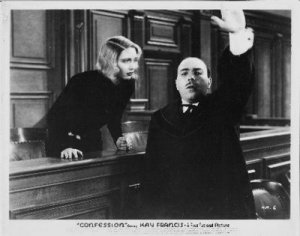 Confession can sure be hokey. Or absurd and unbelievable. It seems to me that confession is a pretty good barometer of how well one’s plot is holding together; if the confession seems funny when it’s serious, or causes eyerolls for the reader, it’s a bridge to far, and that means the plot has gone too far on its own out of solid story territory.


 On the surface, it’s easy to see how a big city like DC would differ from a small town like Walla Walla. (Hint: no tumbleweeds in DC.) And it’s probably not hard to identify areas of similarity. (They both have a lot of hot air.) And yet there are things that less identifiably, mark a place as its own, where the limitations of its geography, its people, its culture, draw lines over the topography, creating and precluding the universe as the residents know it.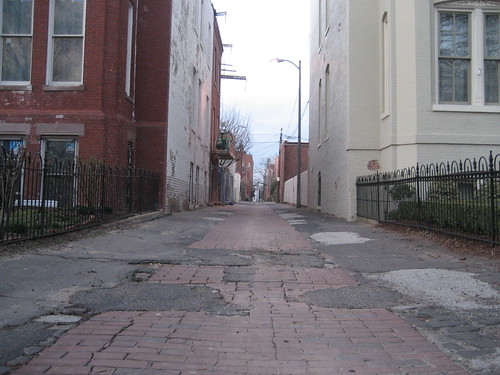
 I’ve written before about having the wearwithal for taking up writing as a career, or if not a career, an ambition. There’s writing for one’s vertical filing cabinet, and then there’s writing with the intention of getting the thing published. When one isn’t a writer, it looks like a cakewalk. There’s the throngs of fans, the languid lounging at the hotel pool while on a book tour, the eating of many bon bons, and the excitement of the book signing or reading session.


 Trans/plant/portation